Mealybugs are tiny pests that can become a huge threat if left uncontrolled. These tiny pests can be hard to spot until the infestation gets out of control. So, how can you tell if your garden is infested, and how do you protect your plants? Luckily, mealybugs are easy to identify and treat once you’ve seen them. Here’s everything you need to know about these pests and how to get rid of mealybugs on plants.
What causes mealybugs on plants?
Mealybugs love plants with high nitrogen levels, soft growth, and juice that they love to feed on (citrus crops are particularly susceptible for this reason). Usually, these insects are drawn to plants that are being cared for too much, as opposed to too little. Overwatering or overfertilizing your plants results in a squishy, soft environment where mealybugs can thrive.
Why mealybugs are bad for plants
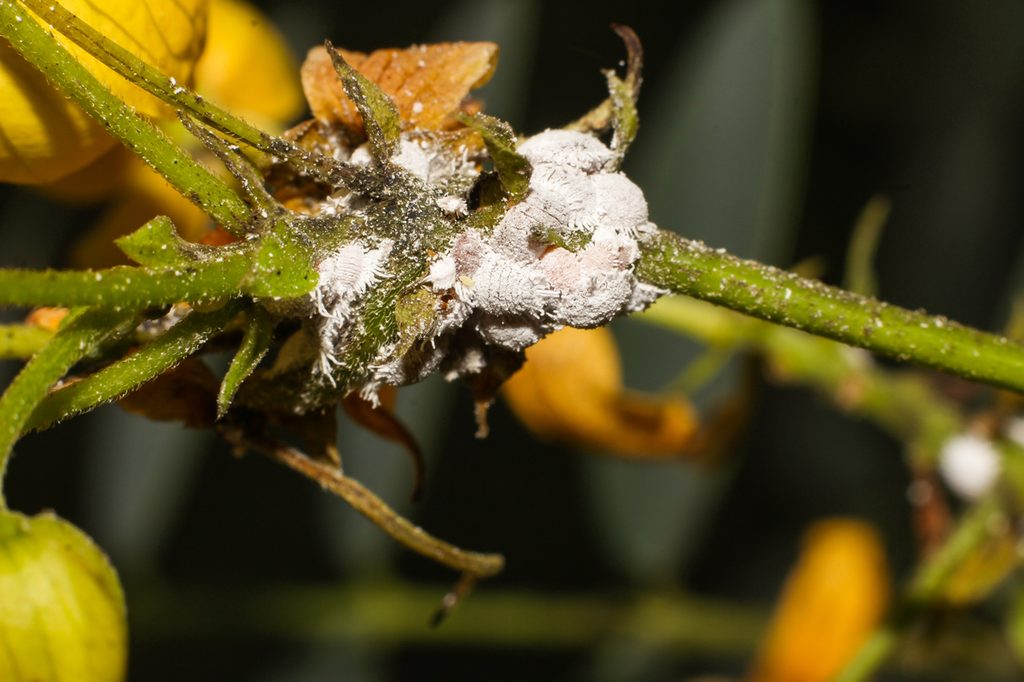
Like other sap-sucking pests, mealybugs are essentially taking the life from your plant. They favor crops with delicious flavors, sucking out the juice and doing damage in the process. Plants infested with mealybugs will start to have yellowing leaves and leaf drop, and in extreme cases, mealybug damage can cause premature buds, fruits, and veggies to fall off.
Worse yet, they don’t come alone. If left unattended, a mealybug problem can grow to the point where sooty mold fungus starts to develop. With their damage comes a weakened plant, and weakened plants are prone to other problems — ranging anywhere from diseases to even more pests. You should deal with mealybugs as soon as you catch them.
Signs of a mealybug infestation in your garden
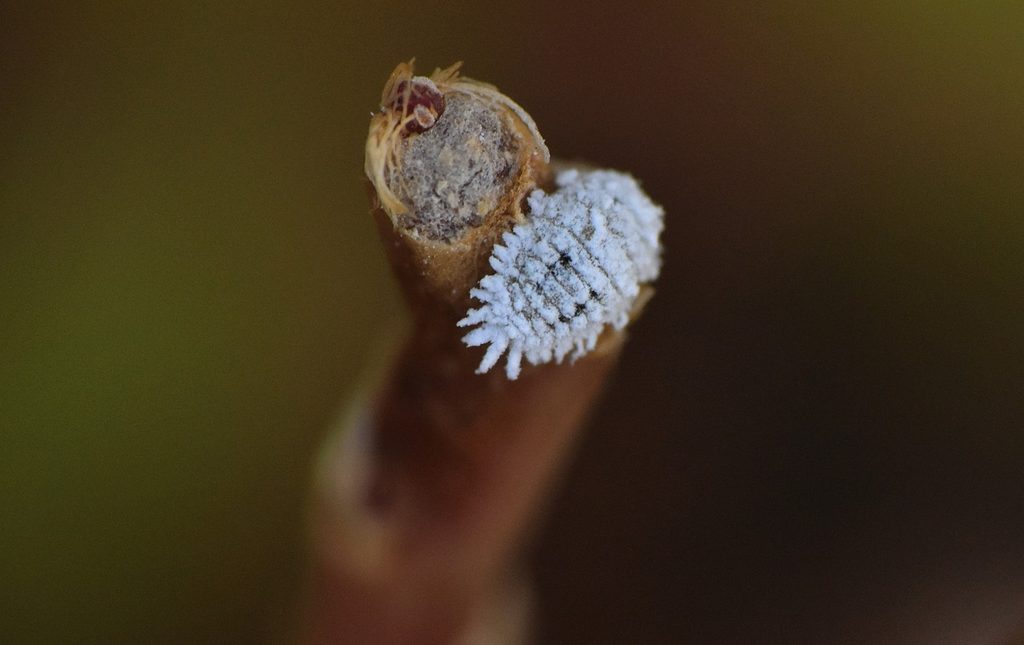
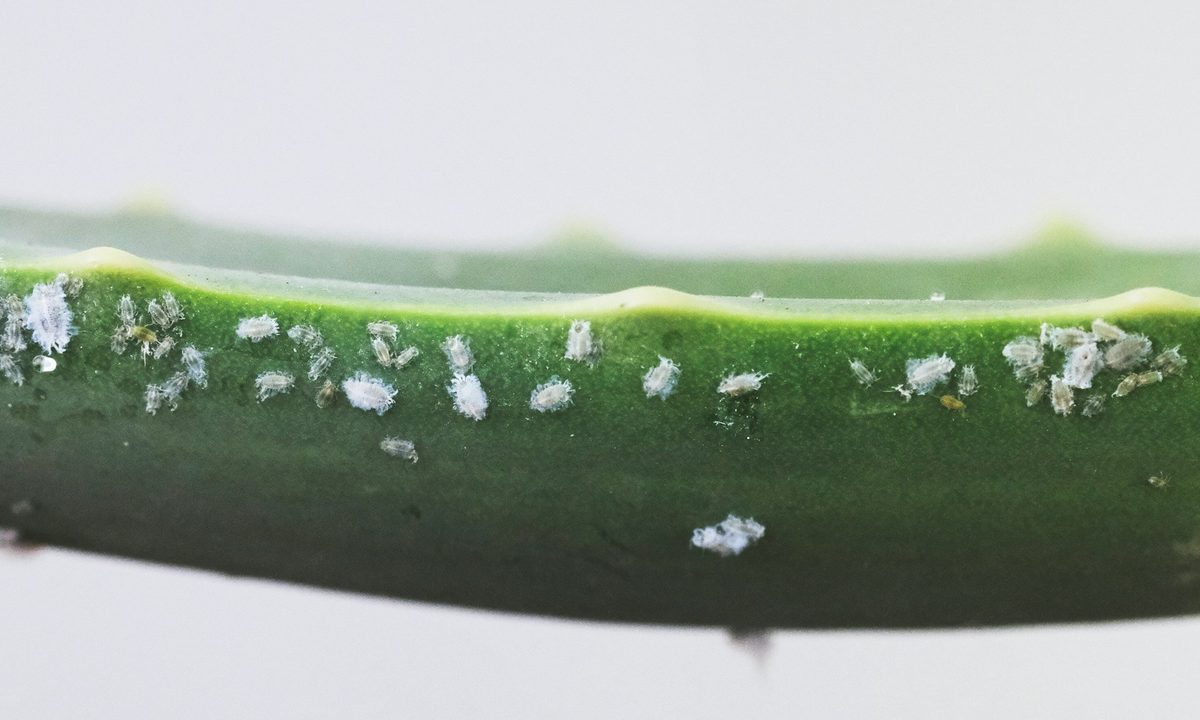
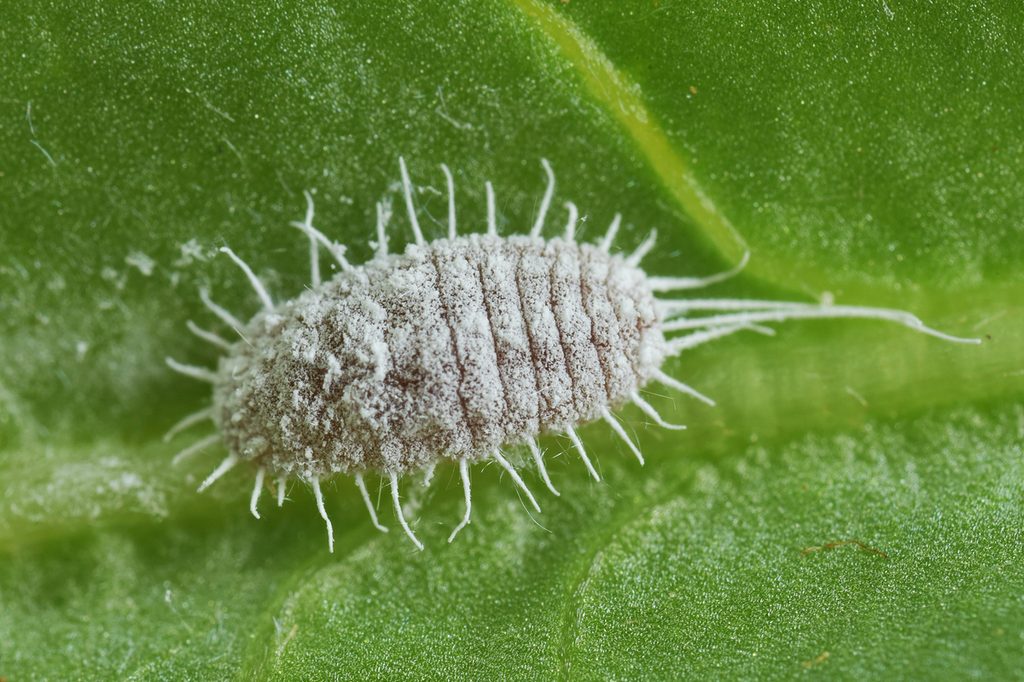
As they cause damage to your plant, mealybugs will secrete a white powdery substance on the leaves and stems of plants. If you notice that your plants are starting to look wax-like or cottony, you may have a mealybug infestation on your hands.
Can mealybugs affect indoor and outdoor plants?
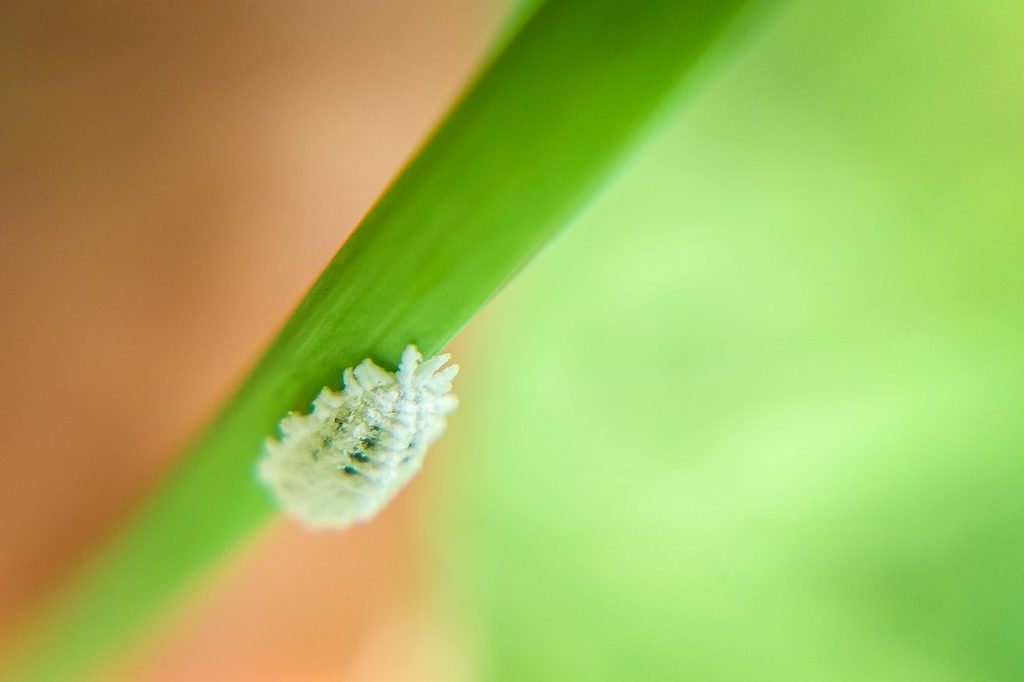
Yes! They can affect both outdoor and indoor plants, so this is a pest you’ll want to be on the lookout for in all your garden spaces. Because mealybugs are warm-weather insects, they’re mostly found indoors and in greenhouses in northern climates (and rarely on outdoor crops).
When it comes to indoor plants, mealybugs are drawn more to tropical species that like warm, humid environments. If you don’t have any of those in your home, your plants are at less of a risk; however, every species and variety of plant will have its own challenges. Some tropical plants might not attract mealybugs, and some non-tropical plants might get infested with them much more easily than the rest. It’s important to familiarize yourself with every kind of plant you’re growing to know what challenges might lie ahead.
How to get rid of mealybugs on plants

You can use most techniques to get rid of mealybugs on both indoor and outdoor plants. Where possible, you want to try natural methods of removal first to cause as little harm to the infested plant as possible (as well as those in the surrounding area). If you have a mealybug infestation on any of your plants, here are some things you can try — in order of small to large infestation:
- Use isopropyl alcohol. For small infestations, you can soak a cotton ball in 70% rubbing alcohol and wipe the mealybugs away. This kills and removes them. Test it on one leaf before wiping the whole plant to make sure the leaves don’t burn.
- Wash the mealybugs away. If you don’t want to risk burning your plant, you can also use this method to remove small infestations. Test on one leaf first to make sure you have a powerful enough stream of water, and to make sure that the plant can withstand the treatment.
- Treat with neem oil. You can use neem oil for small to midsize infestations since you’ll still be applying by hand. It affects mealybugs’ (and other insects!) ability to feed and helps repel future problems. If they can’t feed, they’ll move on. This treatment may be best on outdoor plants to avoid the risk of the mealybugs simply moving to another houseplant.
- Use a homemade spray. Homemade insect sprays are great for slightly larger infestations that aren’t as easy to remove by hand. You can find some natural homemade pesticide options to use here.
- Introduce predatory insects. Save this method for outdoor gardens only, as you don’t want more insects brought into your home. By introducing natural predators of the mealybugs in a controlled manner, you’ll be able to curb the infestation.
If all else fails, you can try these non-natural solutions to resolve the mealybug problem: insecticidal soap or synthetic chemical pesticide. These methods have directions that you should follow as closely as possible — not only to make sure you’re using the products correctly, but also to keep your plants safe from harm as much as possible.
Helping a plant recover after a mealybug infestation
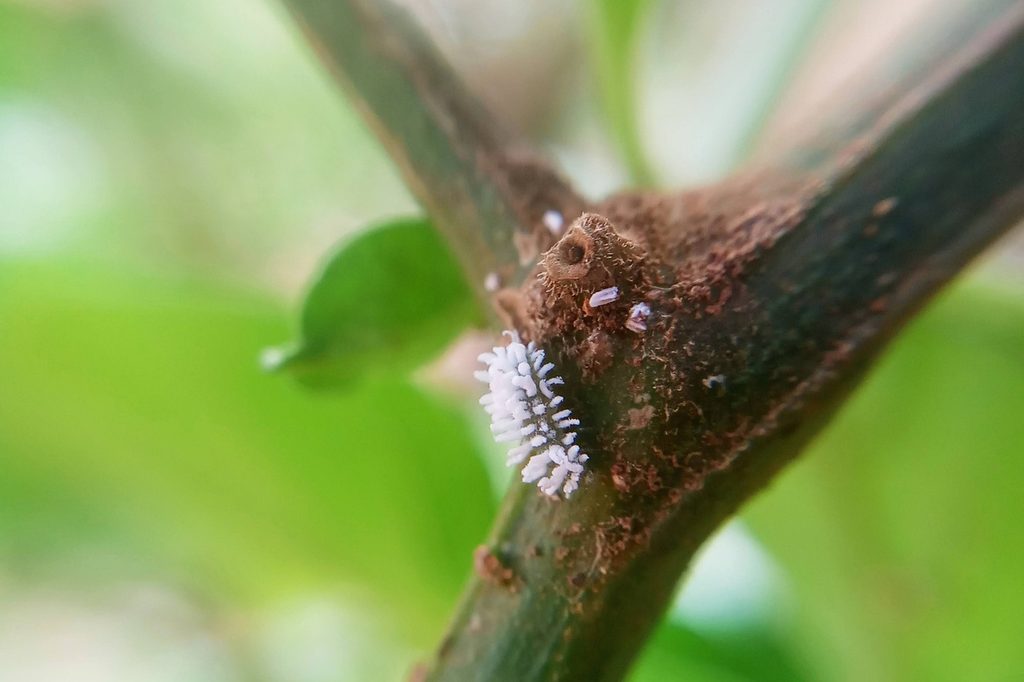
Once your mealybug infestation has been taken care of, your plant will need some time to recover. Depending on the severity of the infestation, your plant may still be weak, which can leave it vulnerable to other pests and fungal infections. Monitor your plant closely for signs of other pests, and continue preventative pest treatments until your plant has regained its strength.
Be sure you are meeting all your plant’s needs. Light, water, temperature, fertilizer, and humidity are all important care elements that will help your plant recover more quickly. Avoid large changes to your plant’s routine (such as moving them to a new location or repotting them), as these changes, even if they will be beneficial in the long run, cause short-term stress. A healthy plant can recover from the stress quickly, but a plant that’s already weak will struggle to recover.
Mealybugs, other pests, and any diseases are nothing you want to play around with. Sometimes, we don’t notice until it’s too late — and that’s only human. It happens to the best of us (even expert gardeners). But as long as you tend to the problem as soon as you notice signs of it, your plants have a good chance of surviving.