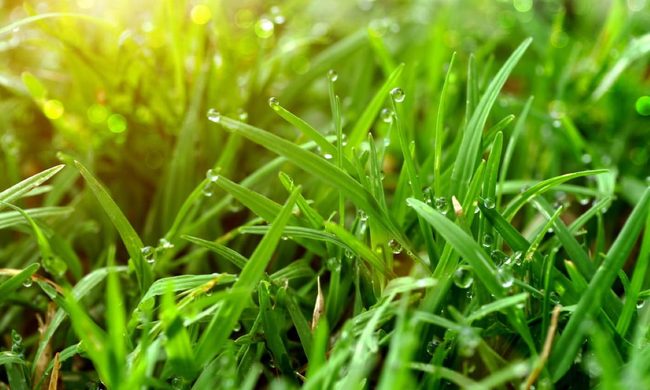
Many homeowners want a lush green lawn to border their homes. However, problems can crop up that prevent you from reaching this goal. Some are relatively easy to fix, such as brown spots on your lawn. Others are more complicated, and the cause needs to be identified before the problem can be solved, like if your grass starts changing color. One such problem is red thread lawn disease. Luckily, it’s a problem that’s easy to identify and treat if you know what to look for. Here’s everything you need to know about preventing and treating red thread lawn disease.

What is red thread lawn disease?
Red thread lawn disease is a fungal infection caused by Laetisaria fuciformis. The earliest signs of red thread are often brown patches in the grass, followed by thin, red or pink strands of fungus. These threads may be hard to notice at first, but as the infection progresses, they become difficult to miss.
Red thread is most prevalent in perennial ryegrass, but it can affect most common lawn grasses. It thrives in damp conditions, especially in lawns with poor soil drainage. Soil with low organic matter is also more prone to developing red thread. Grass that’s already weak, sick, or malnourished has more difficulty fighting off infections, leading to more severe cases.
It’s not uncommon for lawns to see a small patch of red thread, particularly during rainy seasons. Lawns can often recover from these on their own, with minimal intervention. However, more severe or frequently recurring cases need treatment.

Preventing red thread
Before planting your grass, make sure you have well-draining soil and that it is properly aerated. Lawns that don’t see much use may not need regular aerating afterward. Grass that’s used to regular foot traffic, extra parking, or small, movable structures like inflatable pools or swing sets, should be aerated once or twice a year.
Once you plant your grass, only water it as necessary. This can vary, depending on the type of grass you’re growing. On average, the most common lawn grasses require water every three to four days or once a week. Let the soil dry slightly before watering again, to ensure proper drainage and avoid waterlogged soil. If you notice the soil is not drying properly, stop watering it until it dries. Cut back on watering your lawn during rainy seasons to avoid waterlogging the soil.
Avoid shading too much of your lawn. Shade slows evaporation, which leads to wetter soil and high humidity at ground level. Thatch, the layer of dead grass that forms in lawns, should be removed when it reaches half an inch thick. If left to get thicker, it can restrict airflow and drainage, making red thread more likely. You can buy or rent a dethatcher from many gardening equipment stores. If your lawn is already home to trees or structures that provide shade, your yard may be better suited to a different ground cover.

Treating red thread
Fertilizing your lawn with nitrogen-heavy fertilizer, especially natural fertilizers, like compost or leaf mulch, can help improve poor-quality soil. If you haven’t aerated or dethatched your soil, then it’s a good idea to do so. Make sure to sanitize the equipment after using it, especially if you rented it. Don’t water your lawn while it’s infected with red thread. Let it dry out. Your grass will bounce back from a week or two without water, but the fungus may not.
In widespread cases, mow your lawn as short as is healthy for the type of grass you have. Use a clippings bag or catcher so the infected grass doesn’t redistribute across the lawn. Don’t compost the clippings, as this would add red thread fungus into your compost as well. Throw the clippings away, or dispose of them far away from your lawn.
Fungicides aren’t typically used to treat red thread lawn disease. Red thread looks unpleasant, and it can weaken your lawn, but it is rarely fatal. Chemical fungicides poses more of an environmental risk than the fungus itself. Instead, think of red thread as a symptom of overwatering or poor drainage and focus on treating that.

What is the best grass to plant to avoid red thread?
Some grasses are more prone to developing red thread than others. Perennial ryegrass, bluegrass, fescue grasses, bent grass, and Bermuda grass are all more likely to struggle with red thread. Perennial ryegrass, in particular, tends to suffer from it.
In general, warm-weather grasses and drought-tolerant grasses are more resistant to red thread. Zoysia is a good choice for these reasons. In part, this is due to water evaporating more quickly in this warm-weather and drought-tolerant grass that needs less frequent watering.
You may also want to consider moving away from a grass lawn. If your lawn has heavy shade and poor drainage, you may have better luck with a moss lawn. A mixed lawn, which may contain some grass and some weeds or creeping perennials, is another good choice. There are many health issues that grass-only lawns face that don’t afflict mixed lawns.
Red thread can look frightening, but it’s mostly a cosmetic issue. Although it can damage sections of your lawn, it is rarely fatal and is easily preventable once you know what to do. You can help prevent it through proper lawn care, planting a resistant grass variety, or switching to a non-grass lawn. Now that you know all about red thread lawn disease, you know not to panic when it appears. You’re ready to handle this fungal infection calmly and confidently.