When you buy a houseplant, it’s likely you’re under the impression that what you’re buying will last for a long time. And why wouldn’t it? It has a label with care instructions that are pretty straightforward, and it sounds similar to the other houseplants you have. Give it a little water, a little sun, and it should be good to go — but not really. Keeping a houseplant alive for a long time can be a bit more complex than that, and it’s how we arrive at the question: how long do houseplants live?
The average lifespan of your houseplant
There’s a general understanding that the average lifespan of a houseplant can be anywhere from two to five years, but even that isn’t the end-all-be-all. The only plants whose lifespan you can really determine are annuals, and that’s because they live for one growing season. The thing is, a well-cared-for houseplant can sometimes live for decades.
Unlike people or animals, houseplants don’t typically die at a certain age or due to maturity. (There are some plants, though, like grafted cacti that have a shorter lifespan due to being two separate plant segments fused together.) Most plants die due to outside factors involving care, environmental conditions, and the time of year.
Caring for a plant you want to live a long time
Now, let’s talk about those “basic care instructions.” Unless you’re purchasing your plant from a local nursery, it’s likely that the instructions provided with your plant only account for up to eight weeks of life for non-flowering plants and four weeks for flowering plants. Why? Who knows. It could be to keep you coming back to buy more and see what you did wrong, only to end up in the same situation. And it’s not your fault; off the bat, you’re being provided improper guides to care.
Most nurseries and garden stores will have someone that knows the ins and outs of the plants you’re buying. You can also peruse gardening-focused sites (like the one you’re on right now!) for articles and instructions on how to care for any given plant. Some are more reliable than others. Look for well-structured and organized information, as well as details about watering and light requirements. Sites with spelling errors, confusing anecdotes, or self-contradicting content are ones you’ll want to avoid.
Also, if you know someone who has cared for the type of plant you’re looking at and has been successful, ask them! Chances are, they know what they’re doing and will be more than happy to teach you the proper care, too. If you want your houseplant to live for as long as possible, adequate care will be key.
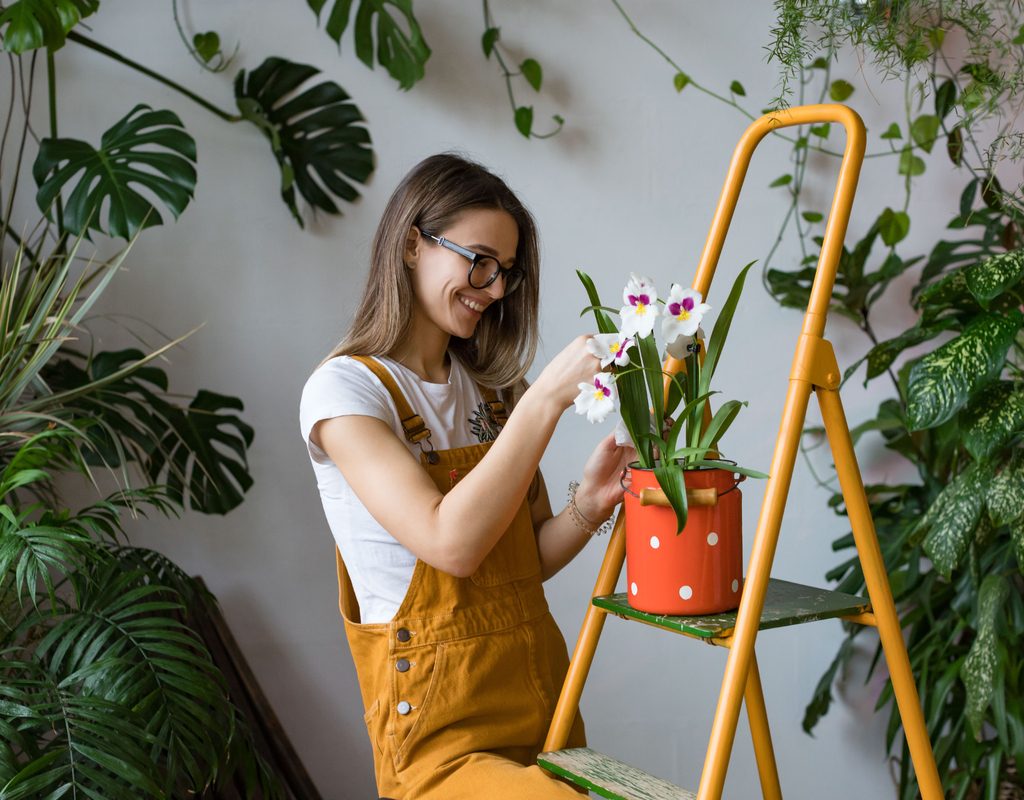
Things to keep in mind about your houseplant
The most common causes of plant death are over- and under-watering. If you’re new to houseplants, starting out with a hardier plant will help you learn the cues for when a plant is getting too much water or too little water. This is why having a pot with good drainage (coupled with a well-draining potting mix) is so important. In a container, the water doesn’t have anywhere to go if there isn’t a hole in the bottom. This can lead to soggy roots, which can not only cause disease but aid in the loss of a plant.
Improper nutrients and soil can also play a part in both slow-growing and dying plants. If the soil type you’re using doesn’t have enough of the nutrients your plant needs, it won’t thrive. This is why you can’t simply take dirt from outside, put it in a pot, and plant something in it. The plant will live for a little bit, but not long. Fertilizing your houseplants will help their growth and lifespan –– just be sure to pay attention to the instructions on the bottle.
Your houseplant, when cared for well, can theoretically grow indefinitely. How? They have a tissue known as “meristems.” The plant cells in this tissue are found in the tips and roots of a plant (and are actually what make cuttings an effective method of propagation). This means that, if it has the space, your plant can potentially grow too tall to hold itself up. Not to worry! As you care for your plant and watch it grow, just make sure to prune it as-needed. This will trim back the plant, keeping it at a sustainable size.
How to help prevent stress
Part of aiding in the long life of your plant will be working to prevent stress. A plant that’s too stressed will often be more prone to pests and diseases, which is why working to maintain an ideal environment is so important. The most common causes of stress are improper light (whether too much or too little), under- and over-watering, and a pot that’s too small. If the roots don’t have enough room to grow, your plant won’t thrive as well as it could.
A long-living houseplant will need proper watering, fertilization, soil type, sunlight, and space. Does this mean there’s no room for error? Of course not. Some houseplants will bounce back easier than others, but it’s common to misstep here and there — especially when you’re just starting out. Every plant is different, so just do your best and learn along the way!