If you’re a lucky homeowner who has an in-ground pool, congratulations. We’re jealous! An inground pool is a luxury for the hot summers where you want to enjoy a dip without leaving your home. However, these pools are a big investment that needs protecting. Covering the pool in the winter is one of the best things you can do to maintain it, not to mention preventing drowning.
There are two main types of covers for in-ground pools: solid vinyl and mesh. Both have their advantages and disadvantages, and it can be difficult to decide which is best for your pool. Don’t worry, we have you covered.

Solid vinyl cover
You might have seen these at your friend’s house during the winter. Solid vinyl covers are made of high-quality PVC reinforced vinyl that keeps everything out of your pool: dirt, silt, leaves, rainwater, or the neighborhood stray cat. Because rainwater collects on top, you will need to drain the top of the cover in one of two ways: a cover pump or drain panels that are built into some solid covers.
Advantages
The biggest advantage for solid covers is they prevent everything and anything from falling into your pool. Even during a storm, the cover will prevent big tree branches or other hazardous material from dirtying your pool.
When you go to remove the cover before summer, you’ll also have much less cleaning to do inside the actual pool, where a mesh cover can let debris sneak through. Your pool will be as clean as the day you closed it.
Lastly, not many people think to protect their pool from sunlight, but that’s important. Too much sunlight can cause water balance fluctuations and allow algae to grow. This can lead to more cleaning and higher costs; a solid cover prevents this.
Disadvantages
One big thing to consider is the size and weight of the solid vinyl. Because the material is so much heavier than mesh, it is much harder to add and remove from the pool — which means it’s probably not the best option for elderly or disabled people. Also, remember the cover pump we previously talked about? A solid vinyl cover won’t let anything into the pool, including rainwater that accumulates on top. That needs to be pumped out because the weight of the water could damage the cover, not to mention it will become stagnant leading to algae growth or mosquitos. These pumps can be a significant cost depending on the manufacturer.
Mesh cover
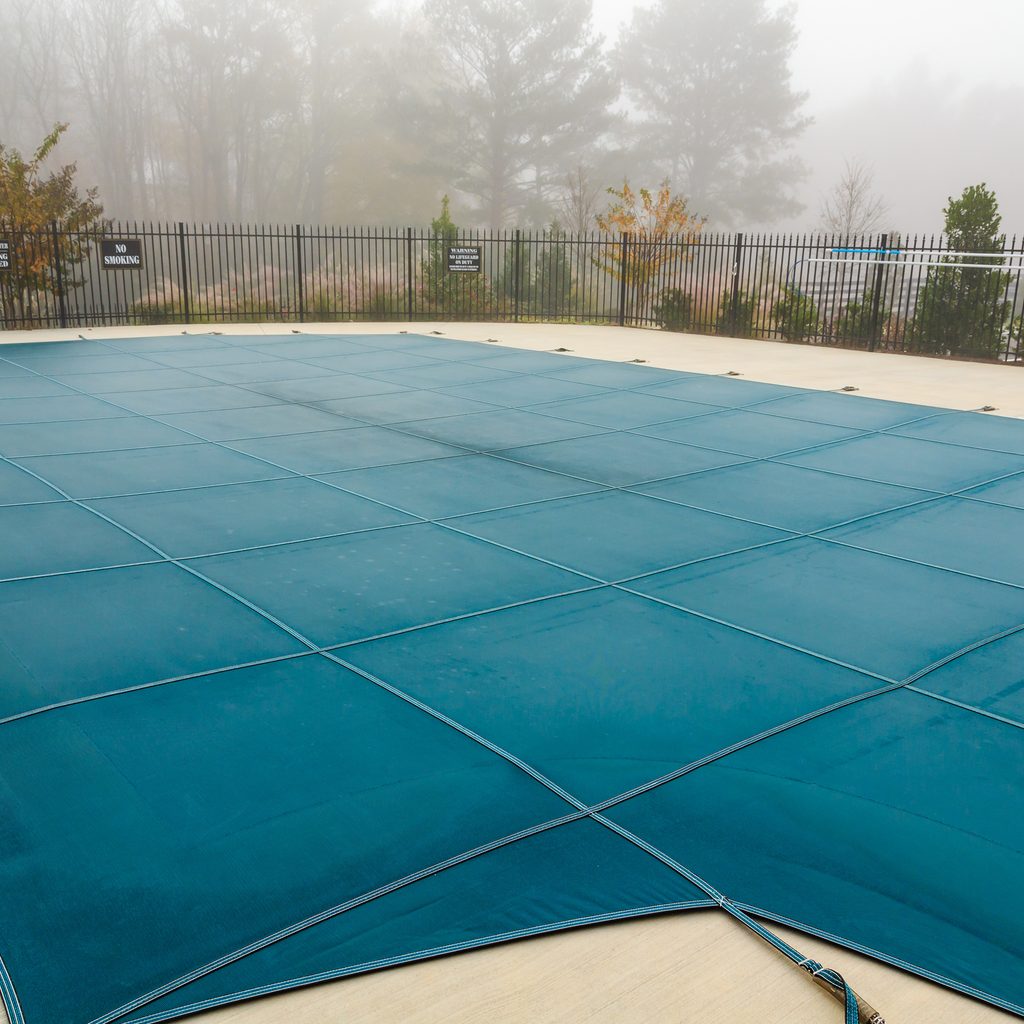
Mesh covers might not be as popular as solid covers, but they offer unique advantages. They are made from a lightweight yet strong weave of different materials, designed to prevent leaves and other debris from getting in the pool while allowing rainwater and snowmelt inside. They are also, usually, less expensive than their solid counterpart because of their lighter weight.
Advantages
One of the biggest advantages of a mesh cover is its weight. At only 4 pounds per 100 square feet, mesh covers are the lightest option for your pool, allowing for easy installation and removal during the different seasons. Also, the design of a mesh cover allows water to pass through, reducing the cost by not needing a pump to remove access water. Even though the mesh design might let small particles through, your pool will still need minimal cleaning once summer hits. Plus, the pool might not need re-filling because of rainwater or snowmelt from the winter months, saving on water resources. Another small advantage is that because the mesh allows water to pass through, it dries very quickly allowing leaves and other debris to blow away on their own. If you are looking for a cover that you can install and leave, mesh is the way to go.
Disadvantages
Despite most debris being caught by the mesh, there will still be small particles that go through, which means more cleaning will be required at springtime once you remove the cover. Also, remember how we said that solid vinyl covers block sunlight? Well, obviously, mesh covers can’t. The sunlight could vaporize chlorine and other chemicals in pool water, which encourages algae growth. All of this leads to more cleaning and possibly higher costs come the warmer months.
Both types of covers have their pros and cons, but the bottom line is this: Do you want a cover that requires more upkeep in the off-season but your pool requires no cleaning in the summer? Then choose the solid vinyl. Do you want a cover you can install and leave alone but might have to clean a lot more once the warmer months hit? Then go for the mesh cover. No matter which option you choose, safety covers are an important component of an in-ground pool, protecting both the pool and your family.