The word “dwarf” in the world of plants means a species variant that grows much more slowly than its standard, non-dwarf counterpart. For instance, a Japanese cedar, Cryptomeria japonica, may grow as much as four feet per year and reach a mature height over 70 feet tall; while a dwarf Japanese cedar like Cryptomeria japonica ‘Globosa Nana’ may only grow four inches per year and top out at four feet tall. Dwarfs offer similar attributes as their larger counterparts, but often in a compact, usually more densely branched or “shrubby” package.
Dwarf trees are excellent choices for gardeners with compact landscapes. Many of these are well adapted for container gardening as well. Even those with wide open spaces often find that dwarf trees allow them to add diversity and unique characteristics that aren’t otherwise available. Read on for a few excellent choices.
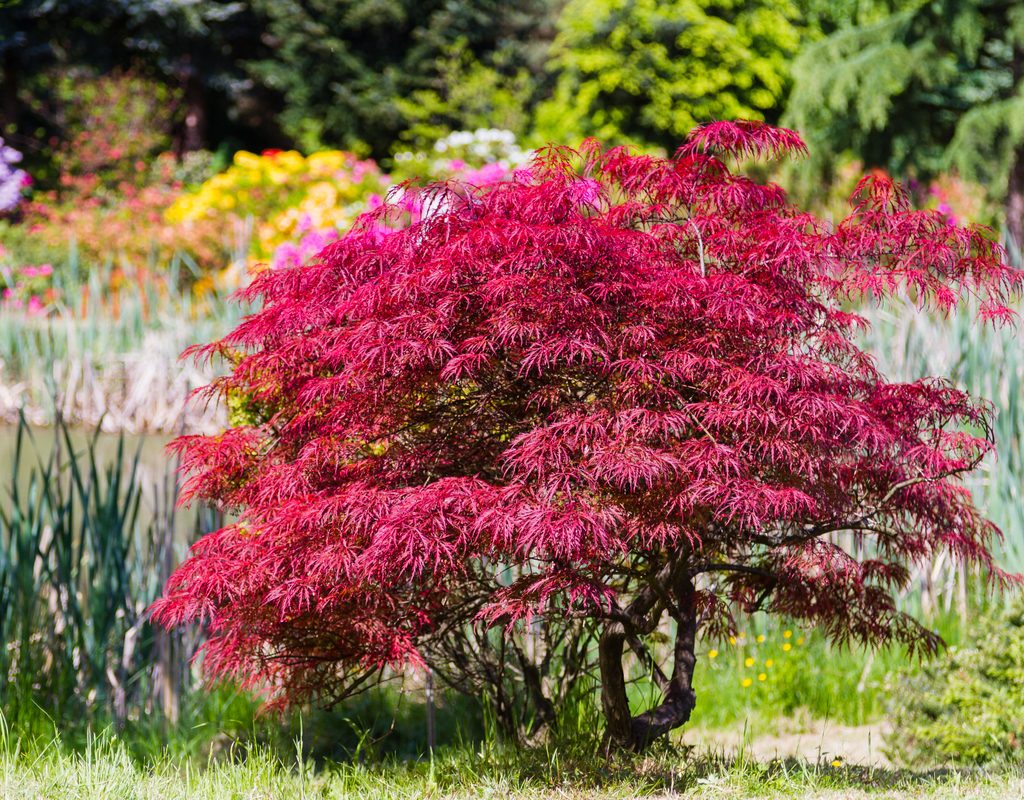
Best foliage: Dwarf Japanese maple
Botanical name: Acer palmatum ‘Orangeola’
Type: Deciduous
Size: 8 feet tall, 6 feet wide
Zones: 5 to 8
Uses: Landscape focal, container plant, shade garden accent
Description: Japanese maples are well known for their branchy growth that takes on a refined appearance with a bit of judicious seasonal pruning. Orangeola produces colorful, lacey leaves on deeply cascading branches. The new leaves emerge reddish-orange, maturing to shades of green and purple. In the fall, it changes to brilliant orange before the leaves drop. Unlike most weeping Japanese maples, this one naturally grows a bit taller than it does wide.
Best evergreen: Golden dwarf Hinoki cypress
Botanical name: Chamaecyparis obtusa ‘Nana Lutea’
Type: Needle-leaf evergreen
Size: 3 feet tall, 3 feet wide
Zones: 4 to 8
Uses: Landscape specimen, container plant, border plant
Description: Hinoki cypress has long been cultivated for lumber, as well as its ornamental value, and its foliage produces a pleasantly aromatic essential oil. Golden dwarf Hinoki cypress is a pretty little conifer that forms an irregularly shaped, pyramidal mound with dense fans of soft, golden foliage. It grows extremely slowly, sometimes only reaching five feet high after many decades. The golden foliage makes a pleasant contrast against a background of deep green broadleaves in the garden.
Best ornamental: Patio peach tree
Botanical name: Prunus persica ‘Bonfire’
Type: Deciduous
Size: 4 to 6 feet tall and wide
Zones: 5 to 8
Uses: Container plant, landscape focal, shrub border accent
Description: This dwarf peach tree has become popular for its profuse display of early spring flowers and deep red foliage. The showy pink double blooms are spectacular. It also produces fruit in the summer. The firm, clingstone peaches are often hidden by dense leaves. They’re not considered high quality fruit for fresh eating but make a good pie or cobbler. Bonfire peach grows at about half the rate of its non-dwarf relatives, making it a good choice for either container plantings or ornamental shrub borders.
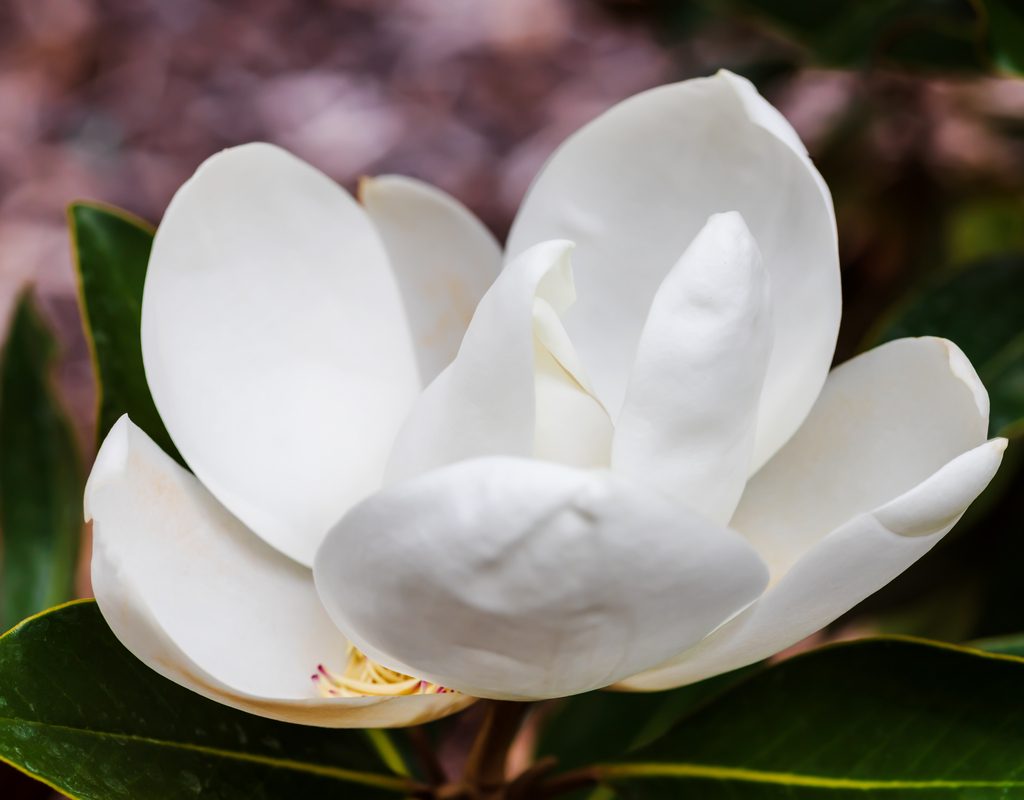
Best flowering: Teddy Bear magnolia
Botanical name: Magnolia grandiflora ‘Southern Charm’
Type: Broadleaf evergreen
Size: 20 feet tall, 12 feet wide
Zones: 7 to 9
Uses: Foundation plant, landscape specimen, container specimen
Description: Teddy Bear magnolia shows that dwarf does not necessarily mean small. Although it fills a fair amount of garden space, this cultivar only reaches about one-third the size of its non-dwarf counterparts. The tough, glossy evergreen leaves feature a generous layer of copper-colored felt on the underside, which look stunning when used to make a holiday wreath. Throughout late spring and summer, this magnolia’s large white flowers fill the garden with a rich, sweet aroma.
Best weeping: Weeping redbud
Botanical name: Cercis canadensis ‘Ruby Falls’
Type: Deciduous
Size: 8 feet tall, 5 feet wide
Zones: 5 to 9
Uses: Landscape focal, container plant
Description: Ruby Falls redbud offers a variety of ornamental characteristics for four seasons of interest. The small size and cascading growth habit adds an architectural element that shows up well against a background of mixed foliage or a blank wall, even in winter. In early spring, deep reddish pink buds open to reveal pink flowers all along the red younger branches for a fountain-like effect. Then the large heart-shaped foliage emerges, first bright maroon, then maturing to deep greenish purple. In autumn, the leaves change to shades of red and gold.
Best for shade: Millane’s dwarf sugar maple
Botanical name: Acer saccharum ‘Millane Dwarf’
Type: Deciduous
Size: 20 feet tall, 8 feet wide
Zones: 4 to 7
Uses: Landscape accent, shade, screen
Description: Sugar maples have been prized for hundreds of years because of their intense fall color and deep summer shade. Millane’s dwarf offers all the color and some of the shade, but in a compact, narrowly upright form. It only reaches about half the size of a standard sugar maple tree. Throughout the growing season its medium texture and green foliage blends into the landscape, before exploding into a brilliant fall display.
Best for wildlife: Red Pygmy dogwood
Botanical name: Cornus florida ‘Red Pygmy’
Type: Deciduous
Size: 7 feet tall, 5 feet wide
Zones: 5 to 9
Uses: Landscape specimen, container plant, shrub border
Description: The typical flowering dogwood, Cornus florida, grows in the woods throughout eastern North America, where it reaches heights of 25 feet or more with tiered branches, a spreading habit and showy white bracts (“flowers”) in spring. This rare dwarf cultivar has a dense growth habit and produces deep red bracts that are the same size as those on the non-dwarf species. In late summer, expect a bountiful crop of red dogwood berries that attract a variety of wildlife, followed by pleasant orange-ish fall foliage color.