Keeping dried flowers is a great way to ensure you have natural beauty in your home all year round, regardless of what is in bloom. Many dried flowers are also useful for teas, potpourri, flavorings, and art – just more reasons to love the art of flower drying.
However, the practice can be challenging; some flowers are naturally better at drying, while some are too fragile or lose their color when dried. It’s unfortunate, but not every dried flower turns out beautiful. Which flowers are the best for drying, then, and what are the best methods to use to ensure a good outcome? Here are our favorite five flowers to dry — and all the tips and tricks we’ve learned along the way.

Roses
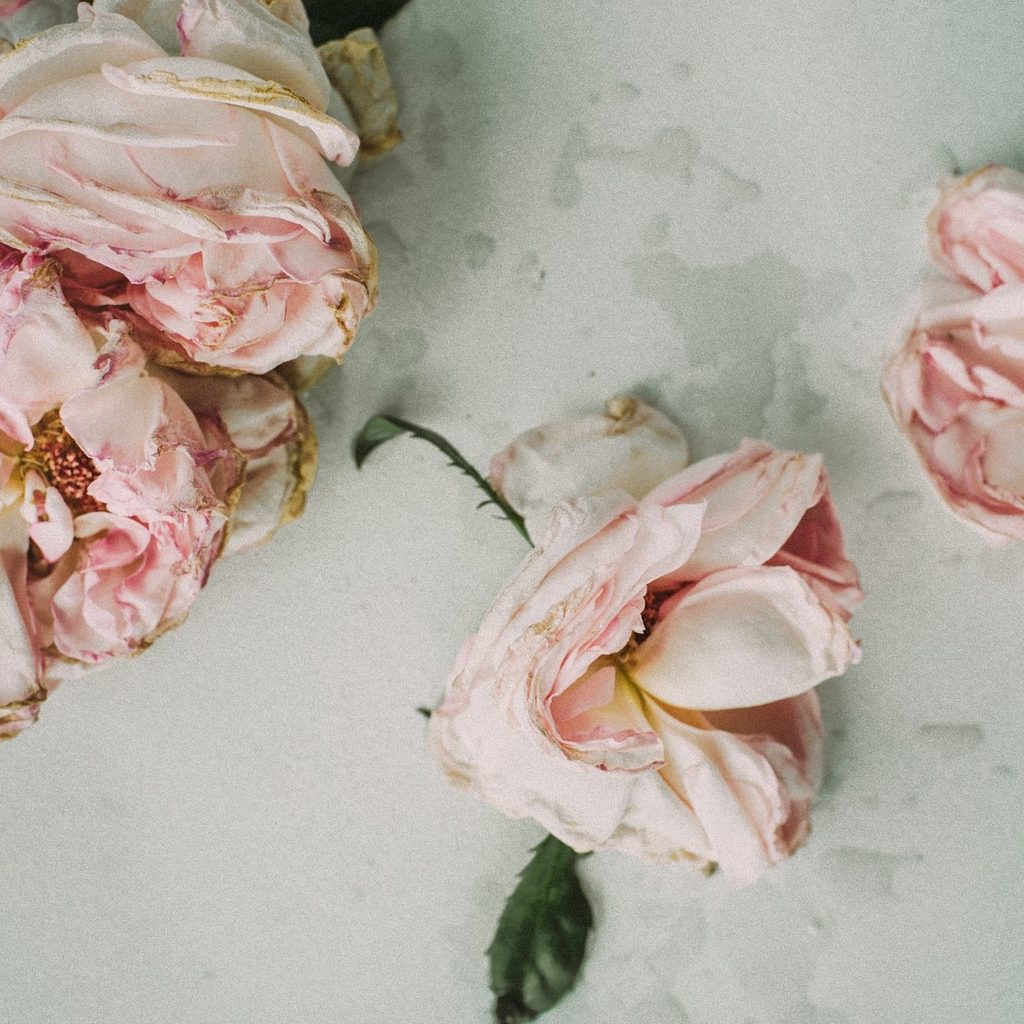
Dried roses are incredibly popular, and it’s no mystery why. They look delicate, elegant, and, if dried correctly, can retain their color quite well. The first trick to drying roses is to choose roses that haven’t fully opened. Roses that are fully in bloom tend to lose petals, making them more difficult to dry intact. However, rose petals can be dried individually as well, so if you only have roses that are completely opened you still have an opportunity to use them.
Drying method
- For roses that are still partly closed, clip them off the bush so that you have several inches of stem along with the blooms.
- Tie a string around the end of the stem and hang it upside down by this string. The flowers should be hanging in a place that is shady, dry, and cool. Sunlight can cause vibrant flowers to fade, while moisture and humidity can slow down or even prevent your flowers from drying.
- This method takes roughly two to three weeks.
If you’d like to dry rose petals, your best bet is to press them. Arrange your rose petals between two paper towels, sheets of wax paper, or fabric. You can place something heavy and flat on top, or lay the petals between the pages of a large book. Check them after a few weeks; this method is a bit slower and requires patience.
Lavender
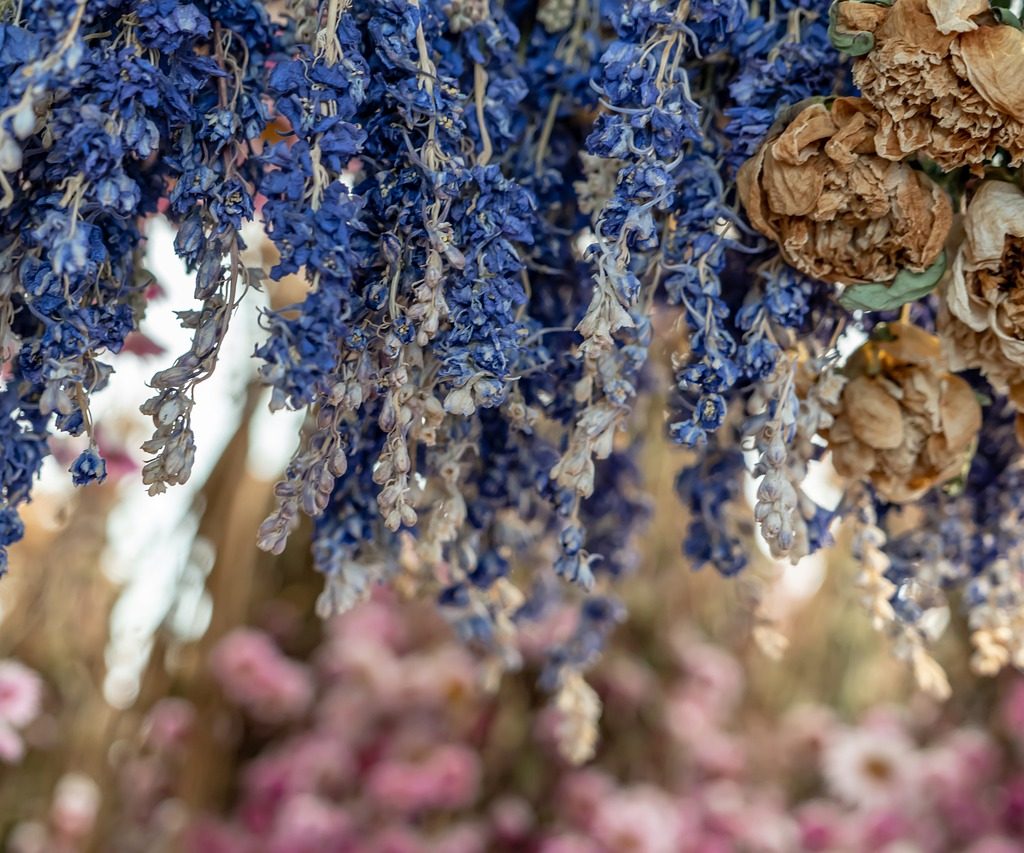
Dried lavender can be used in arrangements, potpourri, or added to baked goods for flavor. Depending on how you plan to use it, you can dry it in several ways. If you have a long stem that you want to keep intact, you can tie a string to the end and hang it upside down. You don’t have to be quite as worried about the sun with lavender as you do with roses, especially if you intend to use the lavender to add flavor or scent to something else.
Pressed lavender is also an option if you have smaller stems of lavender or one stem that you don’t mind cutting into smaller pieces. Pressed lavender is exceptionally good for use in resin crafts such as necklaces, earrings, or coasters.
Carnations
Carnations on the stem are great for arrangements or single decorations and can be dried using the standard method of hanging them upside down in a cool, dry, shady room. Carnations are a little sturdier than roses, so, although you should still be gentle with them, they can be dried fully open.
Carnations without their stem make wonderful decorations and can be sealed and glued to a hairband or pin to make brooches or hair accessories. Although they can be pressed, the better way to keep them in their shape is to — strangely — microwave them.
- Fill a microwaveable container half full of silica gel, then gently place your flower in face up and continue filling with silica gel.
- Add the gel slowly and make sure the petals aren’t folded or bent, as that’s how they will dry.
- Microwave, uncovered, for only a few minutes. Time can vary depending on the voltage of your microwave and the size of the flower, so start with two minutes and add time as needed.
- Take the petals out of the microwave carefully. Remember that the container will be hot! Keep in mind that silica gel is toxic, so the container you use can’t be used for food afterward.
Hydrangeas and sedum
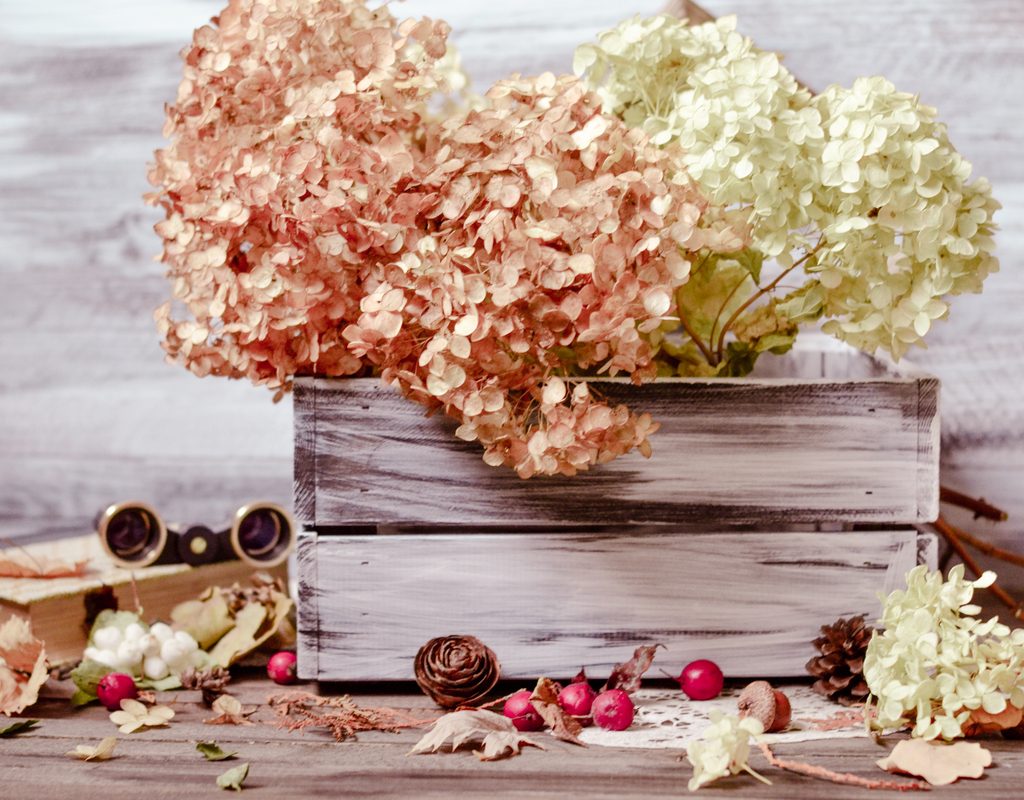
Hydrangeas are beautiful when hung to dry. They are remarkably sturdy and last quite a while when dried. You can preserve some of their color by hanging them somewhere shady, but they also look quite lovely when sun-bleached. It’s a good idea to try drying some in the shade and others in the sun, just to see which results you prefer.
Sedum is another excellent flower to hang for drying. These flowers are a little more delicate than hydrangeas, but not nearly as delicate as roses. Sedum is especially excellent for drying in larger bundles. Hang them to dry in groups that are roughly the size you want to display them in — separating them once they’re dry can be challenging since they are a bit fragile.
These five flowers are some of the best for drying, but they’re far from the only ones. Experiment with some of the flowers in your garden using the methods described here and see what wonderful displays or art you can create!