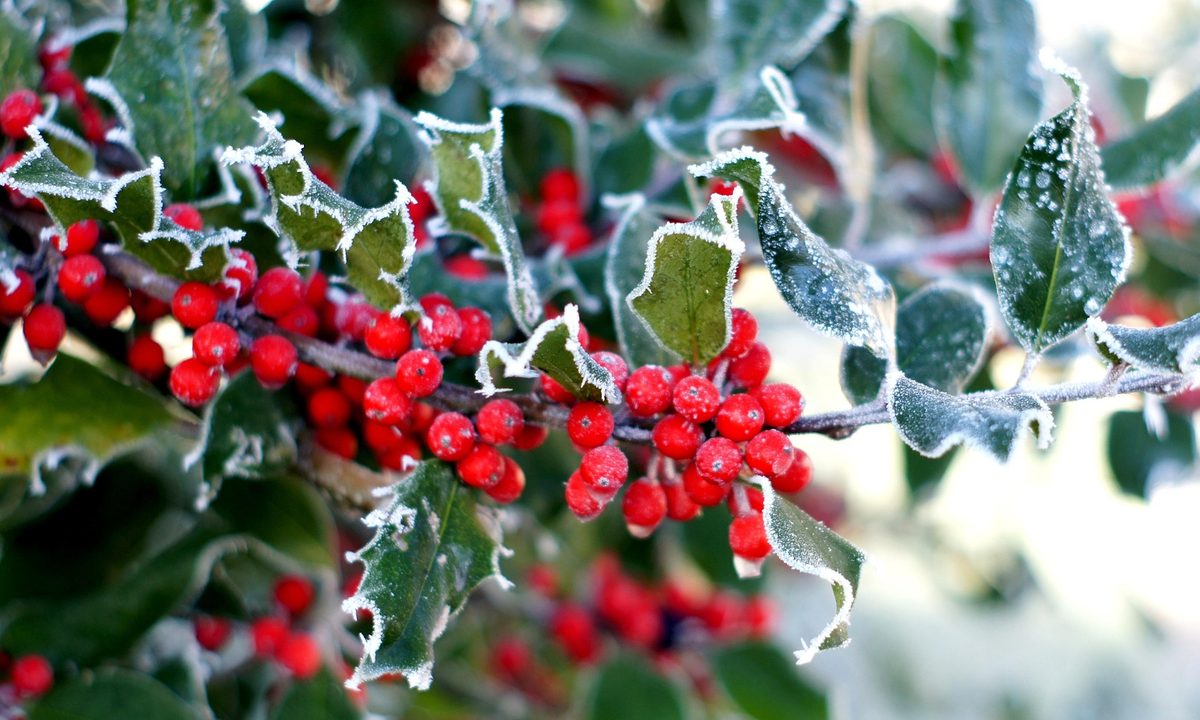
Holly plants are popular winter plants, with their glossy, dark green leaves and bright red berries standing out against the whites and browns of snow and dormant plants. Some species are native to North America and are a great winter food source for birds, while others are native to Europe and Asia. Aside from their berries, holly leaves are the most eye-catching feature of these plants. They’re glossy, dark, and often spiky. If you’re curious about these interesting leaves, here are some fun facts about holly leaves for you!
Holly leaves tend to have more spikes lower to the ground
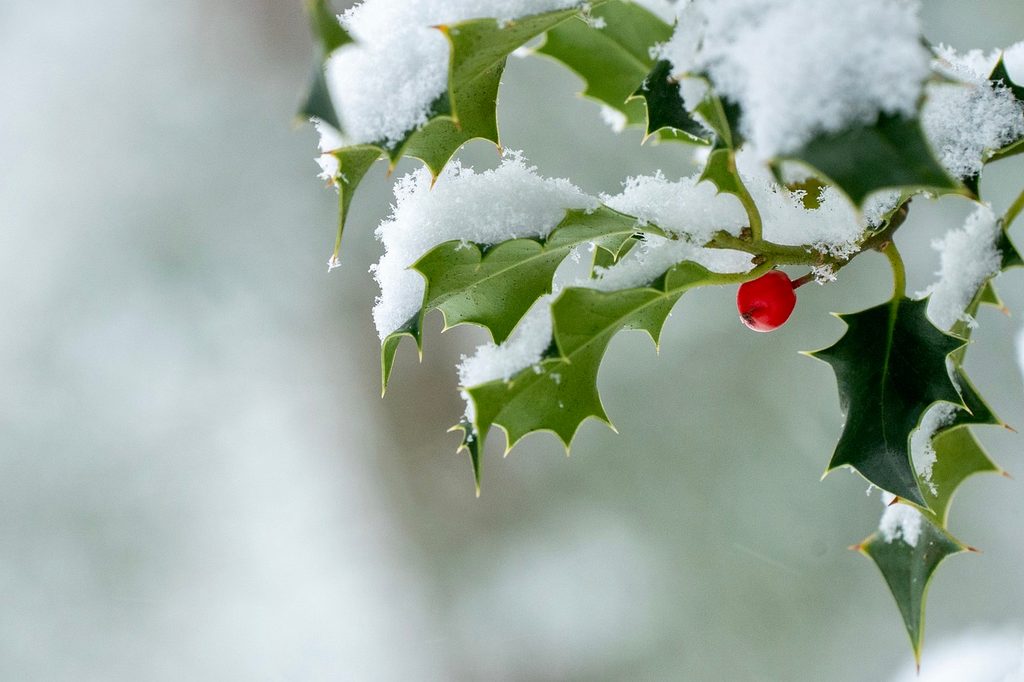
When they first grow, holly leaves are pretty uniform across the plant. However, once a few leaves are eaten (most commonly by deer), a neat genetic quirk of the holly plant reveals itself. The leaves that grow back to replace the eaten ones, as well as the surrounding leaves, grow more spikes. This helps protect the holly plant from being overeaten, but you can use this info to protect yourself as well!
If you need to reach into a holly bush for any reason, aim for higher branches to protect your hands. Additionally, if you like to walk barefoot in your yard or garden and don’t like stepping on shed holly leaves, consider pruning the lowest branches.
Protecting your holly bush from deer can also protect your feet! Deer may eat holly leaves at any time of year, but it’s more common in winter when there are fewer options for the animals. When the weather turns cold, you should consider placing a barrier around your holly bushes to keep deer from munching on them.
Holly leaves are smooth and waxy to conserve water

Holly leaves have a smooth, waxy texture that makes them gorgeous to look at, but it also slows their decomposition, which is why holly leaves aren’t commonly added to compost. It can be annoying to find leftover leaves, ages after other leaves would have crumbled. You may have noticed similar leaves on other plants, but do you know why they’re like that?
A waxy leaf surface keeps the water in the leaf from evaporating too quickly. This is particularly useful in dry climates, but also in cold climates. When the soil freezes, water can’t absorb into it as easily. This can cause dehydration, which is why so many evergreen plants have waxy leaves.
Not all holly plants have spiny leaves

Although the classic holly plant look includes dark green, spiky leaves and bright red berries, the holly family actually contains over 480 species of plants! There’s a lot of variety among the species, including some plants that don’t grow spines on their leaves. If you love seeing holly leaves in the winter, but hate being poked, one of these varieties might be the best choice for you. Additionally, there are deciduous holly plants that lose their leaves in the fall but still produce berries.
Holly leaves have a lot of symbolic meanings

Holly plants have been around for centuries, and over the years they’ve found a place in many stories, myths, superstitions, and religions. Holly leaves and berries are a common addition to Christmas decorations due to their religious symbolism, and they appear in many old stories as a home for faeries. This fascinating history makes holly plants meaningful to many cultures, and can give you a new appreciation for your holly plant. Holly leaves can be used to represent protection, eternal life, fertility, good luck, and more!
Holly trees and shrubs are great additions to gardens. Their bright berries provide important food for local birds, and their glossy leaves can keep your garden from looking drab throughout winter. Now you have some fun facts that you can pull out to impress your guests — and to help you keep your hands and feet safe from prickly leaves!