A fixture in spring and summer gardens, daffodils make for cheerful borders and are gorgeous as cut flowers. From pinks to peaches, they come in quite an expansion of shades, but are perhaps best recognized for their vibrant yellow blooms. Caring for daffodils is easy if you remember a few maintenance tips throughout the year. Here’s our guide on how to plant daffodils and nourish them for your dream flower garden.
How do you plant daffodils?
Growing daffodils outdoors
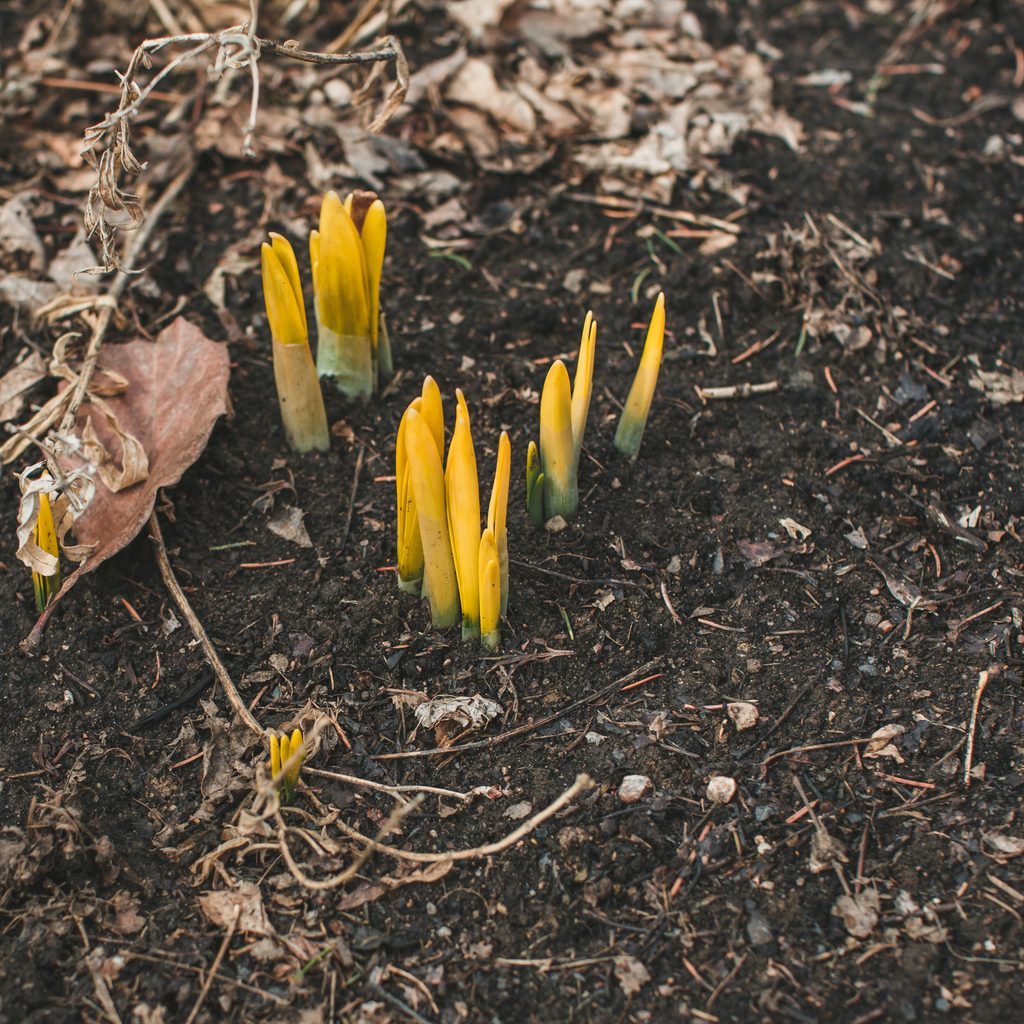
When looking at daffodil bulbs, seek out ones that are plump and large to ensure healthy, vigorous growth. You want to plant daffodils around fall so they’ll bloom a month after the last frost in your area. Autumn is an ideal planting time, as you want your bulbs to have an established root system before the first frost hits your garden. But the cold isn’t all bad; daffodils need a chilling period in the winter before they bloom. If you live in a frost-free area, consider storing your daffodil bulbs in the refrigerator for about 16 weeks before fall.
About a month before the first frost, bury your bulbs 3 to 5 inches deep into the soil with the pointed ends up. (The rule of thumb is that you should bury your bulb twice as deep as its diameter.) If you plant several daffodils in rows, keep each bulb about 4 to 6 inches apart.
Growing daffodils indoors
You can also force daffodils indoors if you want to plant them out of season. Use a pot about 6 to 8 inches wide, placing up to five bulbs inside with the noses exposed above the potting soil. Keep the temperature at around 50 to 55 degrees Fahrenheit and leave your bulbs in an area that gets medium light. When you see shoots emerging, move your bulbs to somewhere that receives room temperature and bright light.
How to care for daffodils
Once planted in the ground, daffodils only have a few requirements they need to thrive. Here are some conditions to keep in mind as you care for your daffodils.
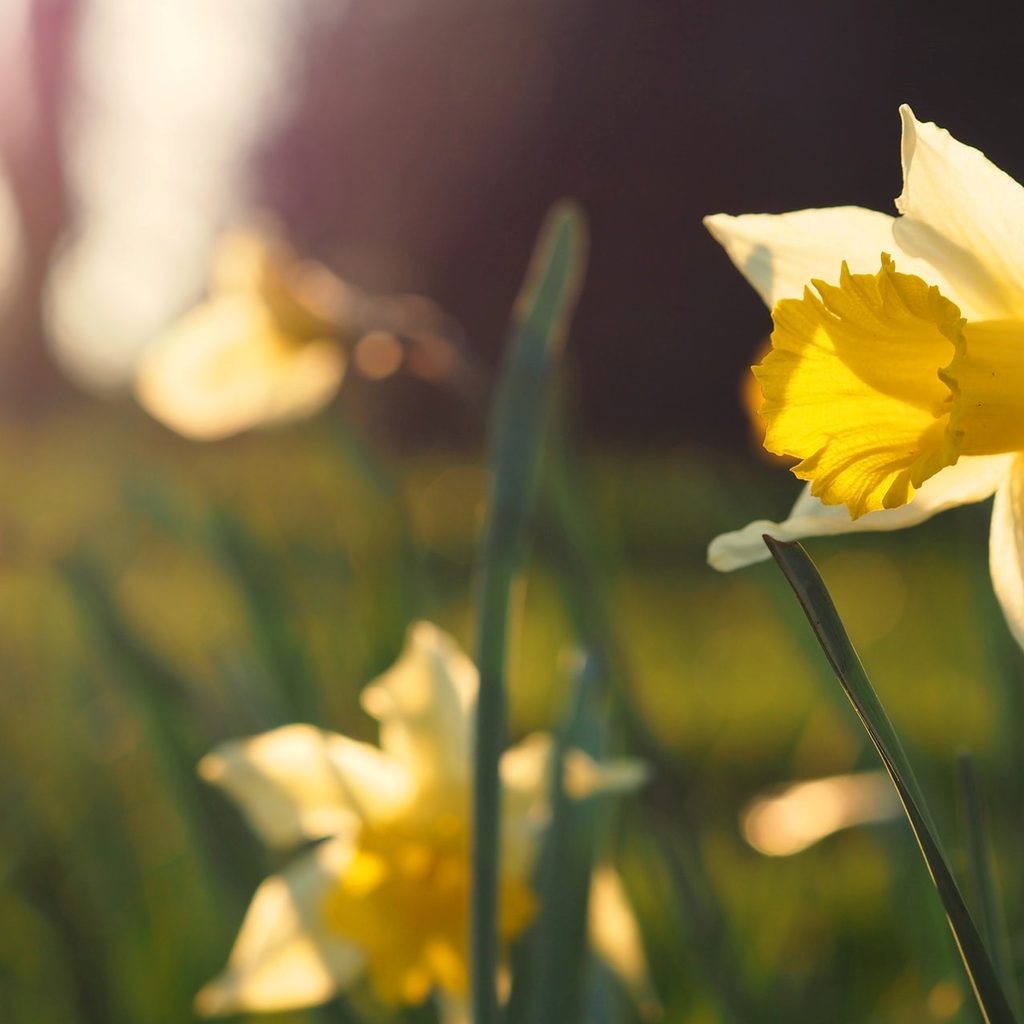
- Light: Daffodils thrive when they receive full sun 6 to 8 hours a day — partial shade limits their bloom production. Southern exposure gives you lots of light, but you want to choose a daffodil variety that doesn’t need a long chilling period if you situated it in a bright, warm area.
- Water: A once-a-week cadence for watering should work well for daffodils, which appreciate well-watered soil when they’re actively growing. When your daffodils go dormant; however, it’s best to cut back on watering, only doing so once when you plant them in the ground. To keep from overwatering your daffodil bulbs, consider companion planting them with daylilies, which bloom after daffodils and use up excess soil moisture to prevent your daffodil bulbs from rotting.
- Soil: Daffodils do best in neutral to slightly acidic soil. Some varieties are partial to an alkaline pH, so read your plant or bulb label to understand care requirements. Other than the pH, you need to know if you have well-draining soil — if it holds onto water too much, your bulbs may rot.
- Fertilizer: To encourage flowering, go for a high-potassium, low-nitrogen fertilizer. Nitrogen is great for leaf development, but potassium helps your daffodils put out blooms. Daffodils aren’t particularly heavy feeders, but you can mix your soil with a fertilizer that has an N-P-K ratio of 1:4:4 or 1:3:3 when you plant your bulbs.
- Toxicity: Daffodils are poisonous to humans and animals, so keep them away from children and pets. All parts of daffodils contain a toxic chemical called lycorine, which can cause nausea, vomiting, and abdominal pain. Additionally, the bulbs have chemicals called oxalates, which can cause severe burning and irritation on the skin and in the mouth.
How to care for daffodils after they bloom
Do daffodils bloom more than once?
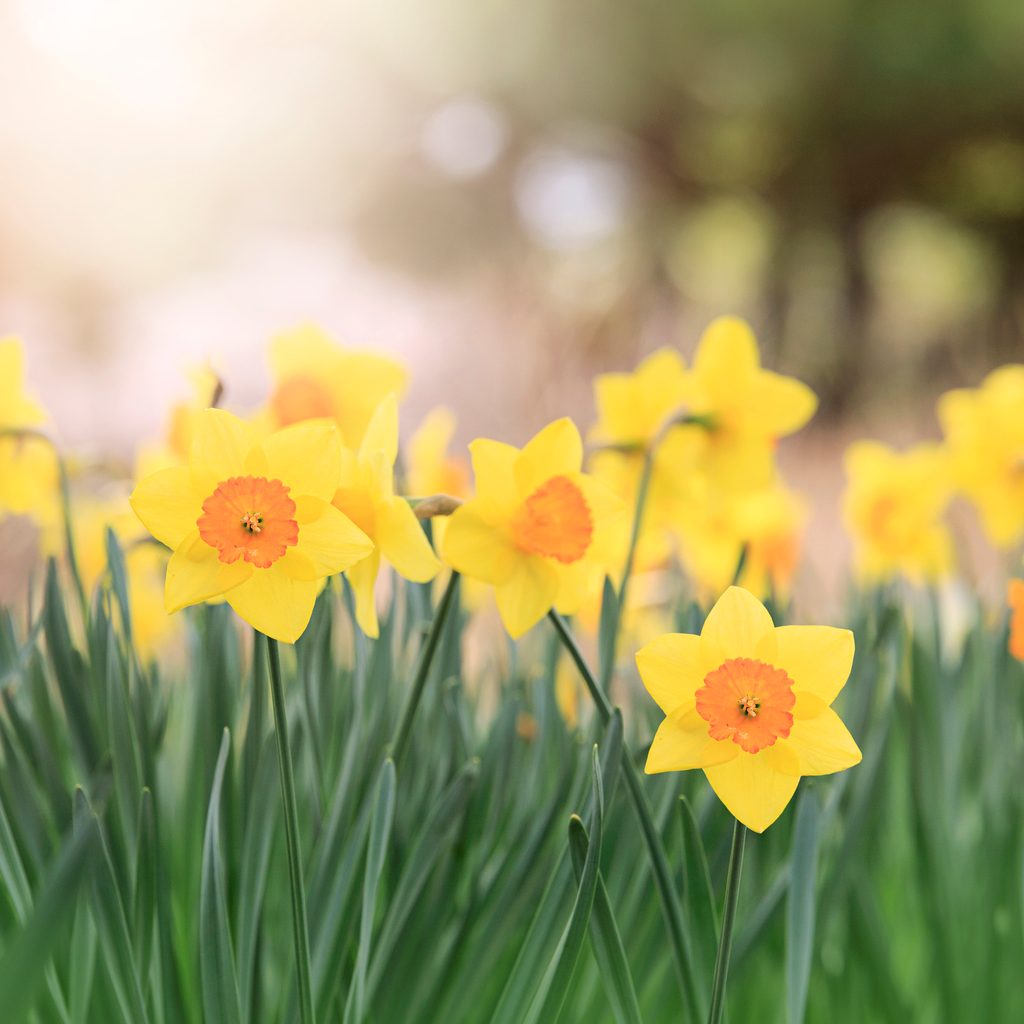
Daffodils are hardy in zones 3 to 9, which means they’ll come back after more than one growing season in these areas. They can have up to 20 flowers per stem and can rebloom the following year with proper care.
When do you cut back daffodils?
After daffodils bloom in late winter or spring, deadhead their flowers and keep their leaves. Removing spent blooms helps your plant invest more time into growing than putting out seeds. However, don’t cut back your daffodils entirely — allow the leaves to die out or keep them on for at least eight more weeks. Though they may look unsightly and yellow, you want the leaves to continue photosynthesizing to convert light energy into sugars that help your daffodils grow the following year.
To prevent your garden from looking too unruly, you can tie the leaves into a neat knot shape, although this cuts down how much light they receive. Once your daffodils die down, it’s helpful to place golf tees or plant markers next to them just so you know where they are.
If you’re new to flowering plants, daffodils are some of the easiest to maintain. Although they won’t coast by on total neglect, they’ll regrow year after year as long as you’re diligent about watering them and removing their spent blooms. After patiently overseeing their dormant period in the fall and winter, you’ll be able to enjoy their lovely flowers come spring.