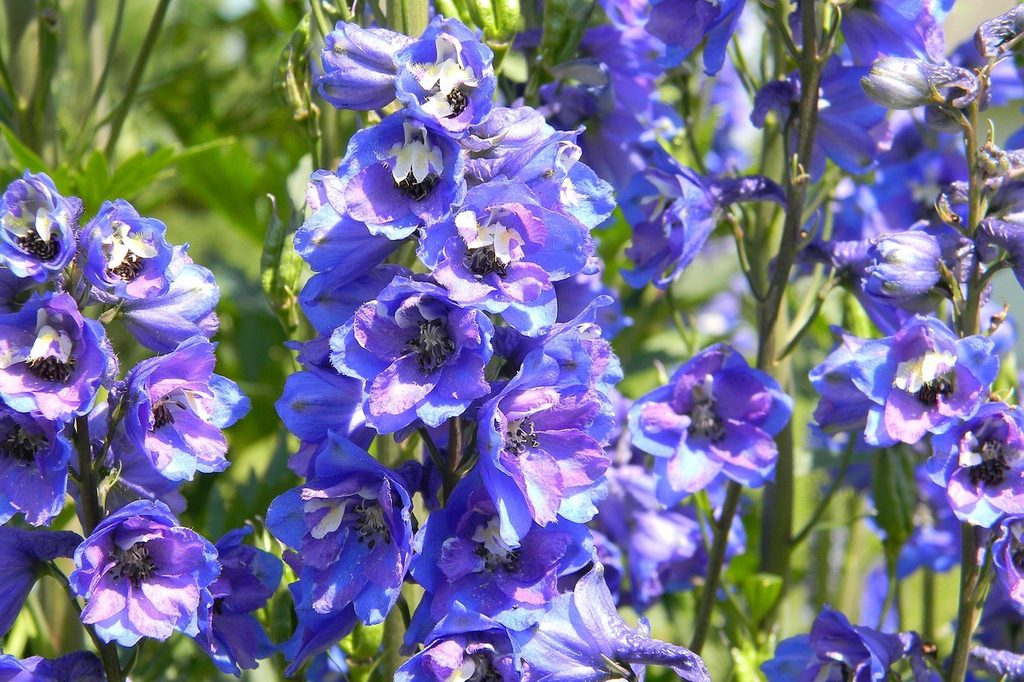
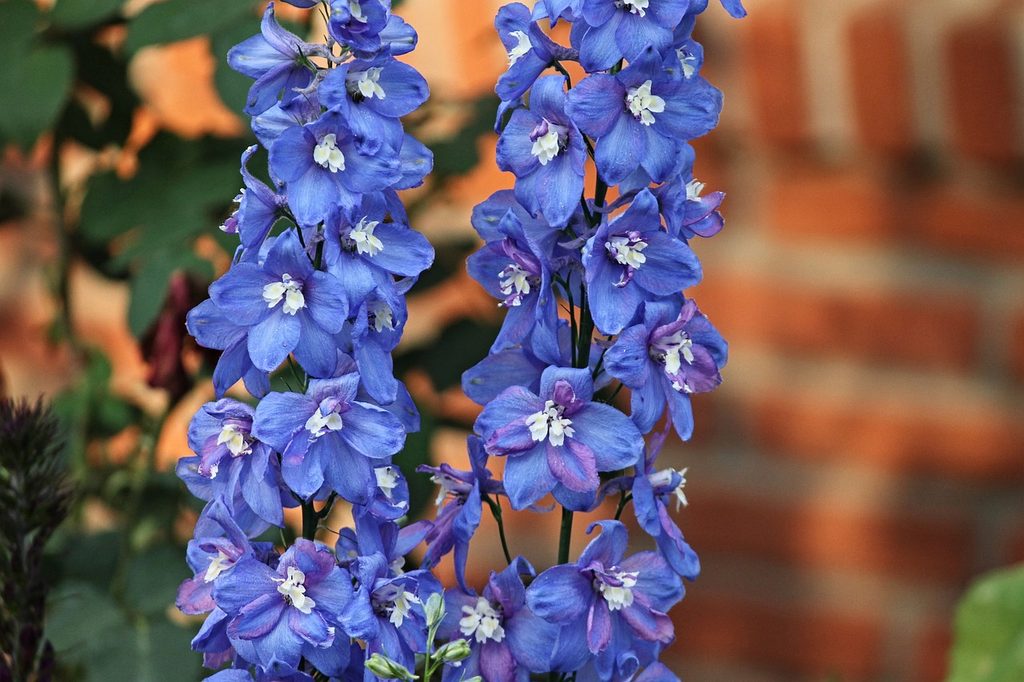
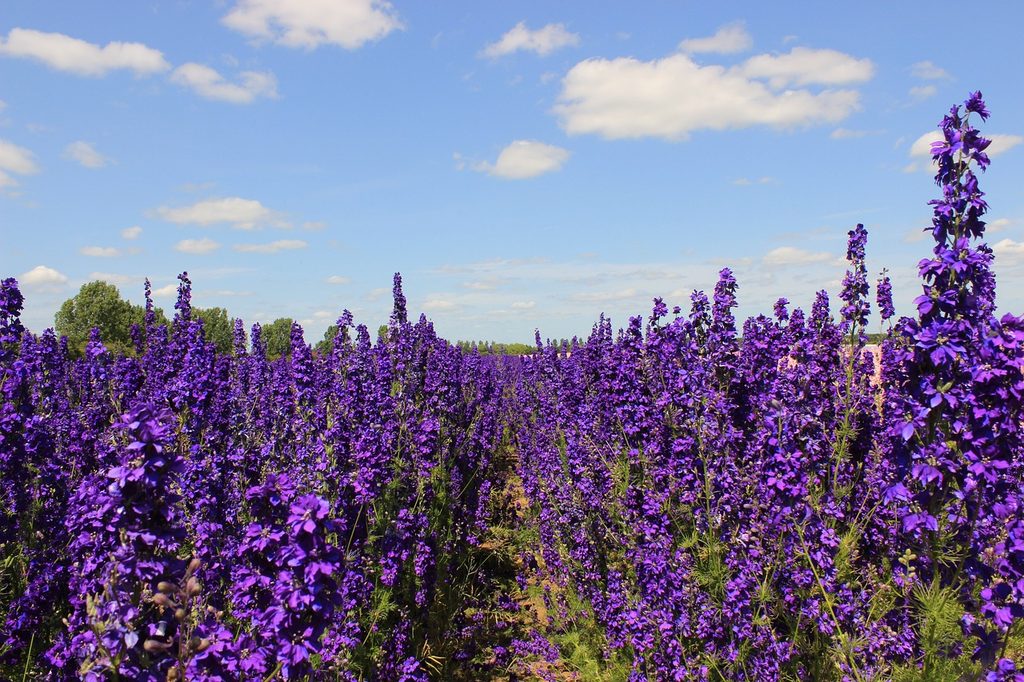
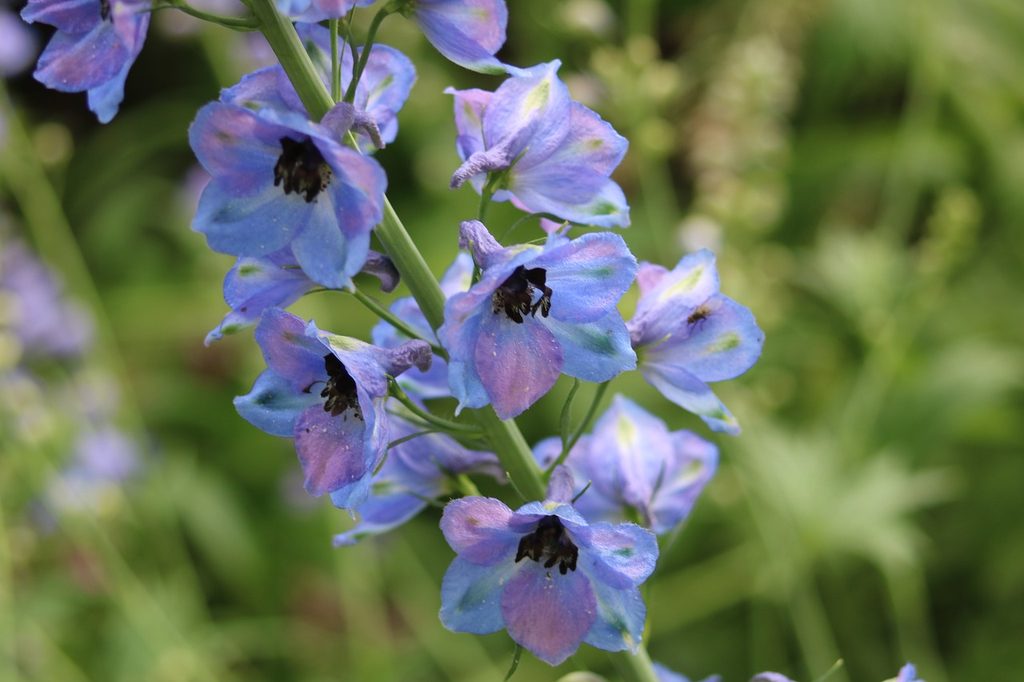
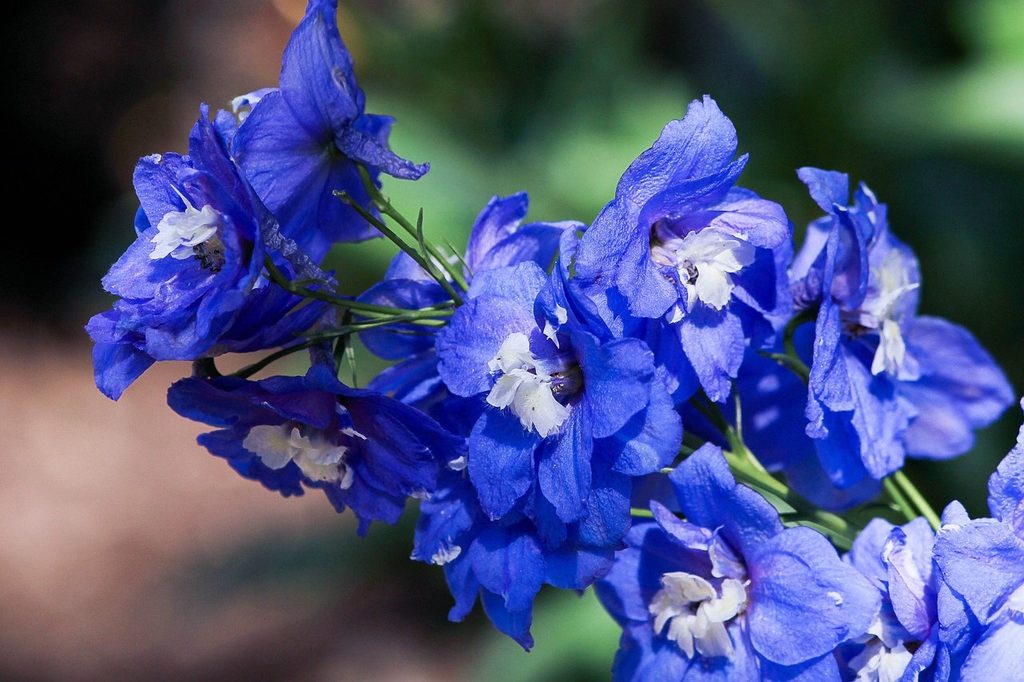
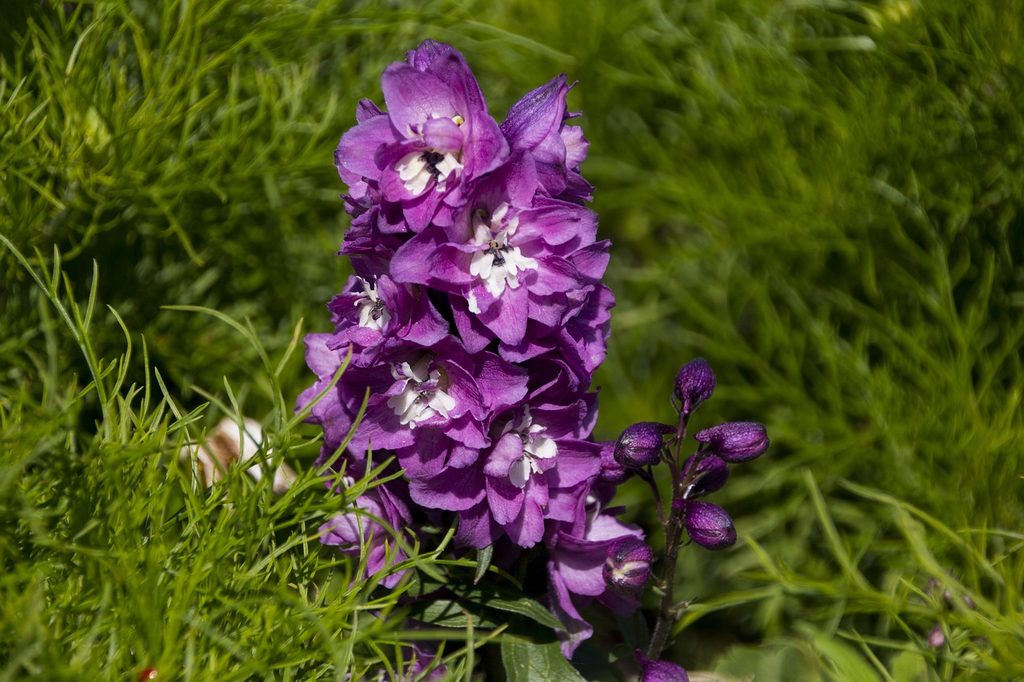
Larkspur, also known as delphinium, is known for its tall, brightly colored flowers. Coming in shades of pink, purple, white, yellow, and blue, larkspur is an easy-to-grow plant that looks stunning in most gardens and in containers. It’s also toxic, which can be a concern for gardeners with pets or small children. This guide to growing larkspur flowers will answer all your questions, so you can safely and successfully add this lovely flower to your home or garden.
Planting larkspur
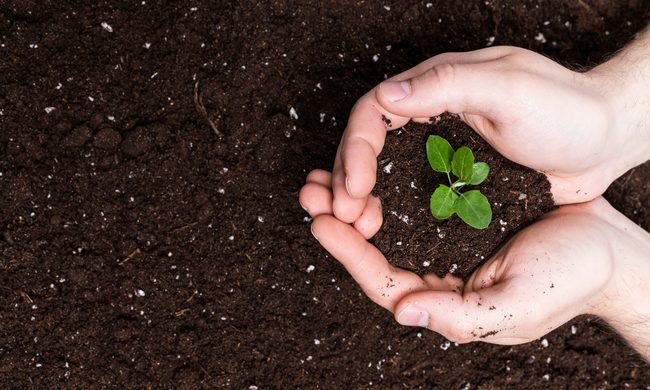
Start planting your larkspur in early spring or in the middle of fall when the weather is mild. You don’t need to plant the seeds deeply, only 1/8 to 1/4 of an inch deep. Space them roughly a foot apart. You can sow the seeds closer together, but you’ll need to thin them after they sprout so they have enough space. Larkspur can grow several feet tall, and while they won’t be nearly as wide, they will spread over time.
Choose a planting site that has well-draining soil and is in full sun for the best and brightest flowers. They can tolerate some shade, but you’re likely to see thinner growth and potentially some structural problems. Larkspur flowers planted in the shade are more likely to need staking. Soil drainage is important, as larkspur prefers lightly moist soil but can’t tolerate standing water.
Larkspur flower care
Larkspur flowers need fairly regular watering to thrive. While they can survive mild droughts, they will often stay smaller and have fewer flowers. Larkspur flowers prefer soil that’s moist but not soggy, so watering once or twice per week, depending on the weather, is typically enough. If the soil is still wet from the last watering, wait for it to dry slightly before watering it again to avoid overwatering your larkspur.
These flowers also benefit from deadheading. Removing wilted, faded, or older flowers makes room for new flowers to grow and encourages the plant to continue blooming. Luckily, larkspur makes an excellent addition to cut flower arrangements. Removing fresher flowers will have the same effect as deadheading, so you shouldn’t worry about using your garden larkspur for cut flowers.
Common problems with larkspur
Garden pests such as aphids and mites will sometimes bother larkspur. An insecticidal soap, neem oil, or attracting natural predators like ladybugs can help keep the population of these pests under control. Larger pests such as deer and rabbits rarely bother larkspur. You may see powdery mildew on your larkspur, especially during the summer. Thinning your garden to increase air circulation is a good way to prevent this, as is taking care with your watering routine.
Other common problems are related to planting and care. Larkspur plants that don’t get enough sun will be weaker, leaving them more vulnerable to pests and diseases. Stunted growth, limp stems, and fewer, smaller, or duller flowers are all signs of lack of light. Moving your larkspur or removing whatever is shading them to increase the amount of sun they receive is a good idea.
Larkspur companion plants
Larkspur pairs well with a number of other full-sun plants. You can mix your larkspur with other tall flowers like sunflowers, foxglove, hollyhock, geraniums, peonies, certain rose varieties, and clematis. Spacing and timing are important for these combinations. You don’t want the faster-growing plants to cast shade on the smaller seedlings that are still sprouting. However, once they’re all mature, these combinations are excellent for attracting pollinators. In addition to bees and butterflies, many of these flowers are also attractive to hummingbirds.
Herbs such as sage and catmint are also attractive to pollinators and grow well with larkspur, and decorative grasses can add some texture to the mix. Avoid plants that prefer full shade, need consistently wet soil, or are sensitive to moist soil. Take care when planting your larkspur near ferns, orchids, cacti, succulents, and moss.
How dangerous is larkspur?
Larkspur is highly toxic, and although the exact amount of toxicity varies depending on the plant’s age and growing condition, even a small amount can cause serious problems. Young plants, new growth, and seeds are the most dangerous, but adult plants are still toxic. Larkspur is toxic for pets and people, so it’s best to avoid planting it in areas where pets and children play. While not as dangerous to touch, it can cause skin irritation, so it’s recommended to wear gloves when caring for it. If you suspect a pet or person has eaten larkspur, it’s important to calmly and quickly seek medical attention.
This beautiful but dangerous flower is a delightful addition to most gardens and can grow safely as long as the proper precautions are in place. Whether you’re thinking of adding larkspur to an existing garden or planning a new one, this easy-to-grow flower is quite a sight to behold. Now that you know all about how to care for them, you’re ready to start growing your own larkspur flowers!