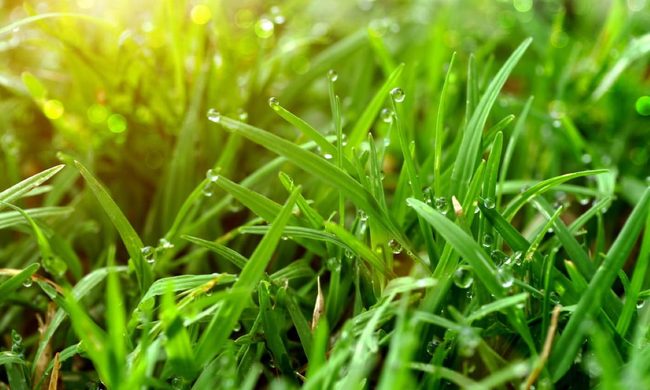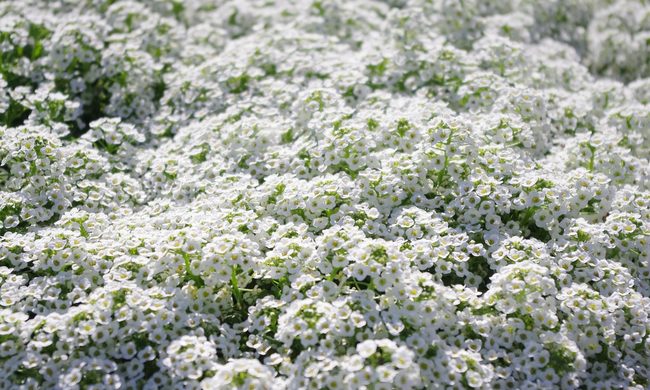
If you’re not interested in keeping a lawn but still want ground cover for your garden design, consider low-growing ornamental grasses. What’s great about short ornamental grasses is they add texture and dimension to your space without requiring too much maintenance; whether you keep them next to beds or grow them in planters. Want to give your outdoor space a makeover? Ahead are some of the best types of low-growing ornamental grasses to incorporate into your landscape.
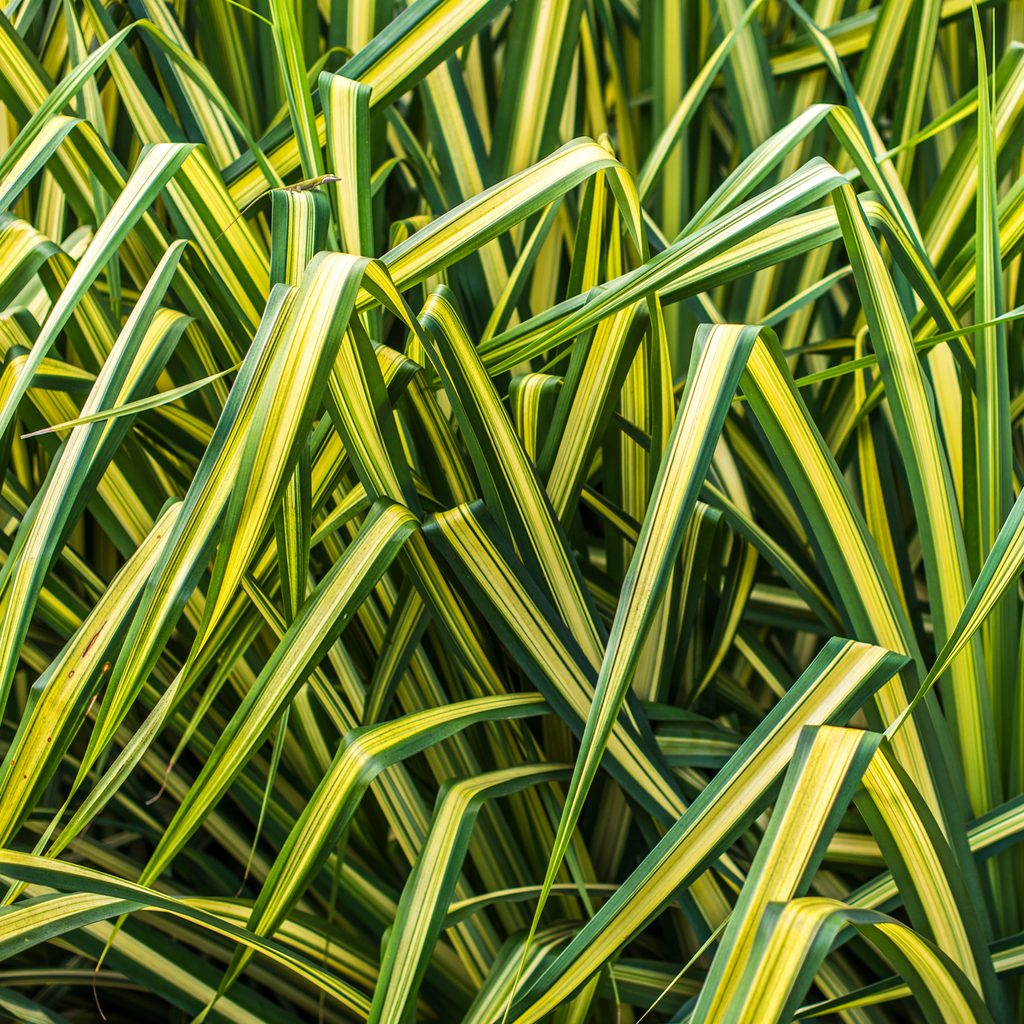
1. Japanese sedge
Native to central and southern Japan, Japanese sedge grows in tufts with flat, dark green leaves for lovely ornamental grass landscaping — the blades, which can reach up to a foot tall, may have cream edges if you have a variegated variety. Great for ponds and water gardens, this short ornamental grass thrives in moist soil and full sun in zones 6 through 9.
Bear in mind, this sedge type is rather sensitive, so keep it away from extremely dry or soggy soil. As long as you get its watering needs down, it’s a low-maintenance plant that resists deer and pest damage. Around spring, you can prune and divide your sedge grass to keep its growth in check.
2. Japanese forest grass
Japanese forest grass comes from the rocky cliffs of Hanshu, Japan. It’s an elegant ground cover with slender stems and bright foliage — some types may even turn pink in cool weather. In zones 5 through 9, it works well as a border plant for shady areas and thrives in well-draining soil.
Though the blades of grass can grow up to a foot long, it tends to grow slowly in loose, delicate mounds. While Japanese forest grass does best in shady areas, you can grow it in full sun if you live in a cooler climate. A weekly watering schedule should suffice for Japanese forest grass, particularly as temperatures rise in the spring and summer.
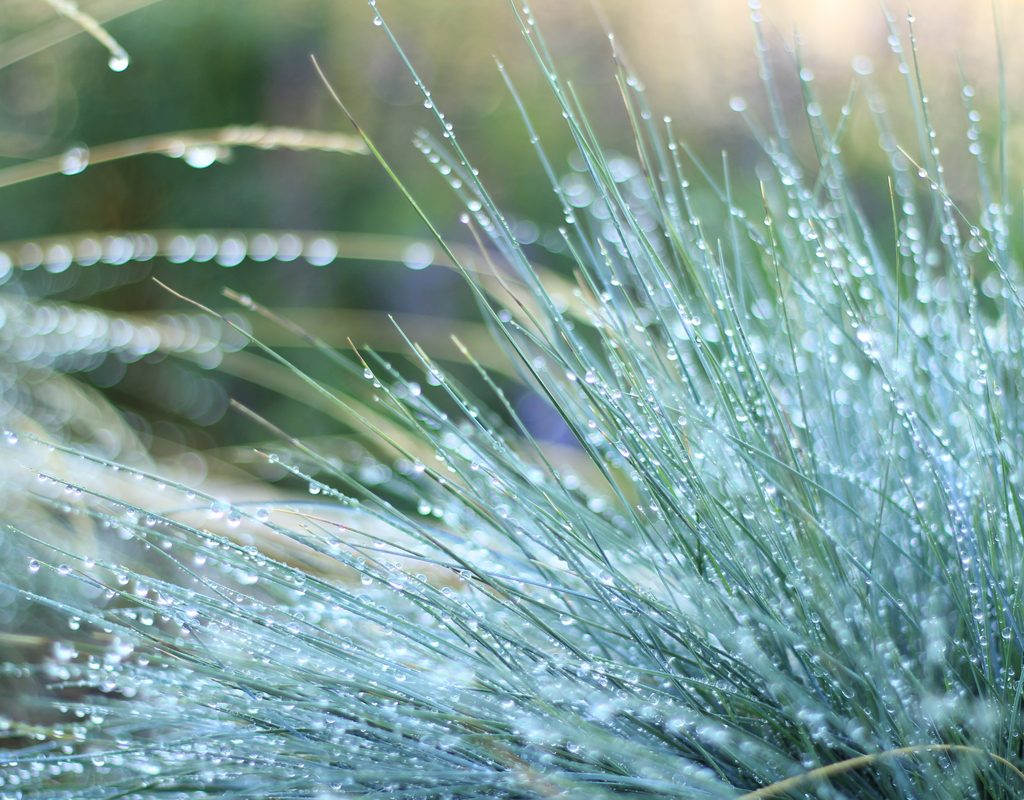
3. Blue fescue grass
Fescue doesn’t grow as low as your typical manicured turf grass, but it is a short-growing grass when you consider it in the world of ornamental grasses — and that includes “tall” fescue, which hovers around 4 inches tall. It grows in tight mounds with a lovely icy blue color.
Perfect for zones 4 through 8, it’s ideal for using as an edging or border plant, growing anywhere between 4 and 12 inches tall. It can handle drought, too, so you won’t need to worry about your water bill increasing. For the best results with blue fescue, give it well-draining soil and full sun.
4. Tufted hair grass
One of the prettiest low-growing ornamental grasses, tufted hair grass features fine, hair-like blue-green grass that emerges in clumps — later in the growing season, it turns a golden color. It typically stays around a foot tall, so it’s ideal for less spacious gardens; it can even grow in containers. Known for its low-maintenance nature, it enjoys partial shade, pairing well with ferns. You can care for it anywhere from zone 4 to 9, where it’ll attract butterflies.
5. Hameln fountain grass
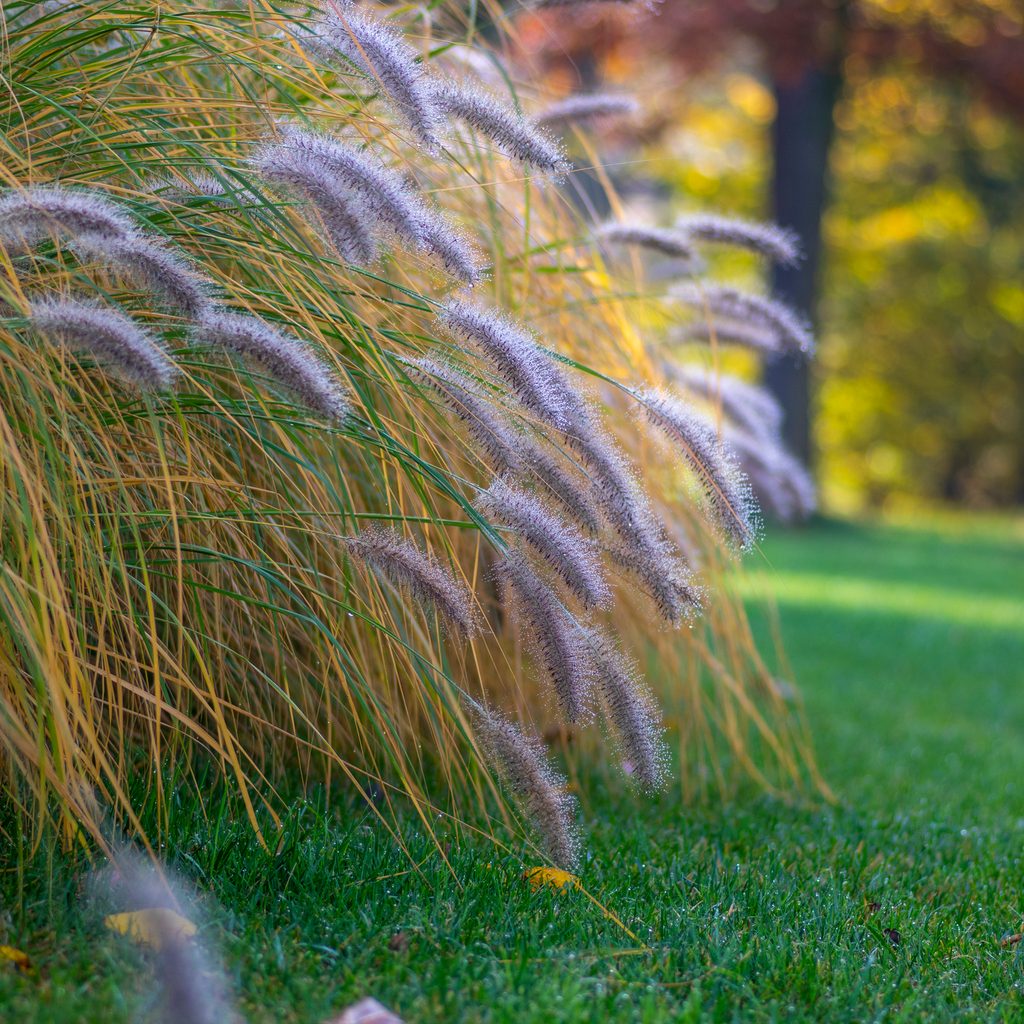
A dwarf variety of fountain grass, Hameln fountain grass features tan seed heads that turn pinkish in the fall for a whimsical touch next to your shrubs and flowers. You can even keep it in containers, which can be great vessels for its fountain-like, arching blades.
This variety of fountain grass thrives in full sun in zones 4 through 11, only occasionally needing watering in hot weather. Plus, it resists deer and draws in birds, so you’ll attract pollinators without bringing in critters that munch on your plants.
6. Mondo grass
Mondo grass can range from light green to deep red. But one thing’s certain: It’s a low-growing ornamental grass. It only reaches up to 8 inches tall, and some dwarf varieties even stay around 4 to 6 inches. It’s been used for a long time in Japanese gardens to add texture with its tufted mounds of fine foliage. In the summer, the grass can even put out blue flower spikes and blue blackberries for extra color. Mondo grass does well in the shade in zones 6 through 11.
If you want short ornamental grass that doesn’t require too much watering or trimming, consider a low-maintenance ornamental grass. Low ornamental grass can work as a ground cover to fill up space and add texture without requiring too much upkeep. What’s great about small ornamental grasses is they’ll do well in containers in small spaces, too. You’ll have a wide range of options available, whether you love fescue grass with pale blue blades or fountain grass with whimsical seed heads.