Sunny flower gardens are bright and cheerful, but they aren’t the only option. There are many ways you can design a garden. If your yard is shady or the only space you have available is on a shaded, covered porch or patio, there are still plenty of gorgeous flowers you can grow.
Whether you want to deepen the shade with cool colors for a soothing vibe or brighten it up with a pop of color, there are shade-loving perennial flowers for every garden. To help you get started on your next flower garden, here are some of our favorite perennial shade flowers for your yard.
Columbine
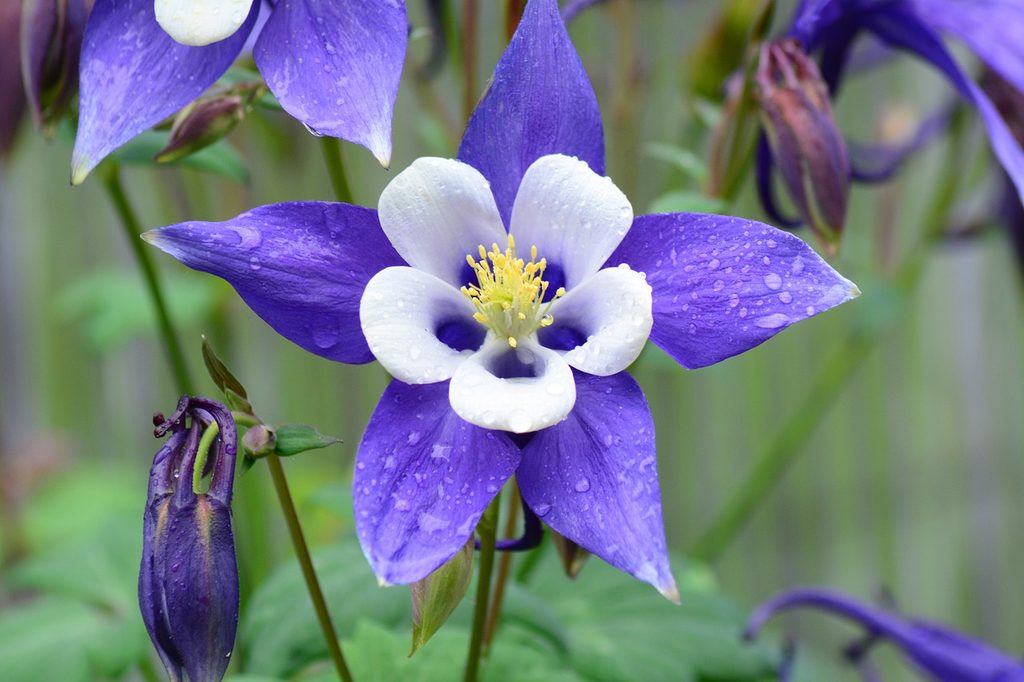
Columbine flowers, also known as aquilegia, are lovely native wildflowers with species suited to a variety of environments. While some of the most common columbine varieties are blue or purple, red and pink columbine flowers are also available. With their star-shaped flowers and white centers, columbine flowers are both elegant and cute.
While they can grow in partial sun, these flowers tend to do best in partial or dappled shade. If trees shade part of your garden, the filtered sunlight coming through the branches is perfect for columbine flowers. For the healthiest flowers, plant your columbine in rich, well-draining soil and water them regularly.
Heuchera
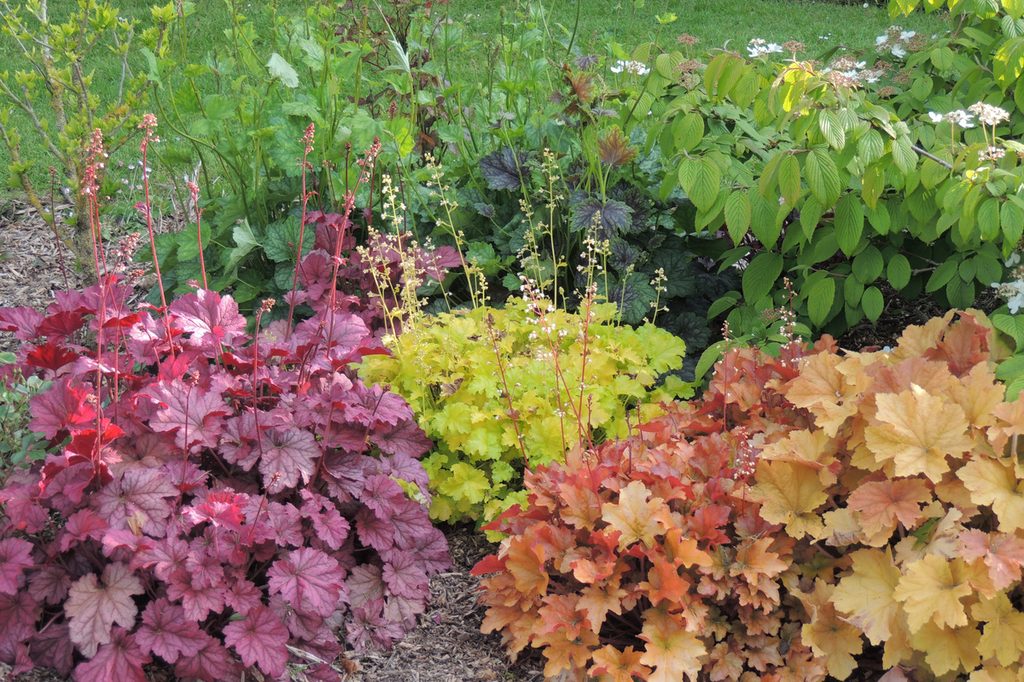
Heucheras are also known as coral bells and named for their flowers, which are typically shaped like little bells and coral pink in color. The flowers grow on tall, thin stems, perfect for adding a bit of height to your garden, and they’re quite cute when used in cut flower displays. However, the real star of the show is the leaves of the heuchera plant, which are large and vibrantly colored.
These plants come in colors that range from deep purple to bright orange, and they love partial shade. While the leaves may be the star, the flowers are cute enough to earn them a place on this list of perennial shade flowers, anyway. Morning sun with afternoon shade, dappled shade, and light shade are all great options for these plants. Heuchera can’t handle soggy soil, so be sure to plant them in well-draining soil.
Hellebore
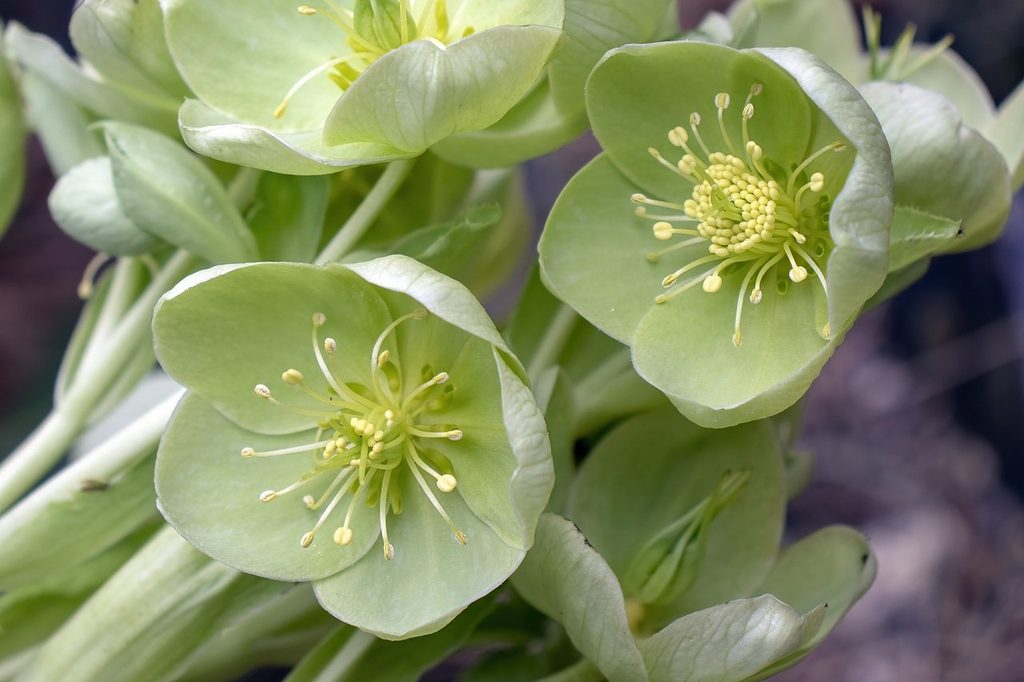
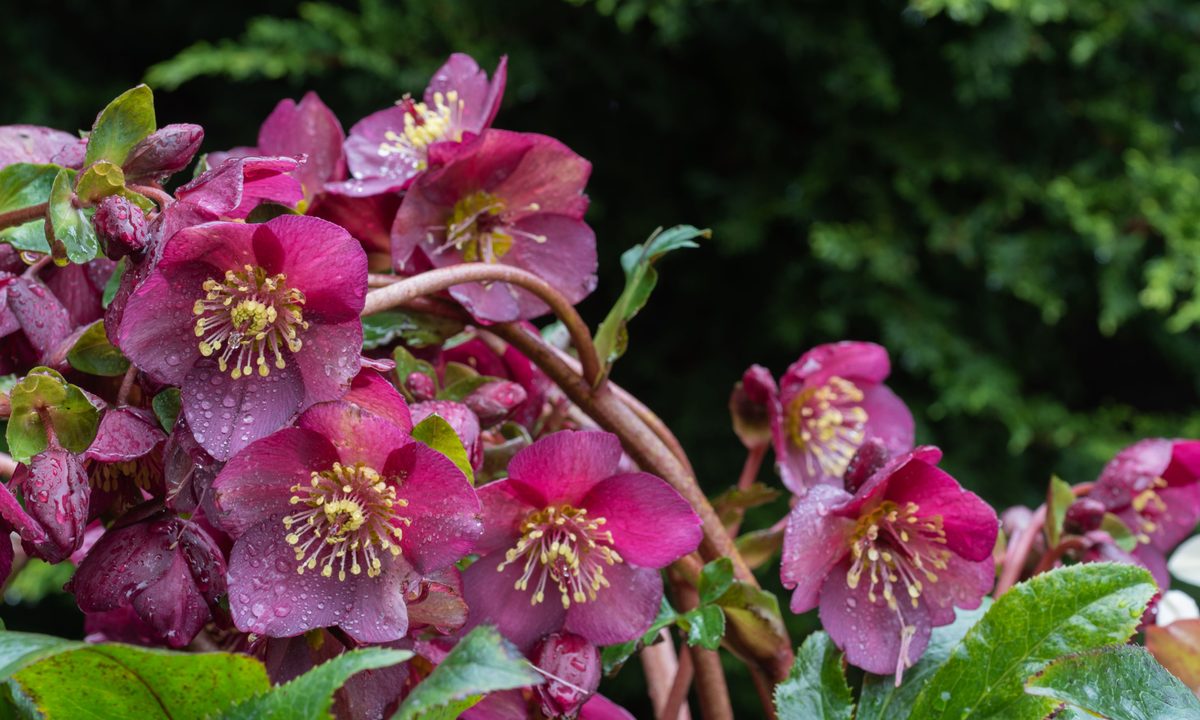
Hellebore flowers, or lenten roses, are lovely flowers that grow well in all types of shade. While they can tolerate full sun, hellebore prefer shadier spots with rich, slightly acidic, well-draining soil. They can even grow in deep shade, although you might see fewer flowers. Hellebores come in a few different colors, including white, pink, purple, and green, which are perfect for matching any aesthetic you prefer.
With delicate-looking flowers and a hardy disposition, these flowers are great for gardens and containers. Some varieties of hellebore feature down-turned flowers, giving the plant a sweet, almost shy look that’s perfect for whimsical gardens. Others have flowers that face up for a more classic appearance.
Wild blue phlox
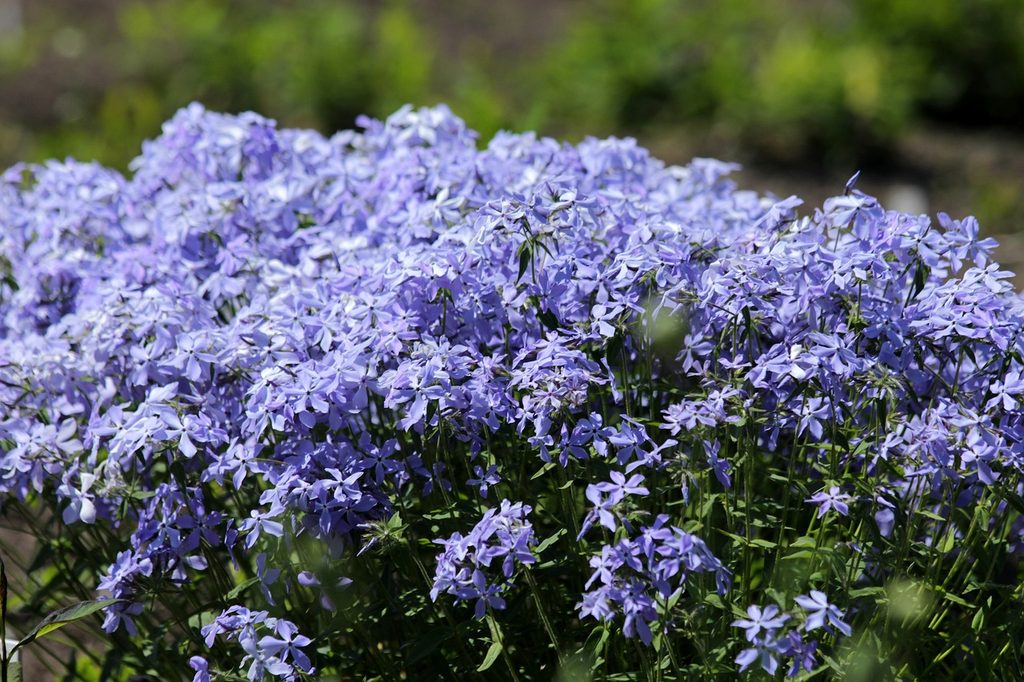
Depending on the species of phlox you’re growing, phlox can grow in full sun to shade. For shady gardens, wild blue phlox, or Phlox divaricata, is the best choice. This type of phlox features small, delicate-looking blue or light purple flowers. While some blue phlox varieties are brighter, many are pastel, lending themselves well to a sweet and innocent aesthetic. Perfect for fairy gardens, woodland-themed gardens, or simply as a border to a pathway, these perennial shade flowers can also grow in containers.
For the best flowers and healthiest plants, grow your wild blue phlox in rich, well-draining soil and partial or dappled shade. If wild blue phlox isn’t to your liking, its cousin creeping phlox also enjoys shady gardens.
Foamflower
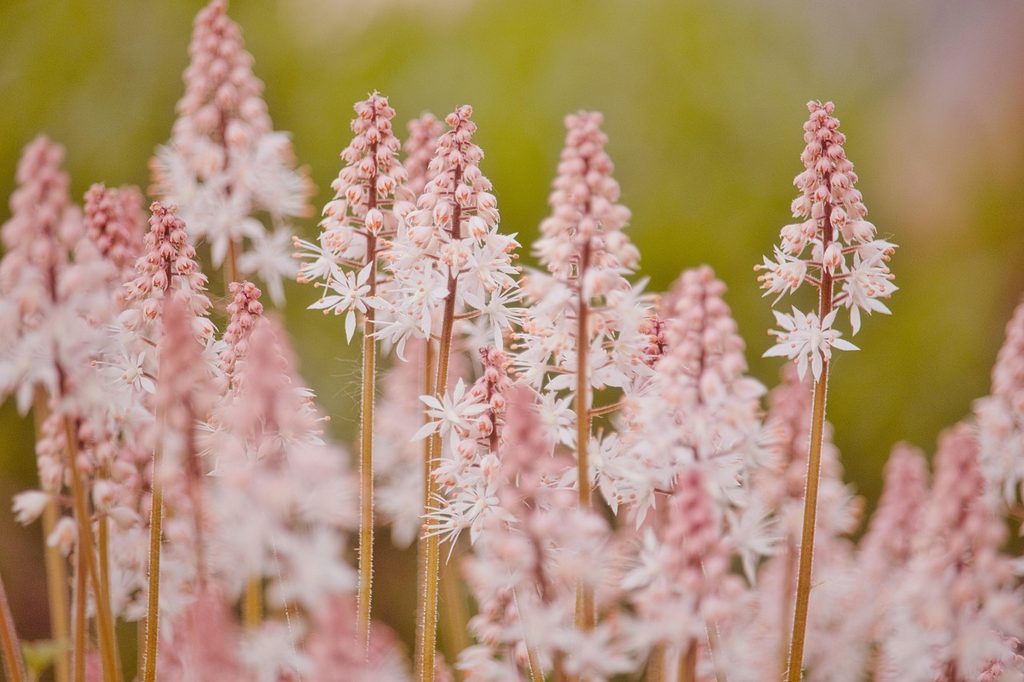
Foamflower, or Tiarella cordifolia, is a rather unique-looking flower. Before the flowers bloom, they look a bit like grape hyacinth flowers, with short flower spikes lined with small round buds. Once they bloom, the reason they’re called foamflower become obvious as the flowers take on a fuzzy, foam-like appearance. The flowers are typically white or pale pink, with a cluster of broad yellow-green leaves around the base.
You can find these flowers in forests, so they grow best in rich, well-draining soil and dappled shade. Despite their unusual appearance, Tiarella cordifolia flowers are native to North America and often found in the eastern states, as well as parts of southern Canada.
These perennial shade flowers are all great choices to fill your shady garden spots. From the sweet, pastel phlox flowers to the brighter heuchera plants, no matter what aesthetic you’re hoping to cultivate, one of these flowers is sure to match. Of course, if you’d rather plant something you can eat, there are always incredible shade-loving fruit trees you can grow.