There are many amazing trees you can grow in your yard or garden, from trees with beautiful flowers to those that simply provide shade. If you’re a fan of vibrant autumn foliage, maple trees might already be on your list, but did you know there are different types of maple trees for different gardens? No matter what size or aesthetic you’re looking for, this guide to the different types of maple trees will help. Here are our four favorite maple trees that you can plant today.
Bigleaf maple
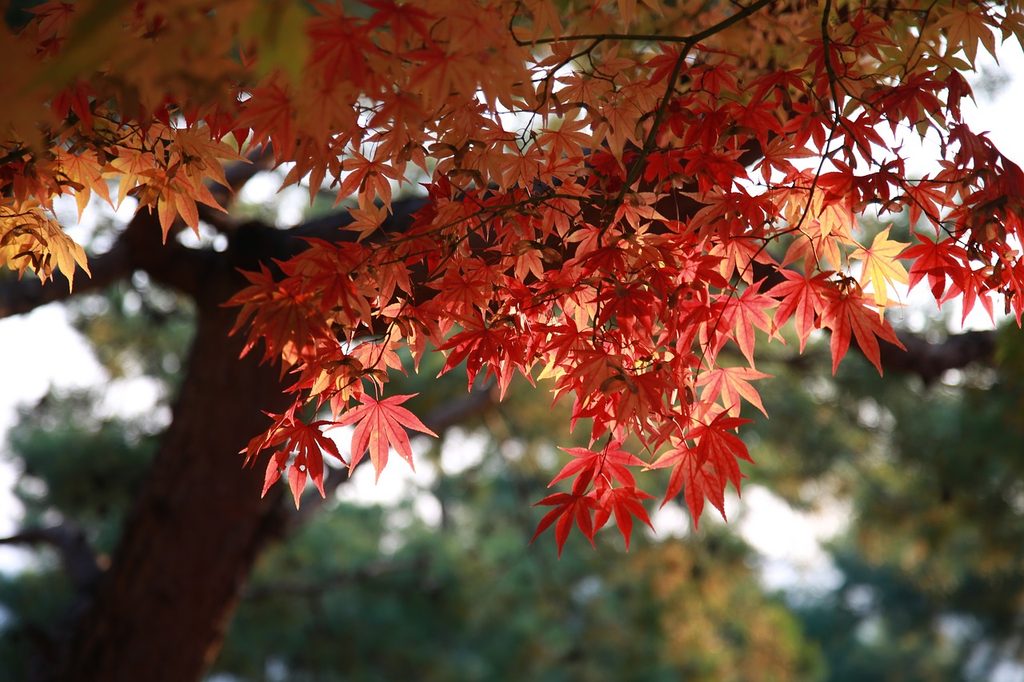
Bigleaf maples are native to the Northwestern U.S. and Canada, and they can grow quite large. If you have room for one, bigleaf maples are excellent at providing shade. They grow quickly, too, so you won’t have to wait quite as long as you would with other trees. In addition to being beautiful, bigleaf maple trees are also popular with wildlife. The seeds are a common food source for birds and squirrels, and any seeds that sprout into saplings are a favorite snack of deer. The flowers, while small, are also edible, and you can eat them in a variety of ways!
Japanese maple
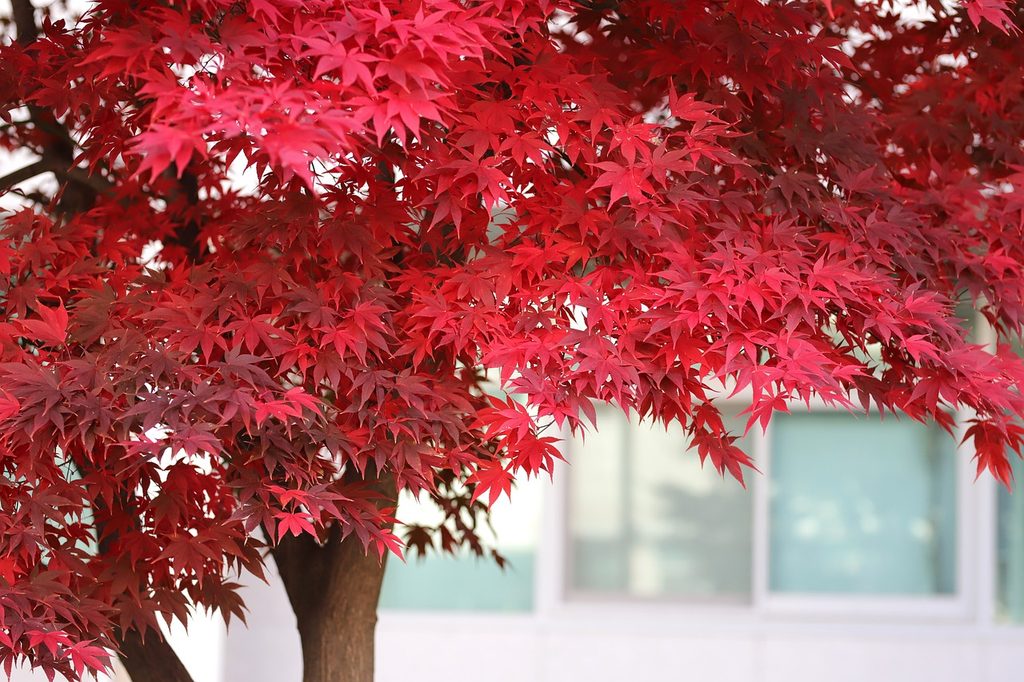
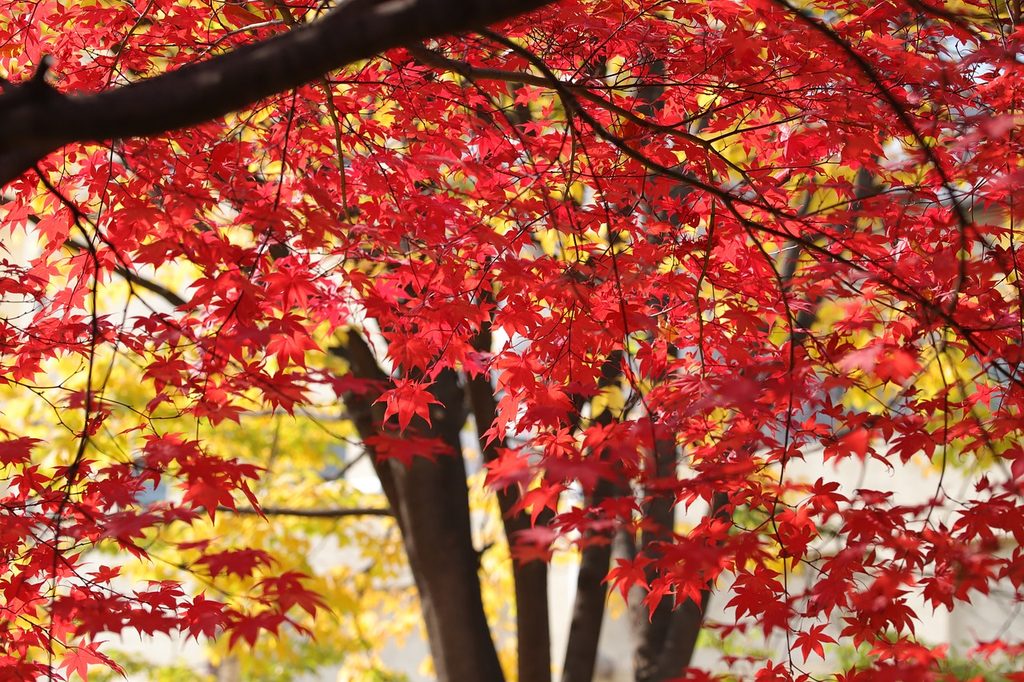
Japanese maple trees are one of the smaller types of maple trees, and they can grow in both gardens and containers. Their smaller size and low-maintenance care make them a great choice for gardeners who don’t have the time or energy to invest in a larger tree or for gardeners who may be moving to a new home in the next few years and want to take their tree with them. Japanese maple trees are perhaps best known for their fall foliage, which, like all maples, is a beautiful red color. However, Japanese maples come in many interesting shades of red, from deep maroon to a light, rosy red, and even some variegated varieties.
Paperbark maple
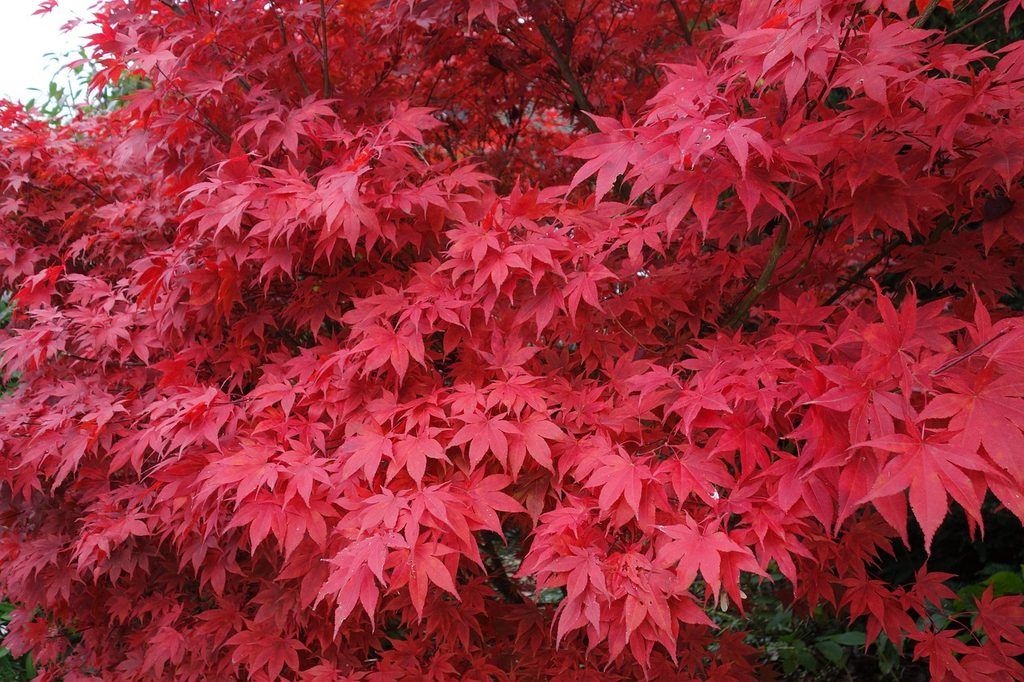
Paperbark maples are an excellent choice if you love the fall colors of maple trees, but wish they were more interesting during the other seasons. Paperbark maple trees get their name because of their distinctive bark, which is a copper or cinnamon color and peels or curls like strips of paper. They make for a stunning display, but they are a bit harder to find than the more common bigleaf or Japanese maple trees. Paperbark maples are relatively small and slow-growing trees, and they can grow in large containers with proper care.
Sugar maple
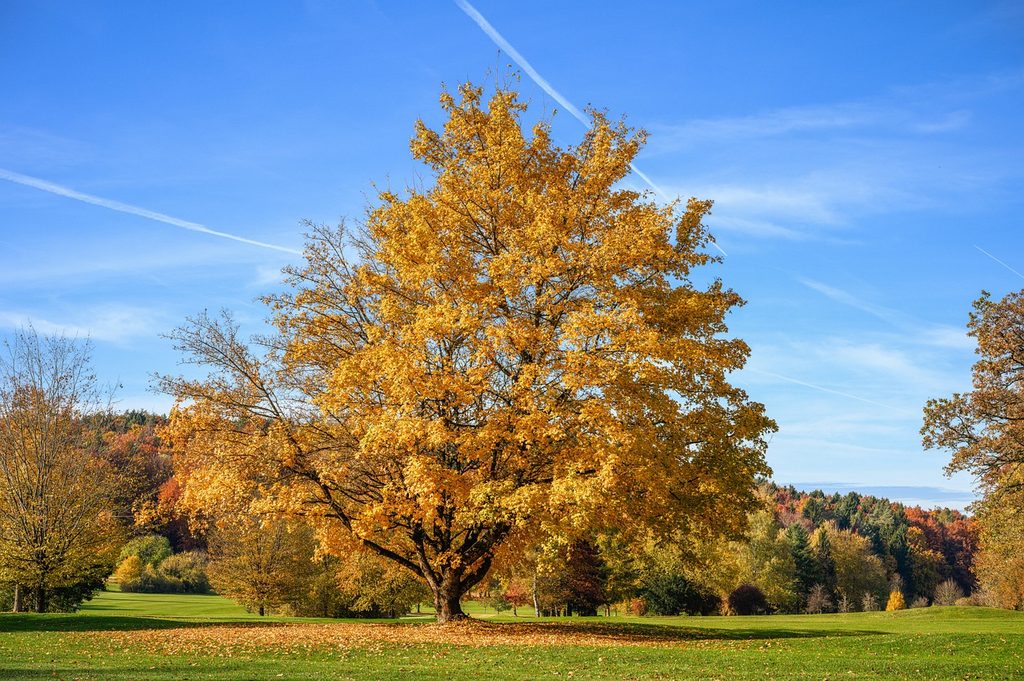
Sugar maples are known for being beautiful, but they’re best known for being delicious. While most types of maple trees can’t create maple syrup, sugar maples are the usual choice, because of their higher sugar content. You can even make your own maple syrup if you grow a few of these trees, although they’re also just nice to have in your garden. Sugar maples are native to the Eastern U.S., and they are lovely medium to large-sized trees with vibrant orange or red foliage in the fall.
There are many types of maple trees, but these four cover a good starting range. From the smaller Japanese maple to the tasty sugar maple and the classic bigleaf maple to the unique paperbark maple, one of these four maple trees is sure to be a good fit for your yard or garden. Maple trees are fairly easy to care for, and their beauty certainly makes them worth having around!