

When it comes to plant care, winter is when most plants go dormant, so it’s mostly safe to assume that your gardening chores should be done, right? Well, not quite. Winter is the ideal time to prune trees and shrubs so they can refocus their energy into productive growth in the spring. If you're unfamiliar with pruning, it can seem like a daunting task. That's why we've put together this guide on how to prune trees for the winter, to help you feel more confident!

Why is it a good idea to prune trees during winter?
Late fall or late winter is the best time to prune trees and shrubs to give them structure and remove unwanted twigs. It all boils down to the fact that this gives them time to heal right before they push out new growth during the spring. Since trees are dormant during wintertime, they experience less stress when you cut them.
Removing diseased and unwanted branches will help the tree redirect its energy towards growing healthy leaves. There’s also a matter of safety; a low-growing branch could pose a threat to cars or pedestrians. On your end, you’ll be able to see the tree more clearly because there are fewer leaves on the tree in the winter.
Other seasons aren’t ideal for pruning. If you decide to clip back your tree during late spring or summer, you could slow down the growth of your tree since you’ll be taking away the leaves, which convert sunlight into energy for the plant. Keep in mind that the right time to prune also depends on the plant — some trees might prefer different times of year for pruning.
The best trees for pruning during winter are evergreens and shade trees. You might want to hold back on snipping spring-flowering plants until after they bloom, and you should only start trimming pine during the spring months.
What conditions do you want when you prune trees in the winter?
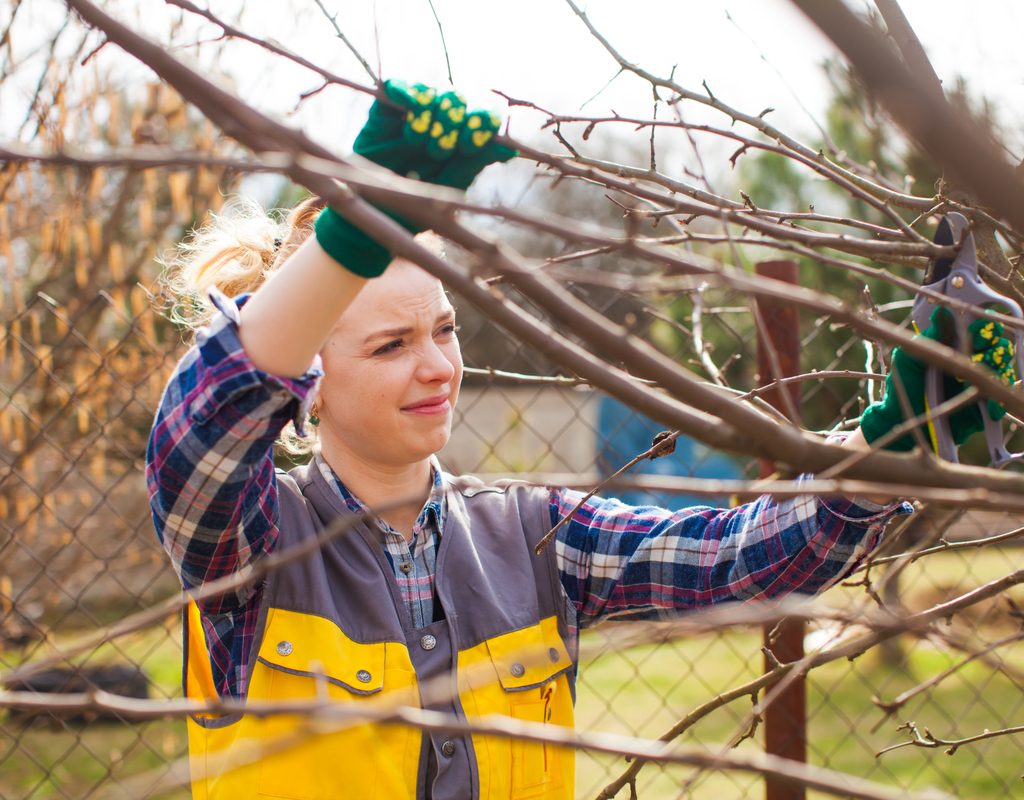
Ideally, the best condition for pruning a tree is when it’s a dry, mild day. You don’t want to cut your tree on a wet winter day because that could introduce fungus and rot to your exposed branches. You also don’t want to prune when it gets too cold, as your tree might not harden before the cold sets in. It’s best to keep off pruning for late winter or early spring when the temperatures are milder.

What to remove when you prune trees
The purpose of pruning is to encourage more vigorous growth and remove debris and unwanted parts.
Step 1: Remove lower and smaller branches to improve how much sun and airflow your tree receives.
Step 2: Get rid of any damaged or diseased wood.
Step 3: Avoid the urge to over-prune, especially if you’re working with a smaller sapling.
It’s a good rule of thumb to remove no more than 2% of your tree branches. Don’t overdo the pruning; you still want to maintain the general structure of your tree. It’ll be easy to tell where to cut deciduous trees, as all of their leaves fall off during the winter.

How do you prune trees in the winter?
Here’s a step-by-step guide to strategizing your pruning routine this winter.
Step 1: Pick out a clean and sharp pair of shears to start the pruning process.
You could also use a tree saw or a pair of loppers if you’re working with a large tree. For safety, consider grabbing goggles and a hard hat. If your tree is tall, it might help to bring along a ladder, too — but definitely avoid using a saw while on a ladder.
Step 2: Assess if there are any damaged or diseased branches that you want to cut.
Step 3: Consider how you want to shape your tree and where you need to make cuts.
It’s best to make big cuts instead of small ones to avoid over-stressing your tree with too many snips. Take note of branches growing in the wrong direction, whether that’s into each other, downwards, or into the tree. You also don’t want too many branches inhibiting the plant’s growth by covering the crown.
Step 4: Cut at nodes where branches attach to each other.
Try not to cut too far or close to a bud — cut right above the bud with a clean, 45-degree diagonal angle. If you snip too far from a node, it may form a stub. If you cut too close, you might gouge into the tree and permanently damage it. Eyeball about a quarter-inch away from a node when you make your cut.

What could happen if you prune incorrectly during winter?
Pruning during the winter certainly comes with benefits, but there are a few risks. Here are things that you want to avoid while cutting back your tree.
- Pruning during wet weather. You could introduce rot and fungus to your tree, which would effectively weaken it.
- Pruning too close to the bud. You could gouge inwards at your tree. This could make it more vulnerable to pests and pathogens that could harm it.
- Pruning too far away from the bud. You could leave an awkward stub.
- Pruning when it’s too cold. Your tree might not harden before the cold gets to it with frost damage.

What happens if you can't prune your trees in winter?
If you're thinking back to previous winters where your trees went unpruned, you might be worried about how that impacted the trees' health. Don't panic! In most cases, trees will survive without pruning - after all, no one prunes a wild forest! However, pruning does provide plenty of benefits. If your tree has damaged or diseased branches that go unchecked, this can impact the health of the tree over time. You're more likely to see fallen branches after a storm, too.
So, what should you do if you're unable to prune your trees? Not everyone has the physical ability, time, or tools needed to complete this task, but luckily there are options. Landscaping and tree service companies typically offer pruning and trimming services, and they're often less busy during winter, making it easier to schedule an appointment. If the tree is in a shared space, you can also talk to the other people you share the space with, to see if they'd be willing to help care for the tree.
Pruning your tree or shrub during winter is the best time to help usher in vigorous spring growth. It takes some timing, assessment, and hard work to get it done, but you’ll be on your way to a strong tree with strategic cuts. If your tree needs a haircut, go ahead and get those pruning shears out when you’re experiencing a mild winter day!