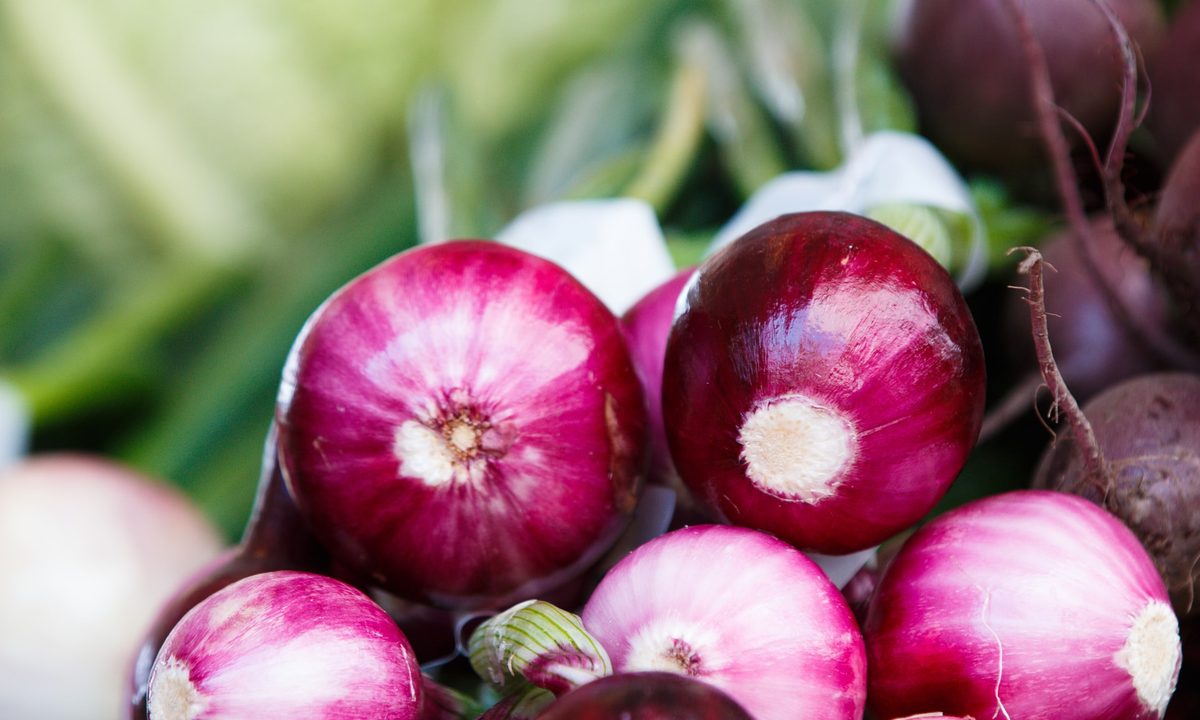
Given how bulbous and big they can get, onions may seem like they exclusively belong in a spacious garden plot — but you can actually grow them inside containers. When you plant onions in pots, your mileage may vary with size and yield, of course. But with careful planning, you can harvest this versatile vegetable from your very own container garden.
Why would you want to grow onions in a pot? The most common answer is space — not everyone has the room to grow onions in a bed or plot. Some regions also have cold winters, during which it may be better to transport onions inside instead of leaving them out in the cold. Most onions thrive in temperatures between 55 to 75 degrees Fahrenheit, although some are hardy down to 20 degrees. Although you have the option of using row covers and frost blankets, bringing them indoors is the easiest way to protect them from harsh freezes.

Picking your onions
Before you start, pick an onion variety that’s best suited for your climate zone. With containers, it makes the most sense to grow green onions for a prolific yield, but you can grow full-sized onions with persistence.
Zone 6 and colder:
If you live in a region where summer days are long, go for long-day onions such as Walla Walla and Yellow Sweet Spanish types. These develop bulbs with 14 to 16 hours of light a day.
Zone 7 and warmer:
If you live in a region where summer days don’t vary in length as much, go for a short-day variety, such as Georgia Sweet and Sweet Red. These develop bulbs with 10 to 12 hours of light a day.

When to plant your onions
You can start your onions with seeds, sets (that is, immature onion bulbs), or even scraps. For long-day onions, plant in early spring to harvest late summer. For short-day onions, plant in fall to pick during the spring. Seeds should be sown two to three months before your last spring frost before you bring them outside.

Planting your onions
To grow your onions in containers, keep in mind the kind of onion that you plant when deciding on a pot. Green onions can handle an 8-inch pot, but with an onion bulb, you’ll want 3 inches of space around each onion that you grow. In either case, your vessel should be at least 6 inches deep, so container gardeners usually plant bulbs inside of tubs or barrels. Any more than 10 inches may be too much, as you may make your bulbs susceptible to root rot.
Step 1: Select a pot and ensure it has drainage. If it doesn't, drill holes in the bottom so that excess water can drain out.
Step 2: Fill the pot with a well-draining soil. Onions aren’t particularly finicky about their growing medium as long as it isn’t too acidic or nutrient-poor.
Step 3: Plant seeds 1 inch deep and set at least 2 inches deep.

How to care for your onions
Now that your onions are planted and established, they'll need some special care to develop.
Step 1: Bring in artificial lights for indoor onions.
Onions grown outdoors need between 10 and 16 hours of sunlight a day. Indoors, you can get away with using fluorescent and incandescent lights, but supplementary grow lights can be helpful. Make sure not to leave your lights on all through the night, as onions need a period of darkness to grow as well.
Step 2: Fertilize regularly.
Although fertilizing isn't strictly necessary, a boost of nitrogen every two to three weeks throughout the growing season can lead to bigger onions. A 5-10-10 or fish-emulsion fertilizer should be sufficient.
Step 3: Water your onions deeply.
Onions grown in containers will need more frequent watering because the soil will dry out faster. Feel the soil each week — if the top is dry, it’s time to grab your watering can. Overwatering may encourage root rot, but underwatering can lead to smaller onions.
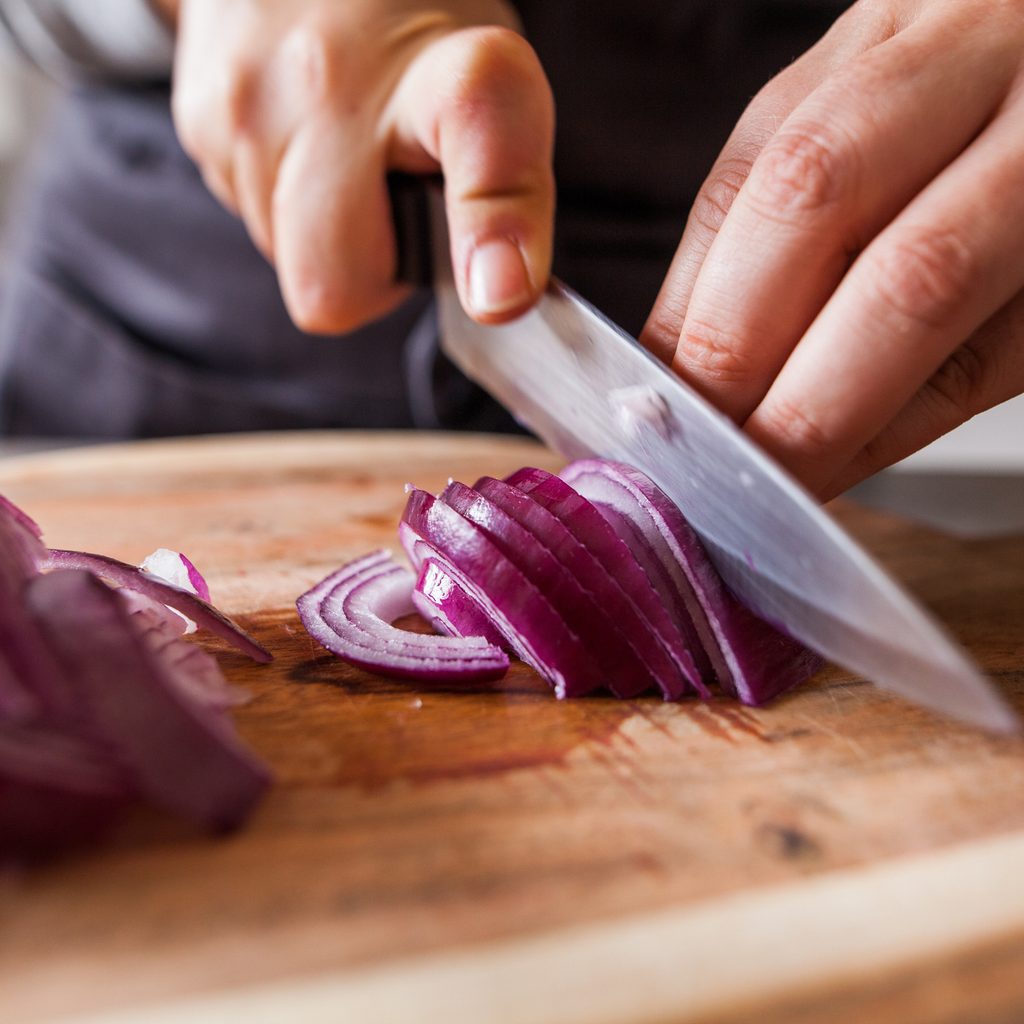
When to harvest your onions
Full-sized onion heads can take anywhere between two to four months to be ready for harvest.
Step 1: When you’re harvesting onions at the seedling stage, you can cook with them like green onions or bring them outside.
Step 2: If you have plans for full onions, thin out your green onions so that the bulbs have 5 to 6 inches of space surrounding them by the time of your harvest.
Step 3: Usually, you’ll know when a full onion is ready for picking when the top leaves turn dry and yellow — check around the two- or three-month mark by digging up your onions.
Growing onions in containers isn’t a futile endeavor — and yes, that includes not only scallions but also full-sized onions. As long as you know which varieties to pick and how to plant them, you’re off to a great start. With ample light and watering, you’ll have this versatile culinary bulb accessible from the comforts of your kitchen or patio.