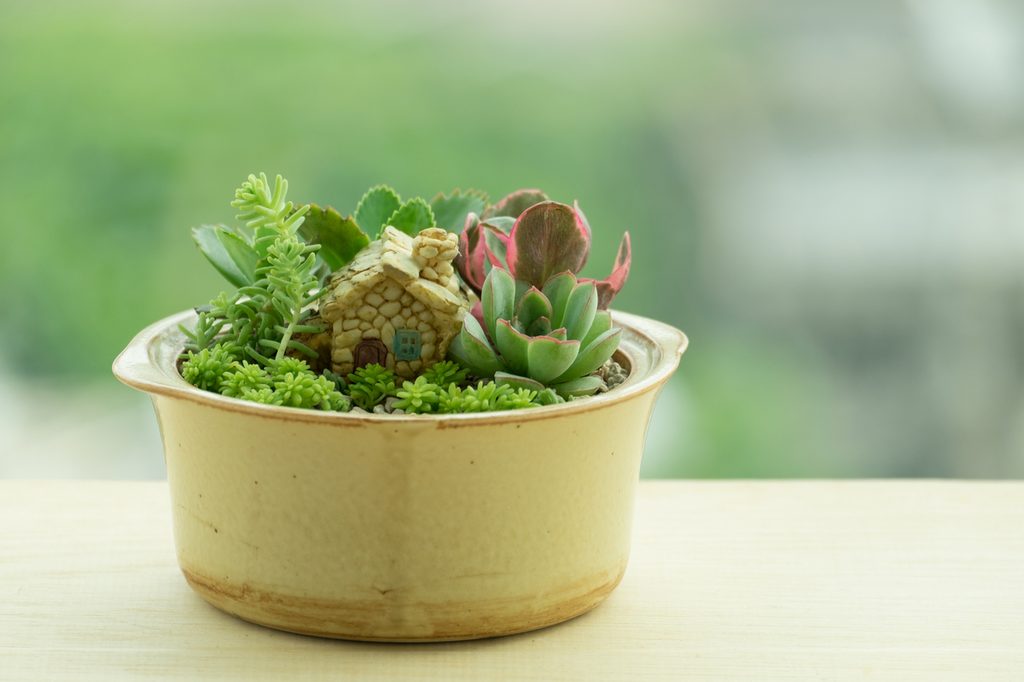
If you’re a fan of fantasy, whimsy, and fun, then you’ll love fairy gardens. These little gardens are perfect spring projects that can add a little extra color and life to your home and garden. Making fairy gardens is a fun activity for the whole family, and you can easily tailor them to fit your personal tastes and aesthetics. There are garden kits you can use to build one, but it’s also easy to make your own.
Whether you want something simple and elegant or a little bit goofy, fairy gardens are a great way to express yourself creatively in the garden. Here’s what you need to know to get started, plus a few tips to help inspire you!
What is a fairy garden?

Fairy gardens are miniature gardens decorated and designed to look like they belong to fairies, gnomes, elves, or other small magical creatures. You can make them in containers or set them up as part of a traditional garden. They typically include little pathways, small houses, and other decorations. Some people decorate their fairy gardens with small fairy figurines, colorful rocks, little signposts, and furniture, such as benches, swings, and bridges.
If fantasy creatures are too whimsical for your taste, you can also design your fairy garden for birds, squirrels, or other small woodland creatures. You can even decorate it with little ceramic or clay animals. Another idea is to theme a different way, such as building your garden around a dark, gothic manor or making it look like Central Park in New York City. Or, decorate it like a miniature version of the rest of your garden. Your only limit is your creativity!
What plants suit fairy gardens?
It’s important to consider the scale of the plants you choose in relation to the house or other decorations. Using small plants keeps the scale consistent and makes the garden look more natural. Small plants can be used for the lawn or garden inside the fairy garden.
Larger plants look massive next to the other decorations and may make them difficult to see. If you’re creating a fairy garden in a traditional garden, then planting large plants at the edge of it can put the fairy garden in perspective and make it look somewhat hidden or secret. Medium-sized plants look large in comparison to the decorations, but are less likely to throw off the balance of the garden. You can use medium plants inside the fairy garden, taking the place of trees or large shrubs.
Another thing to consider is what kind of care each plant requires. Since the scale of a fairy garden is small, the plants are often closer together. Using plants with similar care requirements makes your garden easier to care for, as there is less room to care for each plant individually.
Here are some great choices for a fairy garden:
- Miniature ferns
- Moss
- Succulents
- Creeping thyme
- Clover
- Floss flower
- Sedum
- Wood violets
Container vs. traditional fairy gardens
You can design a fairy garden in a single container (or multiple containers to create a fairy village) or incorporate it into your existing garden. Both have their benefits. Containers can be moved, allowing for easier care and space conservation. Container fairy gardens also make great gifts! However, you’re limited to the size of the container or containers you’re using.
Incorporating your fairy garden into your traditional garden or yard gives you more room to spread out. You can also use preexisting landscape elements, such as trees, hills, or water features, and design your fairy garden around them. However, it’s much more difficult to move them. If you decide you want to change the location of your fairy garden, you have to move each piece and plant individually.
Decorating your fairy garden
What size and theme your fairy garden decorations are is entirely up to you, but there are a few things to consider. First, think about how much space you’re willing to dedicate to your fairy garden and how small you want the decorations to be. Larger decorations take up more room in your garden, but smaller ones make the plants look much larger by comparison.
Next, consider whether you want to buy or make your decorations. In either case, make sure the decorations are suitable for the outdoors. If you decide to buy your decorations, thrift stores often have ceramic houses and figures that you can repaint to fit your garden’s theme. You can also find them online or in other home goods stores. Fish tank decorations and dollhouse furniture are also viable options.
You can make your own decorations by sculpting them from clay or carving them out of wood. It can also be fun to collect and repurpose natural materials, such as rocks, leaves, twigs, and seeds. You can sew or glue these together to form houses or furniture. Make sure to use nontoxic glue, paint, glitter, or other decorations, especially if your fairy garden is part of your traditional garden or yard.
Do fairy gardens have to be miniature?
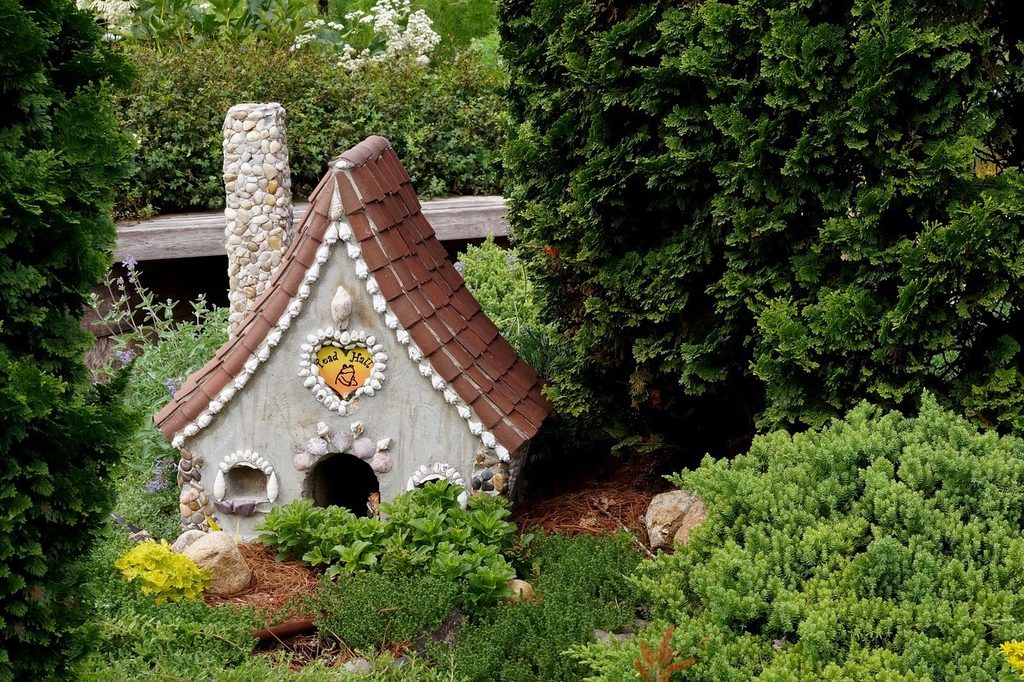
Traditionally, fairy gardens are miniature, since the idea is that look like they belong to fairies. However, there are no real rules. If you’d rather create a person-sized fairy garden, perhaps with the intent of making you and your guests feel like the fairies, then go right ahead! Focusing on plants with vibrant flowers and unique textures is a great way to bring a larger fairy garden to life.
Wisteria, lilac, willow trees, ferns, azaleas, and weigela are a good place to start. Pair that with some whimsical garden furniture modeled to look like mushrooms or tree stumps or that have an ornate and curly design to them for the perfect setting for a fairy-themed party. Steer clear of adding too many small plants, since the larger your plants are the smaller and more fairy-like you and your guests will feel!
Making a fairy garden is a cute and creative way to have fun in your garden. You can make them to match any personality or aesthetic, and you can easily create more than one. You can even design an entire fairy village in your garden if you like! Fairy gardens can be as simple or complicated as you want. Why not make one for yourself and see how you like it?