
  1. Home
  2. Inspiration
  3. How tos

Save money on your water bill: How to make a rain barrel

Tips for setting up a rain barrel in your yard or garden

Add as a preferred source on Google
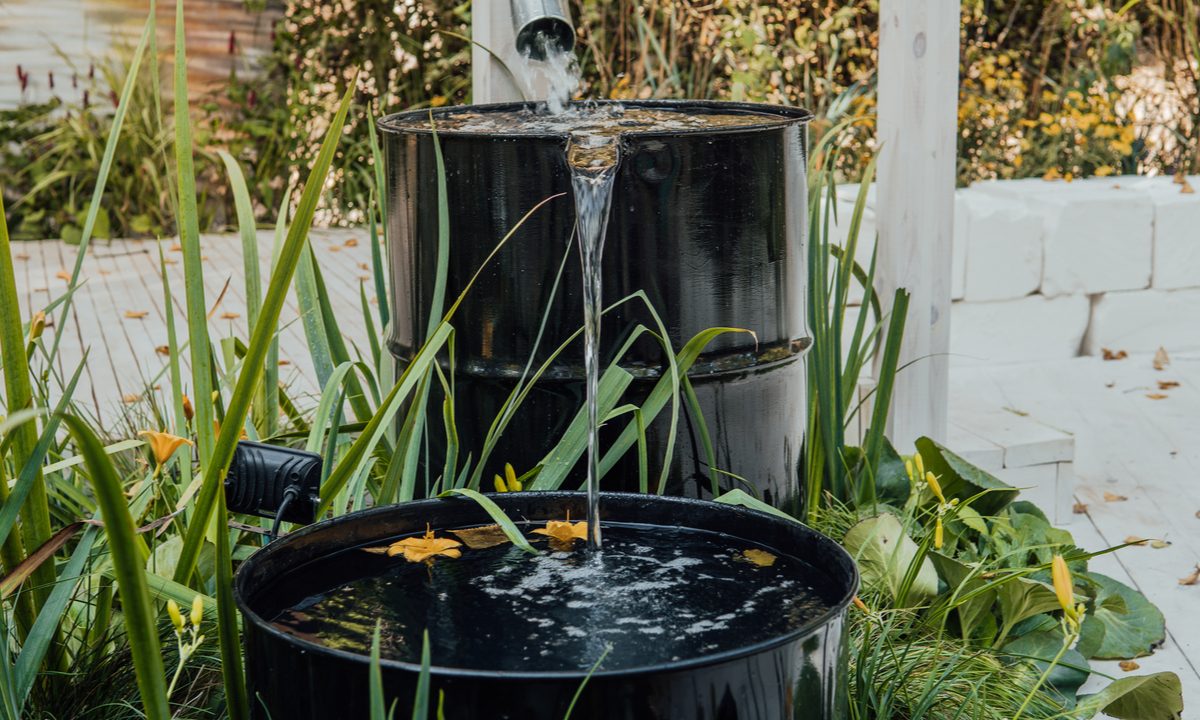
Overflowing rain barrel in a garden
Anton Dios / Shutterstock

Gardening is a soothing hobby, but it can also put stress on your wallet. While many gardening practices are meant to help you save money by growing your own food, all those plants still need to be watered, leading to a higher water bill. You can lessen it by growing a drought-tolerant garden, but what if the plants you want to grow simply aren’t the drought-tolerant types?

Installing a rain barrel and collecting rainwater for later use is an easy way to water your garden without impacting your wallet. Here’s how to get started!

Recommended Videos

Difficulty

Easy

Duration

1 hour 30 minutes

What You Need

  • Large solid barrel with a lid and spigot

  • Bricks, flat stones, or cinder blocks

  • Saw

  • Flexible elbow pipe

A rain barrel next to purple flowers
Waldemar / Unsplash

What are the benefits of a rain barrel?

Rain barrels aid in water conservation efforts, since you’re using stored rainwater rather than tap water. This lowers your water bill, but it’s also good for the environment. Tap water comes from lakes, rivers, groundwater, and reservoirs, which can drain quickly during a drought.

Using rainwater relieves stress on these water systems. Rain barrels require no electricity or chemicals, so they’re eco-friendly, and they allow you to care for plants in droughts.

A garden shed with a green rain barrel
ramboldheiner / Pixabay

How to set up a rain barrel

There are a few different kinds of rain barrels and rainwater collection systems, but here is how to set up the simplest one:

Step 1: Choose a large, solid barrel.

Plastic barrels are popular, as they are lightweight, easy to find, less expensive, and easy to modify. You can also find a barrel specifically made to be a rainwater barrel at many hardware or home improvement stores.

Step 2: Add a lid and a spigot or tap on your barrel.

Lids help keep mosquitoes and debris out and can be a screen or solid type. A spigot or tap helps you fill buckets more easily for watering cans. However, you can always choose to remove the lid and fill your containers by dipping them instead.

Step 3: Choose a location with relatively flat ground that is in front of a downspout and that is near where you will be using the water.

Step 4: Elevate the rain barrel using bricks, flat stones, or cinder blocks.

This gives the barrel stability, helps with water pressure, and gives you easier access to the collected water. Make sure the rain barrel is as close to the downspout as possible.

Step 5: Measure where the rain barrel comes to on the downspout, marking the place.

Step 6: Cut the downspout where you marked using a saw, removing everything below the mark.

Don’t discard the section you remove! When the rain barrel isn’t in use, you can replace it to keep the downspout functional.

Step 7: Attach a flexible elbow to the downspout, angling it to direct water into the rain barrel.

Rain barrels are useful tools that help you conserve water. Whether your interest is in reducing your water bill, helping your garden through a drought, being more eco-friendly, or a mixture of all three, setting up a rain barrel can help. This relatively simple tool can have a big impact!

Attract migratory birds to your yard with these simple tips
Here are some easy ways to invite birds into your outdoor space
Migrating bird flocks

In early spring, many bird species begin to migrate to their spring and summer homes. If you live along a migration path, you should start seeing birds that you normally wouldn’t find in your garden, making this an exciting time for birdwatchers! From the beautiful rufous hummingbird on the West Coast to the East Coast’s orioles, migratory birds are crossing over every part of the U.S. Just because they're flying through your neighborhood doesn't mean they'll visit you're garden, though!

If you want to see gorgeous migratory birds from the comfort of your own home or front porch, then we're here to help. This simple guide will teach you what you need to know about how to attract migratory birds to your yard.

Read more
What is no-dig gardening? Here’s how to do it
Start your own no-dig garden today
A heliotrope plant growing in a garden

There are as many ways to design a garden as there are gardeners, with more variations and methods than we can count. Many of these variations offer benefits, ranging from the soothing effects of zen gardens to the ecological benefits of native wildflower gardens. One beneficial gardening method you might want to try out is no-dig gardening. If you aren’t familiar with this technique, you might be confused by the name. How can you grow a garden without digging? We’ve put together this guide for just that reason, and the answers are simpler than you might imagine.
What is no-dig gardening and is it right for you?

No-dig gardening doesn’t mean you never dig at all -- you’ll still need to dig holes if you want to plant seedlings or mature plants. It just means that digging is limited to only the times when it's necessary. By limiting the amount of digging you do, your garden can more closely mirror the natural environment, leading to fewer weeds, better drainage, and healthier soil.

Read more
Save money and the planet with these food waste apps
Try these apps to help reduce food waste and save the environment
Fresh vegetables with a knife on a wooden surface

According to the USDA food waste FAQs, between 30 and 40% of the nation's food supply goes to waste. The food itself ends up in a landfill, and the time and energy needed to produce it goes to waste as well. Considering the amount of electricity involved in the production, you can understand how this can add up to create a massive impact on society and the environment. While these numbers may feel overwhelming, there are now apps aimed at reducing the amount of waste and redistributing it to those in need.

Whether you're hoping to reduce your own food waste by passing your excess on to your neighbors or looking to pick up a grocery store's surplus, these food waste apps will be a big help to you and the environment. 
The best food waste apps

Read more