
Gardening comes in a variety of forms and fashions, and everyone’s garden will look a little different from their neighbor’s. However, there are a few things that can be counted as gardening staples. Plants are a staple, for example, as well as light and water. Mulch is not quite a gardening staple, but it is certainly very common. It has several uses, and, of course, can be made from multiple materials. If you’re wondering what the difference is between organic and inorganic mulch and which one may be right for you, here’s the full breakdown!
Organic mulch
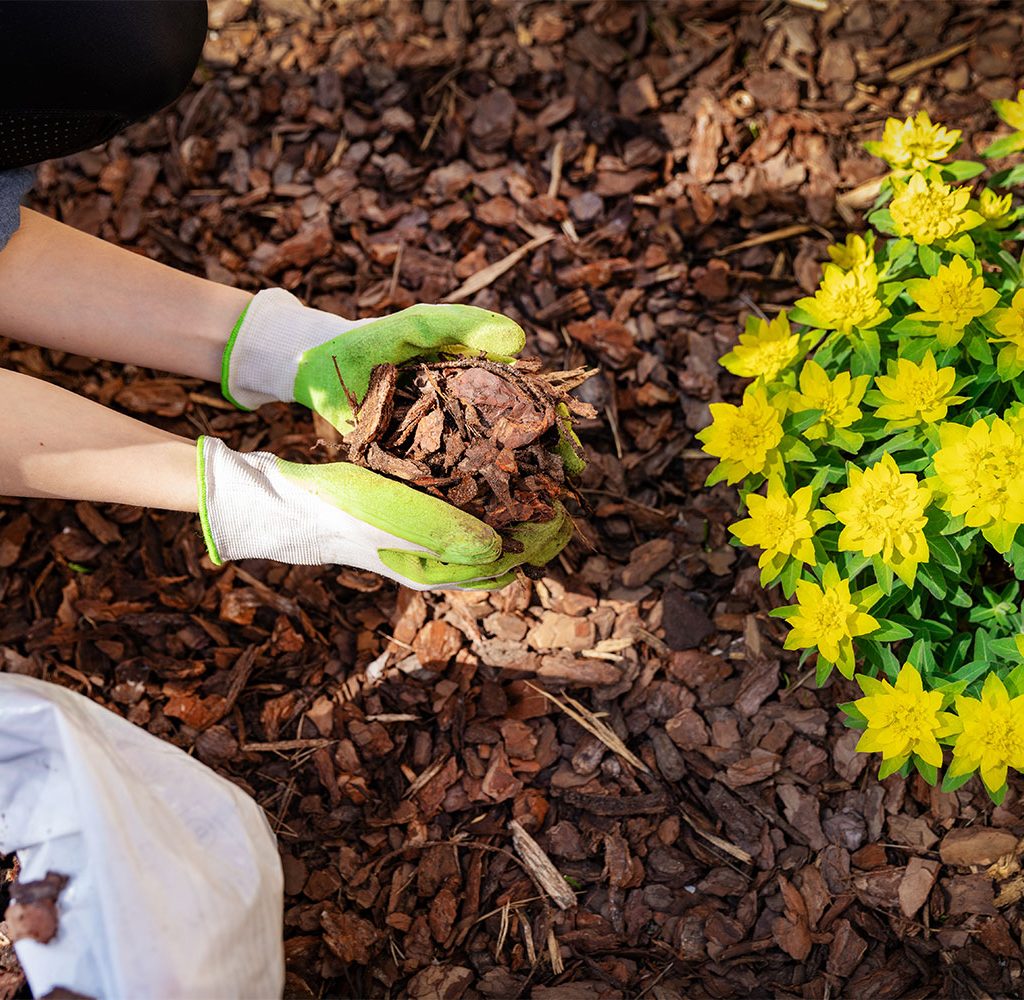
The contents within organic mulch may consist of a myriad of materials that are organic in nature. You can make organic mulch from leaves, straw, sawdust, or wood chips. You can even use compost as organic mulch!
An important distinction is that not every organic mulch is also organic mulch. Organic in the sense used above means material that is or was at one time living. Organic can also mean free from chemicals or pesticides. You can have organic mulch that is also organic, but not every organic mulch is organic in both senses of the word.
However, in general, there isn’t a significant difference in organic mulch that was made with pesticide-free material and organic mulch that contains some material that was treated with pesticides. If you’re very concerned about that, however, and want to keep your garden entirely organic, making your own mulch is a great option.
Garden benefits
Mulch in general benefits your garden by stopping weeds from growing and keeping the soil warm. Organic mulch has the added benefit of breaking down and being absorbed into the soil. The exact benefits actually vary depending on what your organic mulch is made from.
Leaf mulch, for example, takes about a year to a year and a half to fully break down, depending on a few factors. They also add a lot of additional nutrients to the soil, making them comparable to a slow-release fertilizer in some ways!
Wood chips, on the other hand, break down more slowly and don’t add quite as many extra nutrients to the soil. However, they do still provide some benefits when breaking down. Since organic mulch breaks down fully into natural substances, you also have the benefit of not harming the environment. With organic mulch there’s no worry of pollution!
Cost: Money, time, and energy
The biggest issue, in terms of organic mulch, is that the cost is a big variable. The monetary cost depends a lot on which material you’re purchasing. Leaves are relatively cheap, and, in fact, some places such as parks with a lot of trees, will allow you to take leaves for free. Not all places will, though, so always ask first to avoid trouble! Wood chips, on the other hand, are typically more expensive.
Making your own organic mulch is relatively inexpensive but has a higher cost in terms of time and energy. Compost, for example, can be made using the byproducts of regular day-to-day life but can take months to be fully ready to use.
In addition, because organic mulches break down over time, they need to be replaced with greater frequency. This means that costs are are recurring.
Inorganic mulch
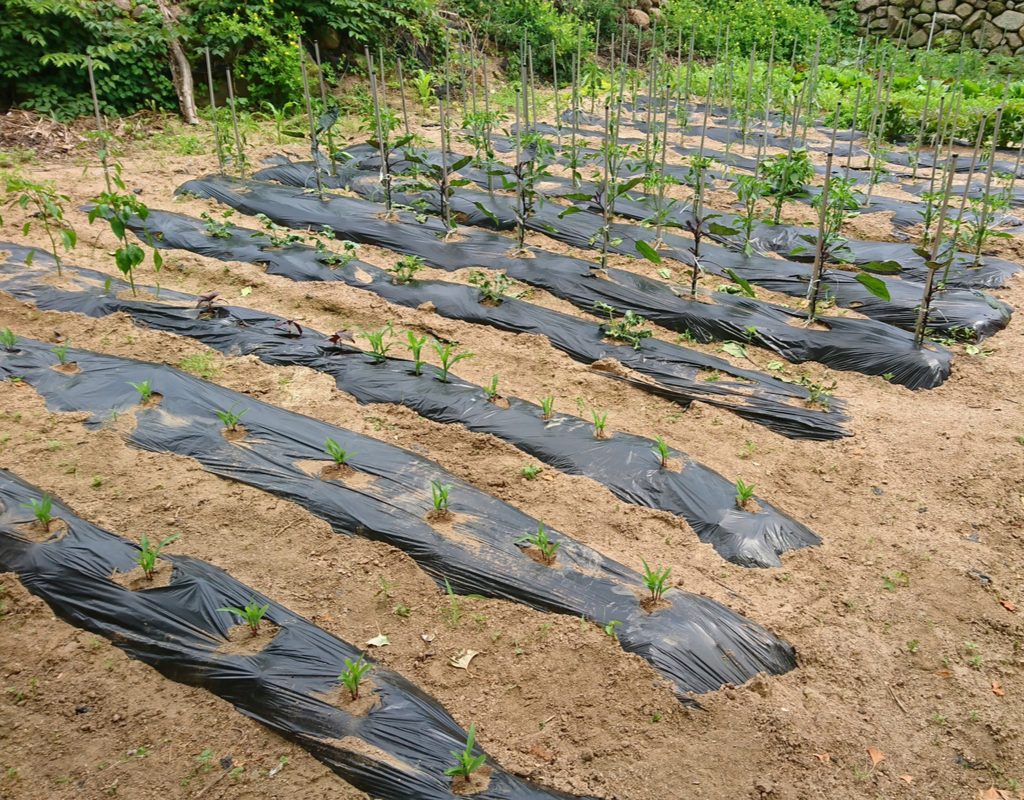
Inorganic mulch is the opposite of organic mulch. It’s mulch made from materials that are not and were never alive. This is typically rocks or sheets of plastic but could be any number of materials. The rubber chips that are commonly used to cover the ground at playgrounds are another option, as are some fabrics.
Garden benefits
Inorganic mulch has the same basic benefits as organic mulch. The cover and weight of the mulch keeps weeds from growing and warms the soil.
Since it is inorganic and doesn’t break down, your garden won’t get the added benefit of nutrients. However, it also doesn’t provide any extra habitat for insects to hide in. If you’ve had trouble with insects that like to hide in foliage of organic matter available then the slight protection offered by inorganic mulch may be helpful to you.
Cost: Money, time, and energy
Inorganic mulch is more monetarily expensive than organic mulch, hands down. It depends somewhat on which material is used, but the cheapest inorganic mulch is still more expensive than the most expensive organic mulch. However, since inorganic mulch takes much, much longer to break down it is effectively a one-time cost.
It does have a lower time and energy cost as well, since you don’t need to spend time making it yourself or worrying about replacing it under normal circumstances. Certain types, such as plastic sheets or rubber mats, can even be taken up and moved to a new location, making them reusable.
So, there you have it! Both of these types of mulch have benefits and drawbacks, and it’s up to you to decide what is most important for you and your garden. Organic mulch has a lot of extra benefits for your garden, but an extremely unpredictable cost in terms of money, time, and energy. Inorganic mulch has fewer garden benefits, but has a more stable monetary cost and a lower time and energy cost. No matter which you choose, your garden will be sure to thank you!