
The gifts have been exchanged, the parties have ended, and you’re ushering your relatives out the door so you can enjoy the last of the holiday season in peace. There’s just one lingering loose end to tie up: What in the world are you going to do with that huge, old Christmas tree?
If you have an artificial tree that’s still in good shape, the answer is simple — just pack it back into the box and put it into the attic or garage for another year. What about a natural tree, though? With environmental sustainability an ever-growing consideration for consumers, it’s no longer as simple as tossing the tree into the next available garbage truck.
It turns out that there are plenty of options for handling this issue. However, one stands out from the rest: mulching your tree. Here’s a look at the most common ways to discard your tree and why mulching might be the best option.
How do I prep my Christmas tree for disposal?
The first step is understanding your options. Possibilities can and will depend very heavily on local government agencies or businesses. While one city’s government will recycle trees, another’s may not. Any disposal plan should start with finding out what’s available in your community.
Here are some general rules to help you get your old Christmas tree ready to exit stage left:
- Don’t wait for the tree to dry out. Dry trees pose a fire hazard.
- When you’re ready, remove the tree stand, tree skirt, ornaments, and lights.
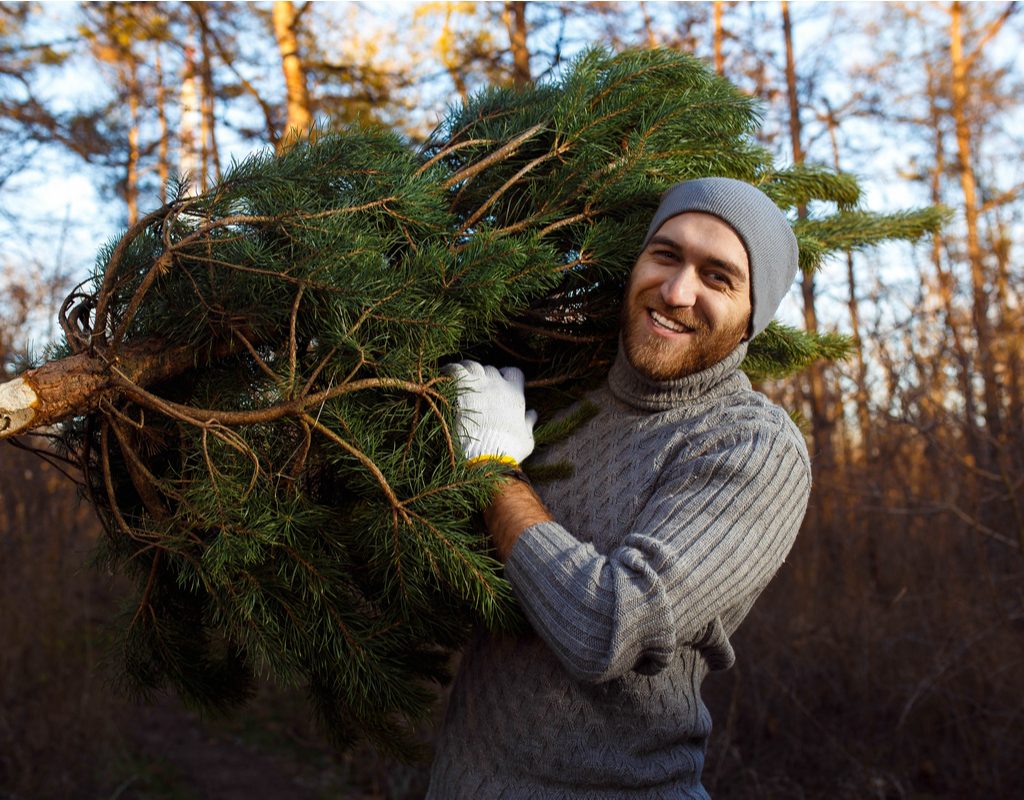
- Before you move the tree, keep things clean by covering the tree with a large plastic tree removal bag (available from Christmas tree vendors as well as big-box or holiday stores). However, you should check with your final destination first, as some do not accept bagged trees.
- If you have an old blanket or sheet, this could also help contain the mess as you move the tree outside.
- If you’re setting your tree on the curb, be aware of and follow any instructions from those doing the removal.
- Be sure the tree does not block access to roads, driveways, sidewalks, or mailboxes.
Now that your tree is properly prepared, it’s time to figure out where it’s going. Somewhere a little greener? Let’s see.
What are the potential options for Christmas tree removal?
Before we get to mulching, let’s take a look at some of the other options that are available.
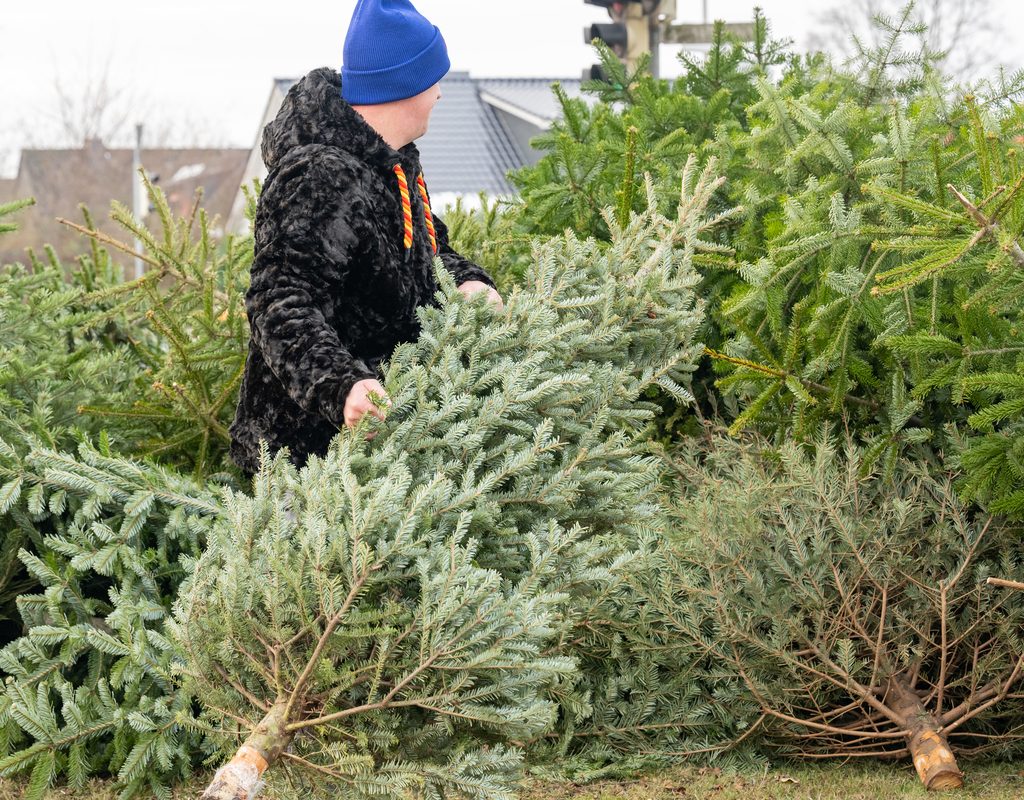
- Curbside trash pickup: Even with so many new options out there, millions of trees each year still end up in landfills. This may not be ideal, especially for those concerned about how we use and manage natural resources, but hey — at least you got your living room back.
- Donate to a parks or wildlife agency: Live Christmas trees can sometimes be donated to state parks or wildlife preserves, which use old trees to create new animal habitats — both on land and in the water.
- Compost: The branches of a retired Christmas tree are welcome additions to industrial compost piles. They allow for good airflow through the compost and bring extra moisture to the environment. In many places, there are year-round services, including businesses that’ll take compost materials off your hands. Poke around and see if any accept Christmas trees.
- Replant: This is only an option if your tree has its roots intact, which means the vast majority of Christmas revelers won’t be able to use this option. If you’re one of the few who has a tree with its roots still attached, move the tree outside to a cool, dry place for a few days to let it re-acclimate to the outdoor conditions. Then dig a hole at least twice as wide as the root system. Drop in your tree, fill in the hole, and water it.
Why is mulching your Christmas tree the best option?
Also known as “treecycling,” mulching can be an easy and practical way to dispose your old Christmas tree.
Here’s that broken record again: You’ll need to check with your local government agencies or nurseries to see if they make this option available. Some city governments and businesses accept Christmas trees and grind them into mulch, which they sometimes then sell or use in local landscapes and parks. If it’s the government doing the treecycling, it could be as easy as putting your tree on the curb.
Even if there’s no curbside Christmas tree pickup in your area, local groups will often hold treecycling events where you can drop off your tree for mulching, often deep into the month of January. In many instances, they’ll give you a bag of your own mulch to take home. For gardeners, that couldn’t come at a more opportune time. Mulch is essential for good plant health during cold-weather months. Think of it as a blanket for your garden that works to stave off frost and help excess water move through the soil.
It can also be fun to make the mulch yourself. Discard the needles and cut or chop the branches into small chunks. Cathartic!
Other ways to recycle your Christmas tree at home
If you’re going down the DIY route when repurposing your tree, mulching is simply one of your many options. Even if the majority of your tree goes towards mulching, you can get creative with your treecycling endeavors. The wood can obviously be turned into firewood — just remember to dry it out for a few months before you burn it. If you’re crafty, you could also use the wood to make coasters for your dining table or rustic stakes for plants that need extra support. While the needles can technically be used as garden mulch, they too can come in handy for craft projects such as fragrant potpourri bags.
Since you’re often able to reap the rewards yourself and don’t need a lot of extra steps or equipment to do it, mulching may be the best option for discarding your old Christmas tree. Whether you take it to your city government or mulch it yourself, it’s a fun and low- or no-cost option. You can also feel good about doing something green and closing the consumption loop by putting the old Christmas tree back in (or on) the earth. That seems like a fitting way to close out the season.