

Composting is a useful way to reduce your food waste and boost your garden’s nutrients when it needs it. It’s a simple process, too. Compost care is relatively easy, and there are plenty of online sources to help you figure it out. If you’ve been reading up on how to compost, then you may have heard the phrase “turn your compost” a time or two.
Turning your compost isn’t difficult, but if you’ve never done it before, then you might be confused about what it is and why you should do it. We’ll answer all your questions and explain what you need to know in this guide to turning compost.
What is turning compost?

Turning compost can best be described as stirring or mixing your compost, so that the organic matter in the bin is moved around rather than forming solid layers. Turning your compost keeps it fluffy and aerated, but there are other benefits as well, such as stopping your compost from becoming compacted.
Compacted compost breaks down slower, mainly due to a lack of airflow and an increase in water retention. Additionally, compacted compost can develop a deeply unpleasant smell, so turning your compost can help it stay smelling fresh and earthy.
When should you turn your compost?

Depending on the size of your bin, you should be turning your compost every two to five weeks. If you save up kitchen scraps to add all at once, then you can simplify your schedule by turning your compost whenever you add to it.
However, there are a few other signs that it might be time to turn your compost. The first thing to keep an eye out for is compacted compost. If your compost is dense or hard, it’s time to turn it. If you have an outdoor bin or pile that isn’t covered, you should turn your compost after it rains, especially if it was a heavy rainstorm. This helps distribute the moisture evenly throughout the compost.
Another sign to keep in mind is scent. Compost should smell mostly of dirt, although it may also smell slightly of whatever was last added to it. If your compost smells heavily like rotten food, it likely needs to be turned. You may also want to check the moisture levels in your compost and add more dry material if it’s too wet.
How to turn your compost
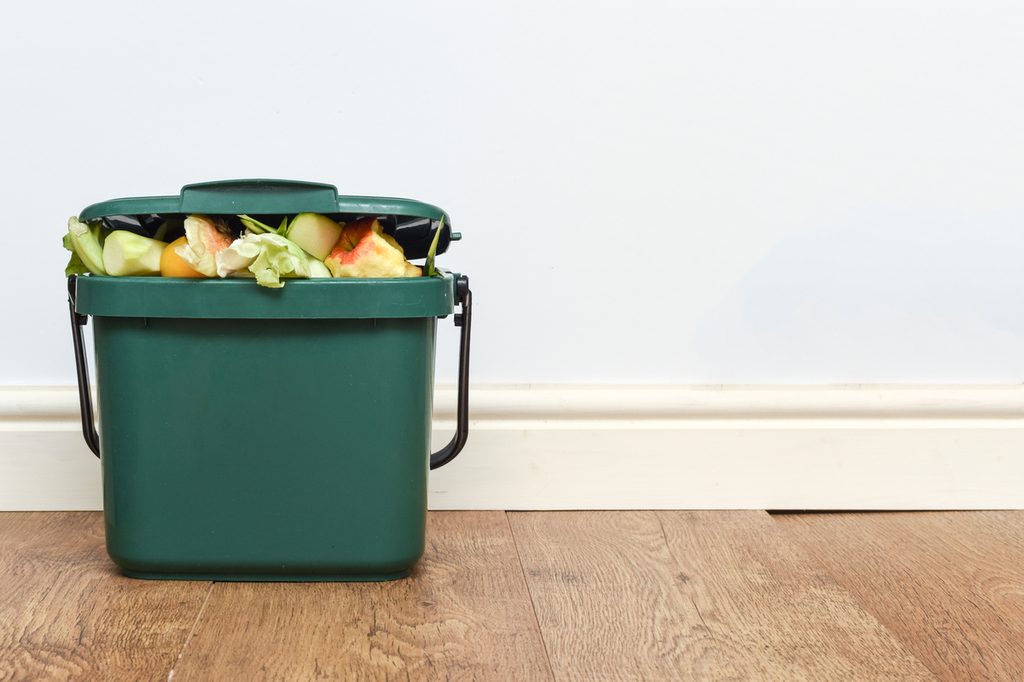
Turning your compost is a simple process, but there are a few ways you can go about it. If you have a small bin that isn’t affixed to anything and has a lid, the easiest way to turn your compost may be just to roll it. Make sure the lid is on tight, then tip the bin onto its side and roll it back and forth a few times. If the bin is very small, you can also just pick it up and give it a good shake.
That isn’t really an option for people with large bins, bins that are affixed to something, or people with compost piles, though. Instead, you’ll need to turn your compost manually. Different tools are helpful for this, depending on the size of your bin or pile. Some commonly used tools are shovels, pitchforks, rakes, or your hands (we recommend wearing gloves).
Whatever tool you’re using, the method remains more or less the same. Scoop up some of the compost, getting as deep into the pile as you can, and flip it over. The goal is to mix the compost, so that you don’t end up with layers. Repeat this process, digging your tool in at different depths until you’re satisfied that the entire bin or pile is loose and fluffy. Be sure to get the edges and bottom as well! Otherwise, you might develop a crust of compacted compost that can block drainage holes.
Another option for turning your compost is to let your bin do the work for you, by getting or making a compost tumbler. Compost tumblers are bins, suspended on their sides off the ground on an axle. This allows the bin to turn, either manually with a crank handle or simply by pushing the bin, or automatically with the use of an engine.
Can you turn your compost too often?

Yes, you can turn your compost too often. Turning your compost more frequently than once every two weeks can slow the composting process down by weeks or even months. This is because, in regular (non-worm) bins, composting is fueled mainly by heat. Heat builds up in the compost over time, starting in the center, which causes the organic matter to break down faster. When compost is turned, some of the heat is released and the compost pile cools down. If you turn your compost too often, then the compost doesn’t have a chance to build up that heat.
Do you need to turn vermicomposting bins?
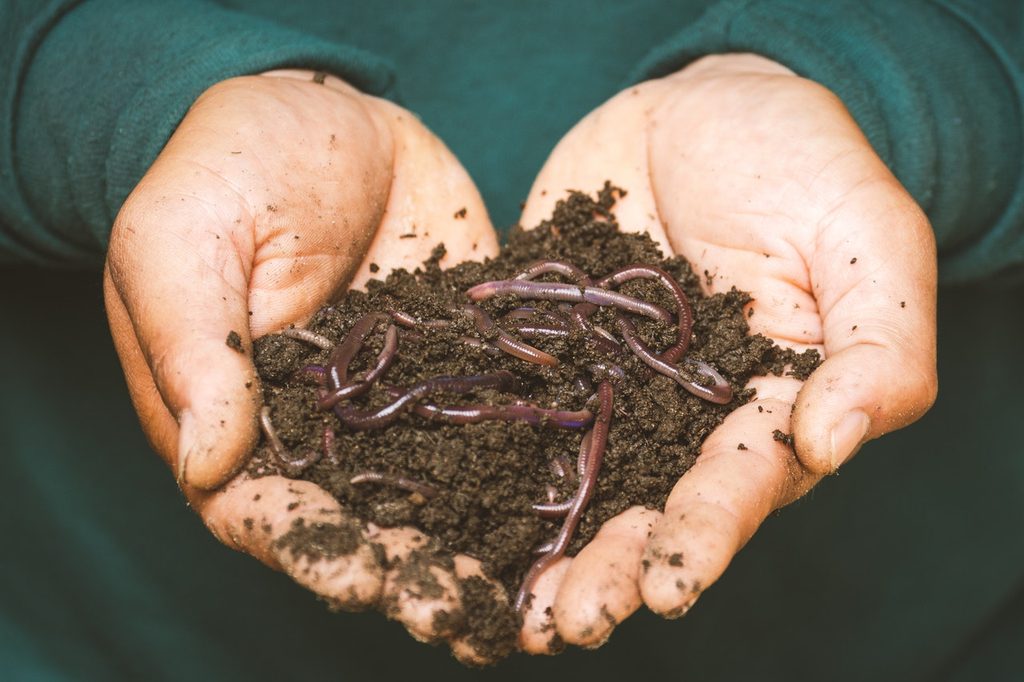
Most compost bins need to be turned to keep the soil aerated, but not vermicompost bins. When composting with worms, the movement of the worms stirs the compost slowly over time. You can turn it occasionally to speed up the process, but avoid turning it too regularly. Disturbing the worms too often can injure or disorient them, which can actually slow down the composting process instead of speeding it up. However, you don’t actually need to turn your worm compost bin in order to take proper care of it.
Now you know everything you need to know about turning your compost. You can produce rich, aerated compost quickly just by turning it once every two to five weeks. Using a shovel, rake, or even just your hands, you can fluff your compost so it’s ready to use weeks earlier than you otherwise might. Whether you choose to aerate your compost manually, get a compost tumbler to do it for you, or just roll your bin across the ground a time or two, you’ll love the results of this simple process.