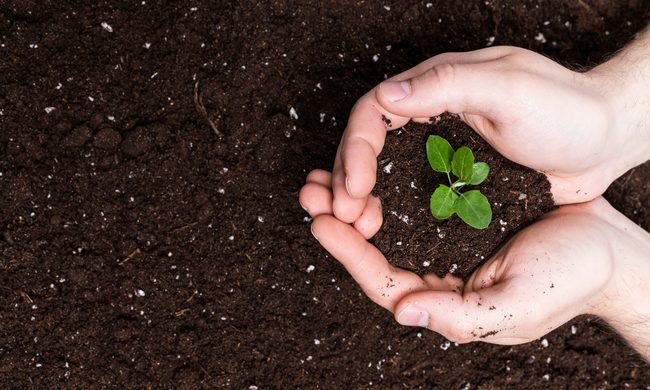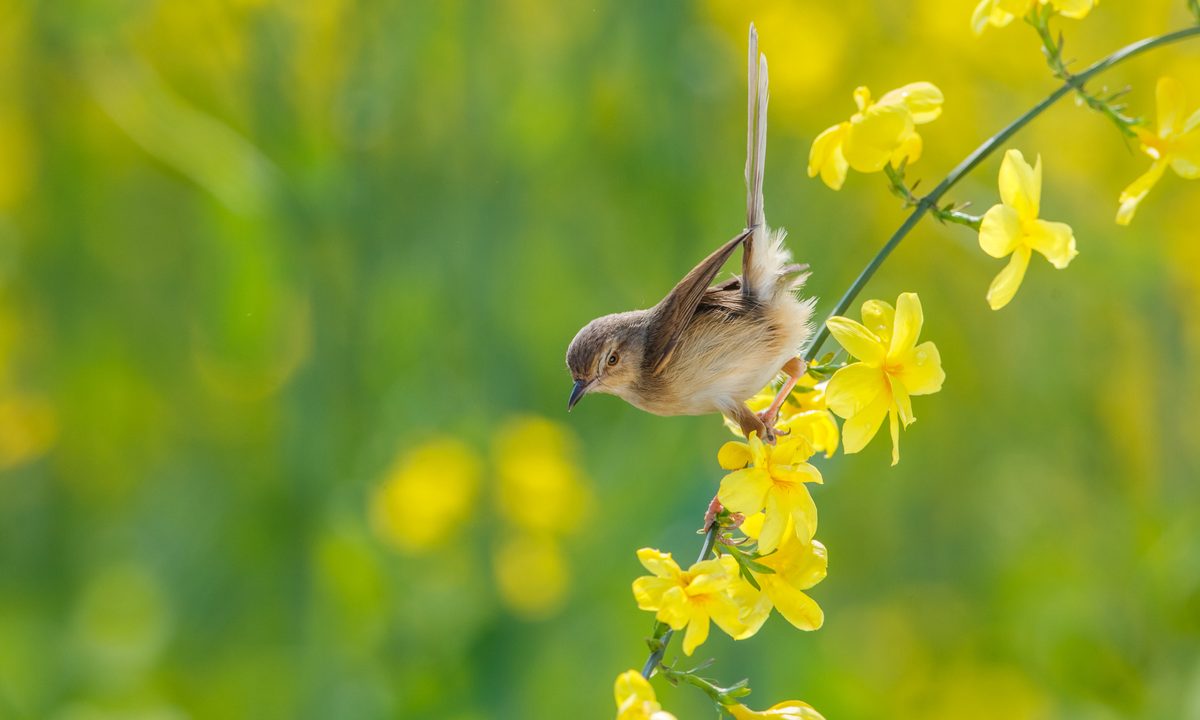
If the long, cold months of winter have left your garden looking cold and empty, it might be time to start planning your spring garden. There are a number of early-blooming spring flowers you can choose from, including classics like tulips and daffodils. If you want something a bit larger than your standard bulbs, you should consider planting winter jasmine. Not familiar with this plant? Don’t worry, we’ll answer all your questions about winter jasmine care so you can get started growing your own.
What is winter jasmine?
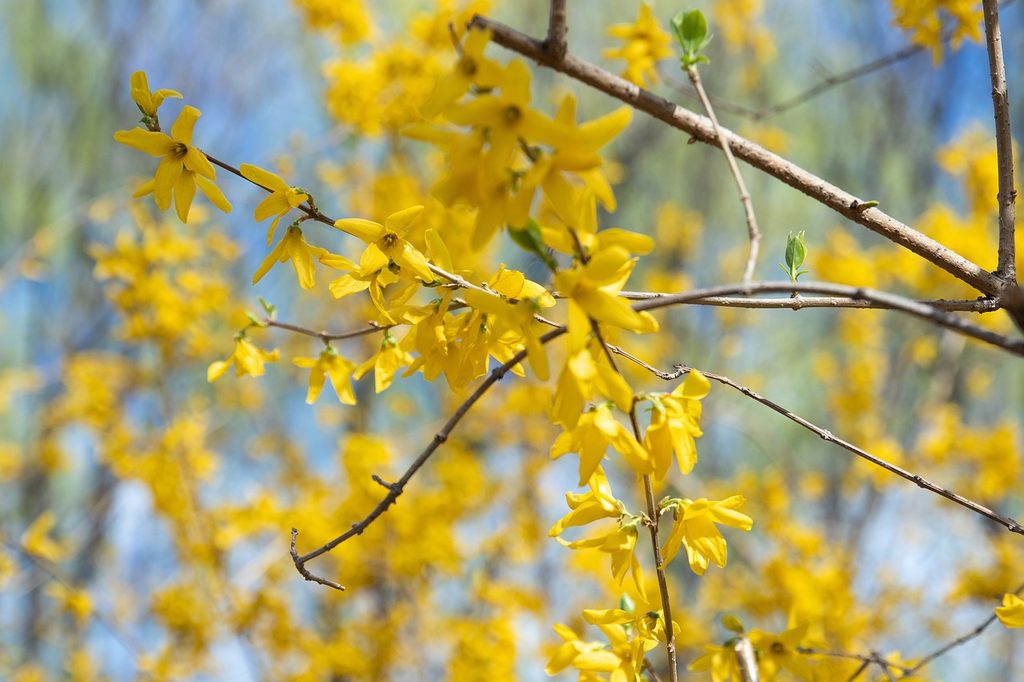
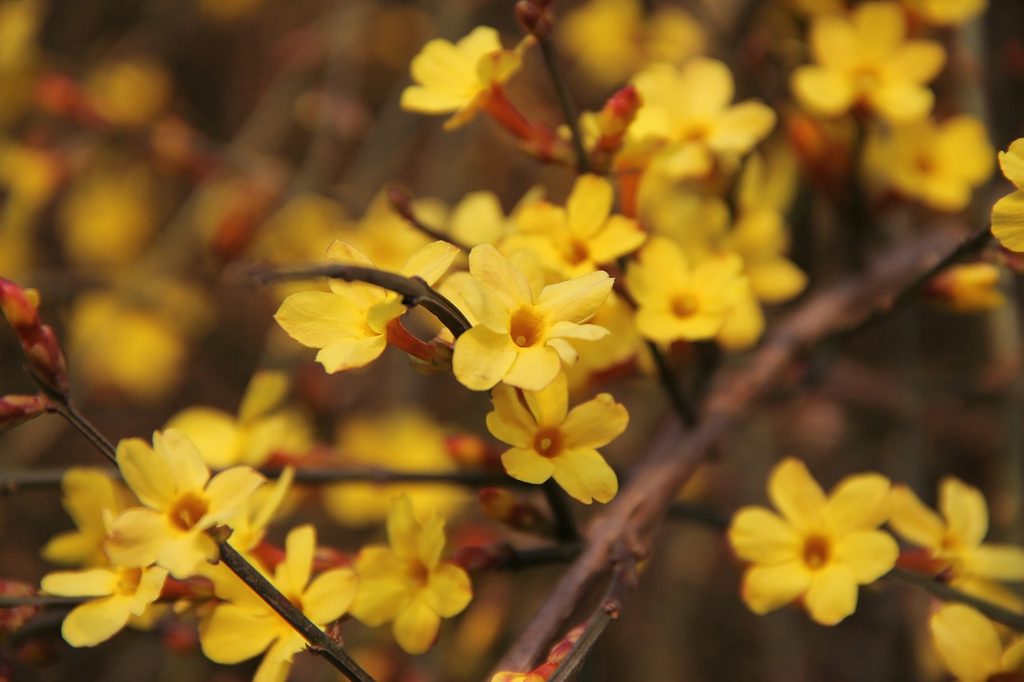
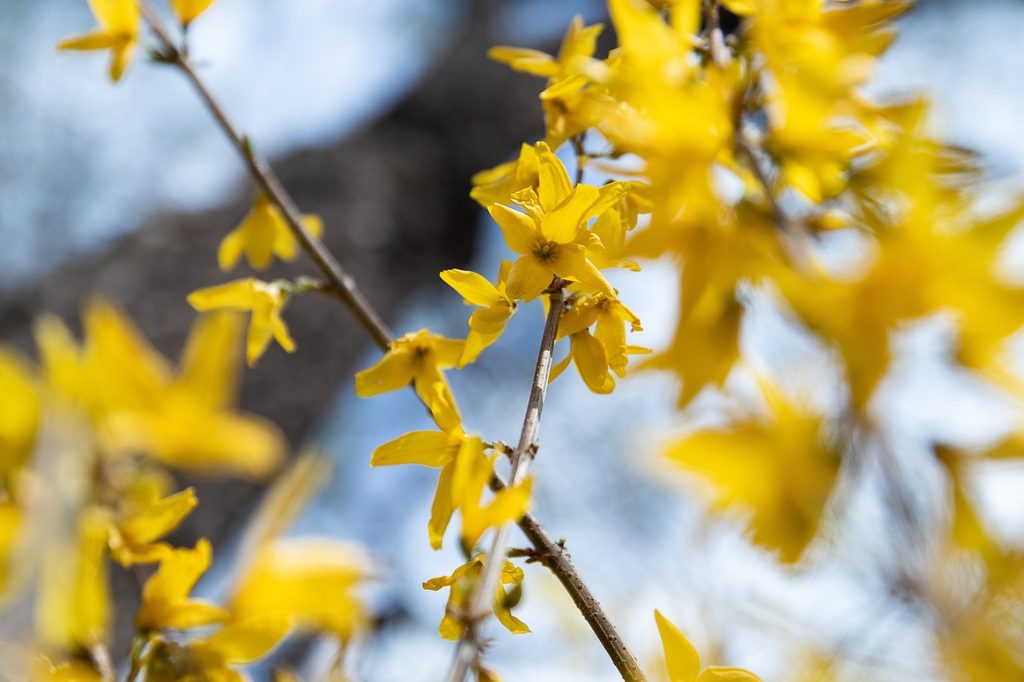
Winter jasmine, or Jasminum nudiflorum, is a shrub with thin, vine-like branches and bright yellow flowers. In its native habitat of China, it’s among the earliest blooming shrubs, blooming right at the end of winter and beginning of spring. In the U.S., it can actually bloom even earlier, sometimes beginning in November, if the weather stays mild. However, it most commonly begins blooming in January or February, typically continuing until March.
As a shrub, winter jasmine stays fairly small, growing to only about 4 or 5 feet tall. However, its vine-line branches can act more like vines, and it’s sometimes grown as a groundcover. In this form, the branches can spread quite far. We recommend growing it as a shrub, as it is generally easier to contain in this form.
Planting winter jasmine
It’s best to begin planting your winter jasmine in spring or early summer. This is typically when mature plants are available, and the warm or mild weather allows it to adjust to its new home without much additional stress. While you can start with seeds, it’s slower and more delicate than starting from an older plant. If you want to start your winter jasmine earlier, we recommend starting it in a container and keeping it indoors for the first winter, then transplanting it into your garden in spring.
Whether in a container or in your garden, plant your winter jasmine in rich, well-draining soil, and avoid dense, slow-draining soil. Amending your soil with compost before planting is a good way to enrich it and improve its texture.
When it comes to lighting, winter jasmine is highly adaptable. It grows and blooms best in full to partial sun, but will grow in shade as well. It can even grow in full or deep shade, although you won’t see as many flowers.
Winter jasmine care
Winter jasmine plants are sensitive to overwatering, so only water them when the soil is dry to the touch. Avoid watering them if the soil is still damp or if you are expecting rain shortly. If your winter jasmine is in a container, make sure the water is draining properly from the bottom of the container to avoid root rot.
Winter jasmine typically doesn’t need to be fertilized, unless it’s growing in naturally poor soil. If your soil is lacking, amending it with compost or a balanced fertilizer during spring will give it a nice boost. Avoid overfertilizing your winter jasmine, as this can lead to unrestrained growth and an abundance of leaves with fewer flowers.
Pruning winter jasmine is a good way to control its size and keep it looking neat, while also promoting healthy growth and getting rid of any damaged or diseased branches. If you’ve pruned shrubs before, then the process will be familiar. Use sharp, clean tools, start at the base of the shrub, work your way up and out, and focus on unhealthy branches first. Then, trim any longer or unattractive branches. To avoid stressing your plant or losing flowers, prune your winter jasmine after the flowers have faded in spring.
Native alternatives to winter jasmine
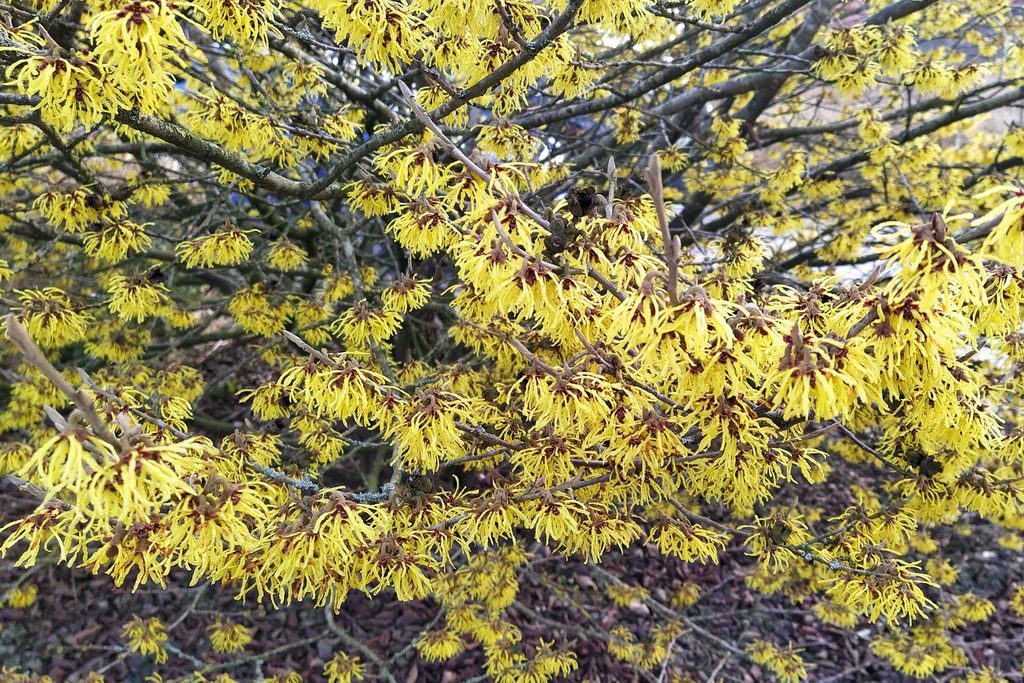
If you love the yellow flowers and shrubby growth of winter jasmine but want to focus on growing native plants, then there’s good news! There are plenty of lovely shrubs you can grow that are native to the U.S. and grow similar flowers. If you’re from the East Coast, you might think of forsythias, but those actually aren’t native either.
While they don’t all bloom as early as winter jasmine does, here are a few native shrubs with yellow flowers to check out:
- Spicebush
- Witch hazel
- Yellow azaleas
- Kalm’s St. John’ s wort
- Carolina jessamine
Winter jasmine is a gorgeous flowering shrub that is sure to brighten up any winter garden, signaling the return of spring with its bright yellow flowers. This shrub is remarkably easy to grow and care for, so there’s no need to worry if you’re a beginner. Of course, if you prefer growing native plants, there are other shrubs you can grow instead to capture some of the color.