‘Tis the season to get spooky, and what better way to get a little scary than with plants? Sure, floating ghost decor and animatronic skeletons can add ambiance to your home and front yard, but what about plants that evoke the macabre? If you want foliage that’s the right amount of ghoulish, consider furnishing your space with black plants alongside your autumnal mums and pumpkins. Ahead, we’ve rounded the best black-colored houseplants to decorate your inside and outside garden come fall for some Halloween fun.
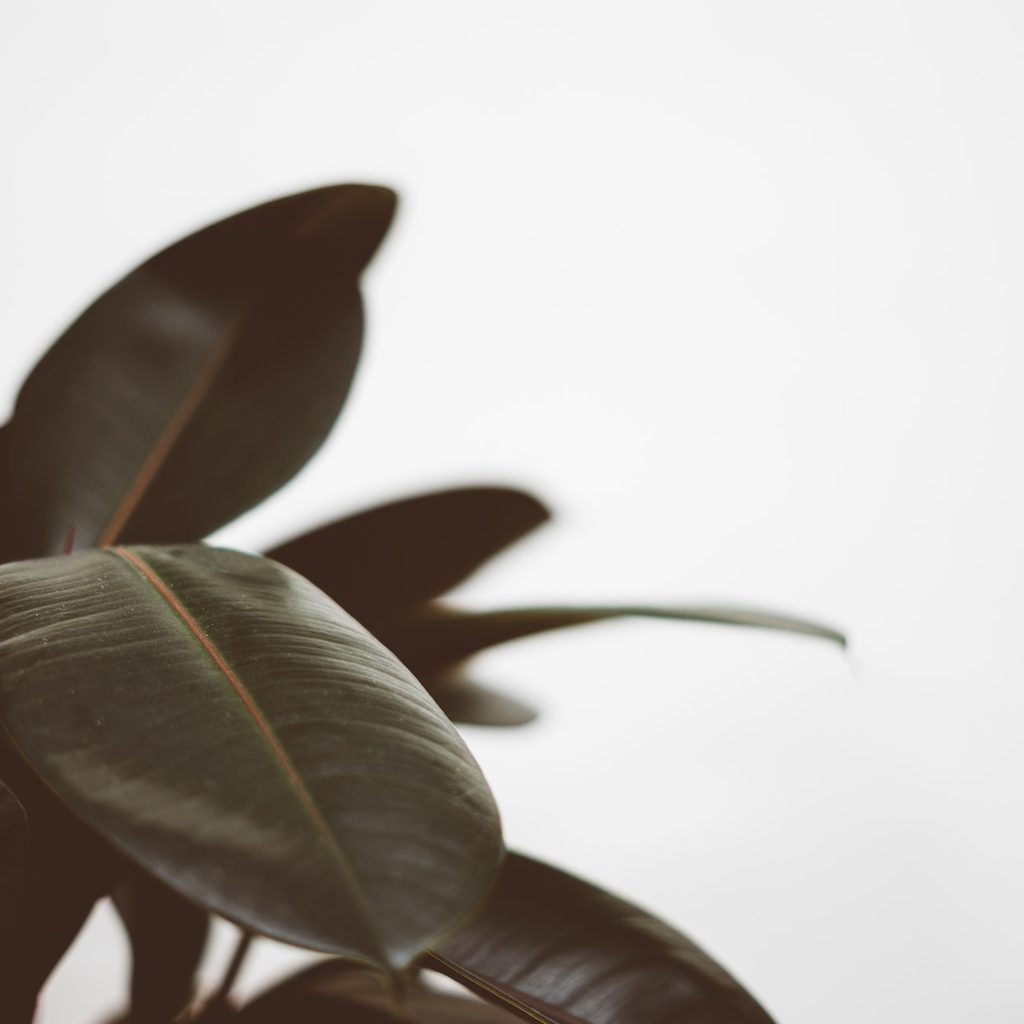
Burgundy rubber plant
The burgundy rubber plant, or ficus elastica, isn’t strictly jet black, but it is black enough to get you in the mood for spooky season. While this is a relatively common houseplant, it’s definitely a stunning one with its leathery dark green leaves. The more you stress it with light, the deeper its color will become. The great thing about the rubber plant is that it’s low maintenance. You only need to water it when its soil dries out—telltale signs of a thirsty plant include drooping leaves and a light planter. Just be careful with stressing your plant with light, as you may get crispy edges with too much direct sunlight.
Pilea dark mystery plant
With a name like “pilea dark mystery,” this beautiful foliage plant is perfect for Halloween festivities! Each brown, almost black, leaf has a silver stripe running down it. (The silvery color is also suitable for the holiday season that follows the spooky period, by the way!) Because it’s modest in height, this pilea makes a great addition to terrariums. While you don’t want to let it dry out completely, it’s a good idea to at least let the topsoil feel a little dry before you get your watering can.

Aeonium black rose succulent
This stunning aeonium is the stuff of dark and dreary poems. As its name implies, it resembles a black rose, although it’s much hardier than a flower since it’s actually a succulent. This aeonium will thrive with two conditions: if you give it bright direct light and don’t overwater it. While it does best outdoors, you can keep it in a container indoors as long as you water it sparingly, give it light, and keep it in well-draining cactus soil.
Black mamba petunias
Imagine the texture of Morticia Addams’ dress, and you might envision something like the black mamba petunia. Black mamba petunias might not be as steely as the aeonium black rose succulent, but their crushed velvet texture and striking black color make them well worth the effort you spend cultivating them! A spooky addition to any landscape, these beautiful plants need six hours of full sun each day to bloom during the growing season. They’re perennial in zones nine through 11, though you can keep them as indoor plants elsewhere. They won’t require as much water in garden beds, but you will need to hydrate them frequently if you leave them in a container.
Peperomia dark ripple plant
The peperomia ripple, or peperomia caperata, features dark, heart-shaped leaves with deep ruffles—it’s pretty much a perfect plant for witchy potions, if those were a thing! The ripple plant can vary anywhere from dark green to blood-like burgundy, both nearly black in color. This peperomia enjoys bright indirect light and moderate watering — leave it in dappled light and water it whenever the top inch of the soil dries out. As with other peperomias, the dark ripple plant does well in moderate humidity, which you can achieve by leaving your planter on a pebble tray or setting it next to a humidifier.
Raven ZZ plant
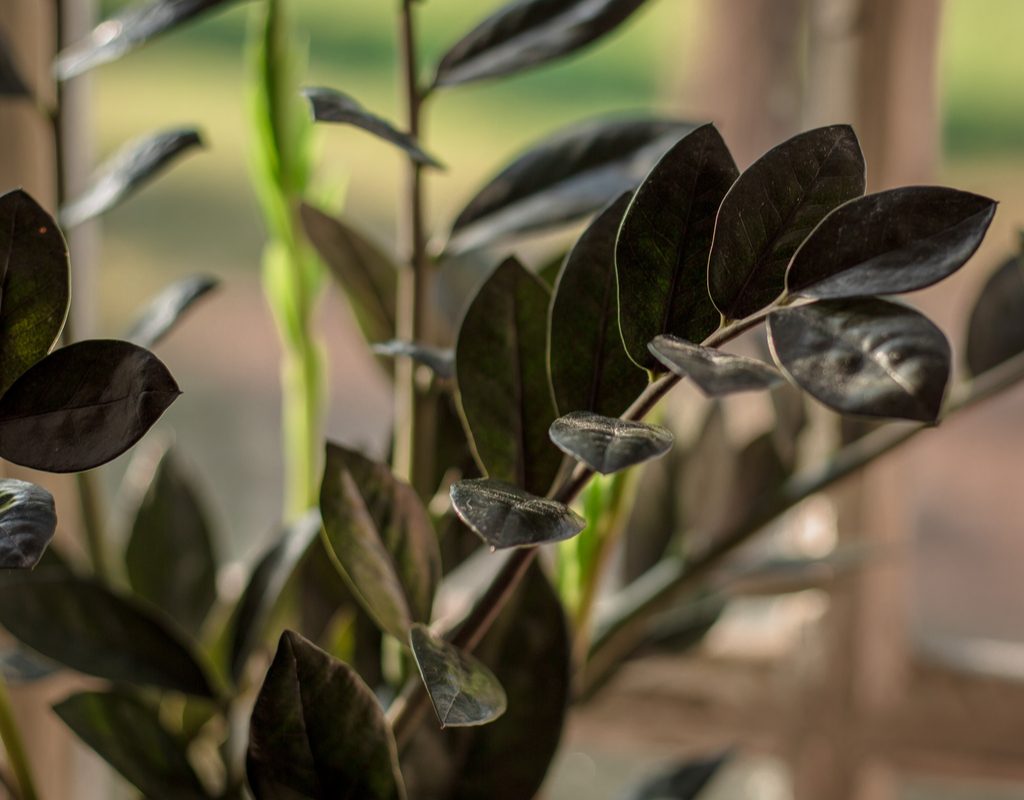
Edgar Allan Poe’s raven may have said nevermore, but the raven ZZ plant is anything but permanently gone. While difficult to track down a few years back, the raven ZZ plant is becoming increasingly accessible. Consisting of glossy leaf sets that shoot off from bulbs, the ZZ plant has a reputation for being virtually unkillable because of its low light and drought tolerance. While this is mostly true, you’ll want to avoid overwatering your ZZ plant, or else its bulbs may start rotting. The best watering cadence for this plant is once a month, or whenever the soil dries out completely. As opposed to a regular ZZ, the raven ZZ’s leaves turn black two months after new growth unfurls.
Black magic colocasia
Technically a taro plant, the black magic colocasia is the epitome of the spooky season with its drooping heart-shaped leaves in a smoky, deep purple color. The showy foliage grows two to six feet tall and wide. It does well in the shade in moist, rich soil, either in beds or large containers. It can survive down to zero degrees Fahrenheit, but you’ll want to set rising tubers down into soil if you want them to survive over the winter.
Autumn has arrived, and it’s time to retire your summer flowers for spookier fare. With Halloween right around the corner, you can’t go wrong with black flowers and foliage to get that haunted house atmosphere. Whether you prefer a black magic colocasia that needs a bit more maintenance or a raven ZZ plant that’s virtually unkillable, there are plenty of black-colored plants out there for you to creep it real throughout October!