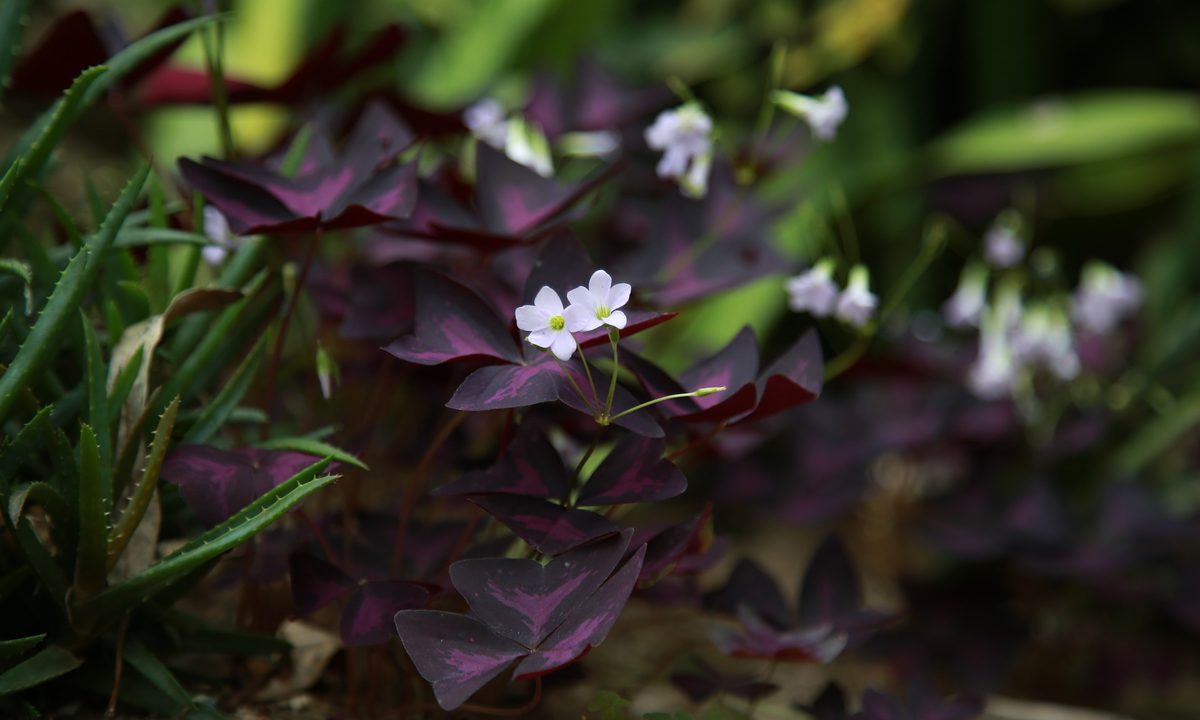
When you think about leaves, you probably picture green spring foliage or bright fall colors. However, those aren’t the only options! Some plants have colorful leaves year-round, even including colors that aren’t found among the typical fall color ranges. One such plant is Oxalis triangularis, also called false shamrock. Its unique triangular leaves range from deep pink to dark purple. Whether you want a lovely living Halloween decoration or need some stunning goth plants all year long, here’s what you need to know about growing Oxalis triangularis.
Planting Oxalis triangularis
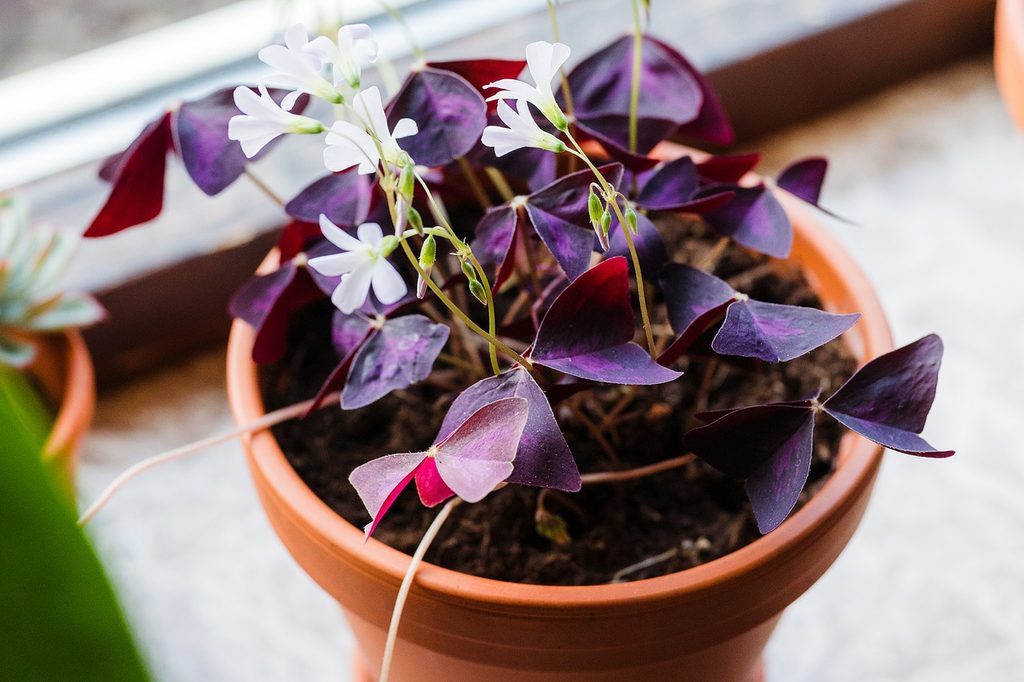
Oxalis triangularis is native to South America, and it grows primarily in rich, well-draining soil along streams. However, this hardy plant isn’t particularly picky and will thrive just about anywhere. To keep it from escaping your garden and spreading into nearby green areas, we recommend growing your Oxalis triangularis in a container. Choose a container with drainage holes and fill it with rich, well-draining soil for the best results.
Oxalis triangularis does best in dappled, filtered, or indirect light. While it can tolerate some direct light, Oxalis triangularis can develop sunburns if left in direct light for too long. You can place your plant away from a window in a bright, sunny room or in front of a window with a light, gauzy curtain. When the weather is warm, you can take your Oxalis triangularis outdoors, but avoid leaving it out when there is a risk of frost. Oxalis triangularis is hardy in USDA zones 8 to 11, but should otherwise only be outdoors during mid to late spring and summer. If you do take your Oxalis outside, be sure to give it some protection from the more intense afternoon sun.
Oxalis triangularis care
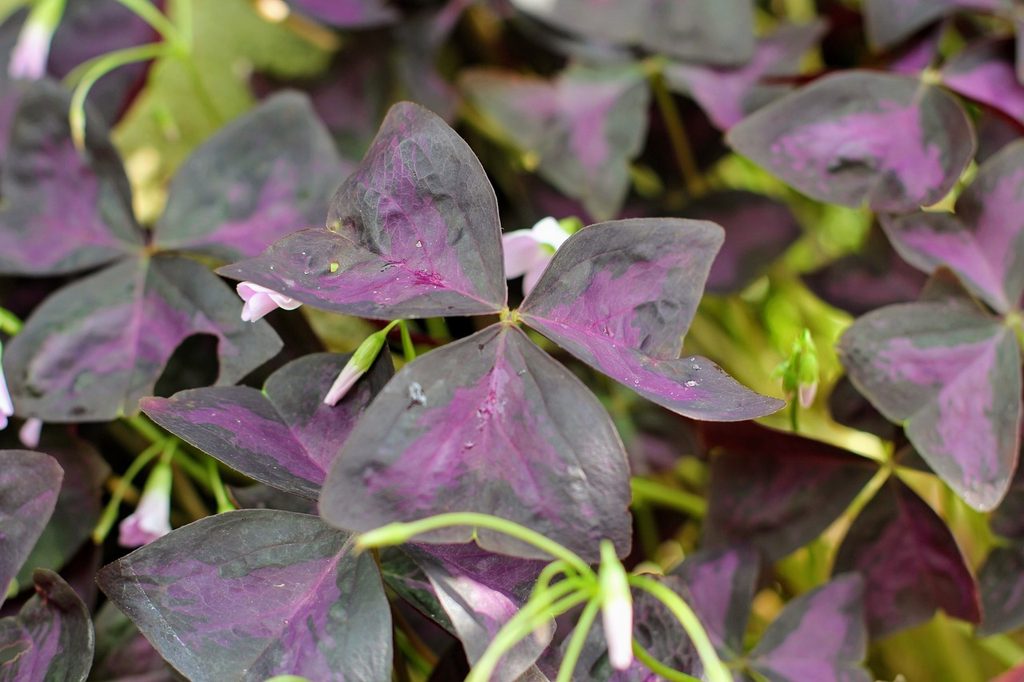
Water your Oxalis triangularis whenever the top few inches of the soil are dry or if the leaves begin to wilt. If your plant is outdoors or in direct light, it will need water more frequently than if it’s indoors in filtered or indirect light. Try not to get the leaves or flowers wet when watering it, as wet leaves are more likely to burn, and consistently damp leaves can encourage fungal infections. Instead, lift the leaves gently with one hand to water below them.
Oxalis triangularis doesn’t typically need fertilizer, as it grows slowly and is not a heavy feeder. You can give your plant a light dose of balanced liquid houseplant fertilizer to encourage growth, if you prefer, but your plant will be fine without it. Once a year to every other year, repot your Oxalis triangularis with fresh soil. This will refresh the nutrients it has access to and clear out anything that may have built up in the soil.
While some gardeners prune their houseplants to control their size, they can prune their Oxalis triangularis plants for a different reason. During spring and summer, this plant grows an incredible number of tiny white flowers. However, most people who grow Oxalis do so for the leaves, not the flowers. If you want your plant to focus on leaf production, you can prune the flowers by cutting the stems before the flowers bloom. This will encourage your plant to put more energy toward leaves and less toward flowers.
Is Oxalis triangularis safe for pets?

Oxalis triangularis is not safe for pets and can cause health problems in cats or dogs eat it. In small amounts, Oxalis triangularis can cause an upset stomach, drooling, and difficulty eating. In larger amounts, or if they eat it regularly, it can cause damage to their kidneys. If your pet has eaten some Oxalis, your vet can help ease the symptoms and make your pet more comfortable while they recover. However, it’s often more effective to keep your plant out of reach of your pets to prevent any problems before they occur.
Oxalis triangularis is mildly toxic to humans as well. However, it is still considered edible by some! Oxalic acid (the toxic compound found in Oxalis plants) can cause stomach irritation and kidney problems (such as an increased risk of kidney stones) in humans. But we are better at processing it than our pets are. Oxalic acid is found in other foods, such as rhubarb and cocoa, to varying degrees. If you have a history of kidney or stomach problems, you may want to consult with your doctor before adding Oxalis leaves to your salad, and you should keep your plants out of reach of small children.
Oxalis triangularis is a stunningly beautiful plant, and it’s remarkably easy to grow. While some people report that it tastes delicious, you should consider the potential health risks carefully before adding it to your diet. Whether on your plate or by your window, this plant is certainly gorgeous, so why not try growing your own today?