Dia de los Muertos is a beautiful time of year, both in sentiment and aesthetics, lasting from October 31 to November 2. A celebration of family and a bittersweet remembrance of those who are gone, flowers are a cornerstone of this holiday. If cut flowers and petals aren’t your style, or if you’d rather use homegrown flowers, here is everything you need to know about growing the three most common Dia de los Muertos flowers.
Marigold

There are plenty of varieties of marigold, and care can vary slightly between them. Aztec marigold, Tagetes erecta, is native to South and Central America and is tolerant of heat and drought. If you live somewhere a little rainier, try French marigold, Tagetes patula, which can handle wetter climates better than other marigolds. Both of these varieties produce big, beautiful blooms, with the Aztec being taller than the French. If you’re looking for a smaller marigold, get the signet marigold, Tagetes tenuifolia, which likes hot, dry climates and has tiny, cute blooms.
Once you’ve picked your marigold variety, you can either plant from seed or get an already-mature plant. Marigolds do well from seeds in general, but it will be longer until you see flowers, especially if you’re planting Aztec marigolds.
Marigolds love sun, so avoid planting them in shady spots. Marigold in the shade is prone to mildew, which can harm or kill your plants. Seeds can be sown 1 inch apart from each other and just an inch down in the soil, but mature plants need to be spaced 8 to 10 inches apart, for French and signet, and 10 to 12 inches apart for Aztec.
You can plant your marigold at any time after the last frost of the season. Since the Aztec marigold is taller and slower to grow, these are best planted as soon as possible after the last frost.
Chrysanthemum
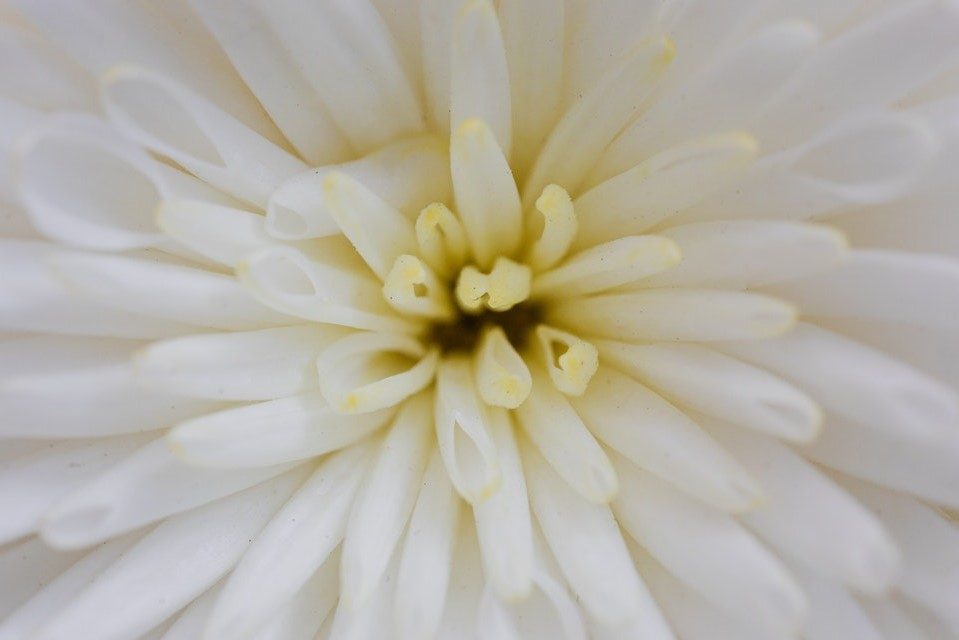
White chrysanthemums are the traditional color for Dia de los Muertos, and there are a few varieties to choose from. Single bloom chrysanthemums are a very classic, traditional variety. Pompoms are more dome shaped and look very fluffy. Spoon blooms have petals that are shaped, unsurprisingly, like spoons. These varieties come in several colors, including the traditional white.
If you’re planting your mums from seed, start them in the spring, so you can have blooms in the fall. Mature mums start appearing in stores and garden centers in September and October, if you don’t want to start from seeds. Be discerning when choosing a mature plant, though! Look for signs of illness or damage, like limp, soggy leaves, spots on the leaves, or holes in the leaves or stem.
Chrysanthemums need six hours of sun a day, but will certainly thank you if they get more than that. More sunlight for mums means bigger, prettier, and more numerous blooms. Keep in mind, though, that soil dries out faster in the sun. Mums like soil that is moist but not soggy. If the soil gets too dry, their roots aren’t able to grow.
Gladiolus
Gladioli come in a wide array of colors and patterns. Care doesn’t typically vary much from variety to variety, so you can choose what you like best based on appearance. There are solid-color gladioli, patterned gladioli, and gladioli with interesting-shaped blooms! Whether you choose a Yellowstone gladiolus, an Elvira gladiolus, or an Abyssian sword lily, the care is more or less the same.
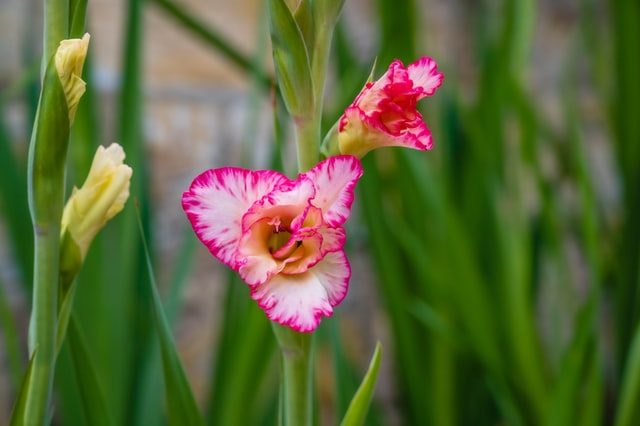
Gladioli grow from bulbs, also called corms, instead of seeds. Bigger corms produce bigger spikes and flowers, while smaller corms produce smaller ones. Bigger corms also tend to bloom sooner, although the difference is only a few weeks.
Corm size also dictates how deep it should be planted. Small corms should be planted 2 to 3 inches down, adding an inch or two for medium corms and another couple inches for large corms.
Whether you’re planting from corms or getting mature plants, make sure you plant them somewhere sunny, with moist but well-drained soil. Gladioli is adaptable to most soil types, but it does not do well in clay. Gladioli and chrysanthemums require very similar conditions and look excellent together, so planting them together, if you have space, is a good idea, especially since chrysanthemums will grow to fill a space and gladioli, being tall and thin, don’t take up much room.
Whether you plan on planting from seeds, corms, or mature plants, these three traditional Dia de los Muertos flowers will brighten any garden, home, or office. They pair well with each other, and there are so many varieties and colors to choose from! No matter how you choose to plant them, or what variety you pick, enjoy your flowers and have a happy Dia de los Muertos!