When people think of propagation, the inclination is always to take cuttings during the active growing season. That’s a great option for most plants, especially since you should be pruning and trimming them during this season. But can you propagate plants in the fall with successful results? Absolutely. Some plants should be propagated in the fall because it is an ideal time for them, while others simply may not survive for propagation in the spring. No matter the reason, here is what you need to know about propagating in the fall.

Pros and cons of propagation
There’s always a risk with propagation since the cuttings aren’t guaranteed to root or survive; however, it’s the same risk you take when planting seeds. Some don’t germinate. So why not try your hand at propagating plants in the fall that may otherwise not make it through to the next season?
Pros of propagation:
- Guarantees qualities of parent plant appear in the baby
- Increases your plant collection at minimal cost
- Lets you have multiples of your favorite plants
- With fruits and veggies, resulting crops are consistent between varieties
Cons of propagation:
- Propagated cuttings can take a while to root and mature
- Lose natural genetic diversity you get when growing from seed
- Mutations don’t happen, which can be good but also prevents beneficial changes
- Babies are susceptible to the same pests and diseases as the parent
Considering both the pros and cons when you ask the question, "Can you propagate plants in the fall?" — it’s up to you to decide whether propagation is for you or not. Ultimately, if you have a variety of plants you really love and want to keep the same traits in the new plants, propagation via cuttings is the way to go! Otherwise, you may just want to buy new seeds next season.

Why propagation is a must come fall
Once September hits and the end of the growing season is upon us, it’s actually a great time to take cuttings from a lot of plants — especially perennials and shrubs that you aren’t sure will survive the winter.
Taking cuttings toward the end of the season allows the plant to grow strong during the growing season, which increases the viability of the cuttings. Cuttings from tender perennial plants, like geraniums, can be taken once temperatures start to cool for the year. After the first frost, you can take cuttings from hardier, woody plants (as well as seed pods) from plants like azaleas and rhododendrons.
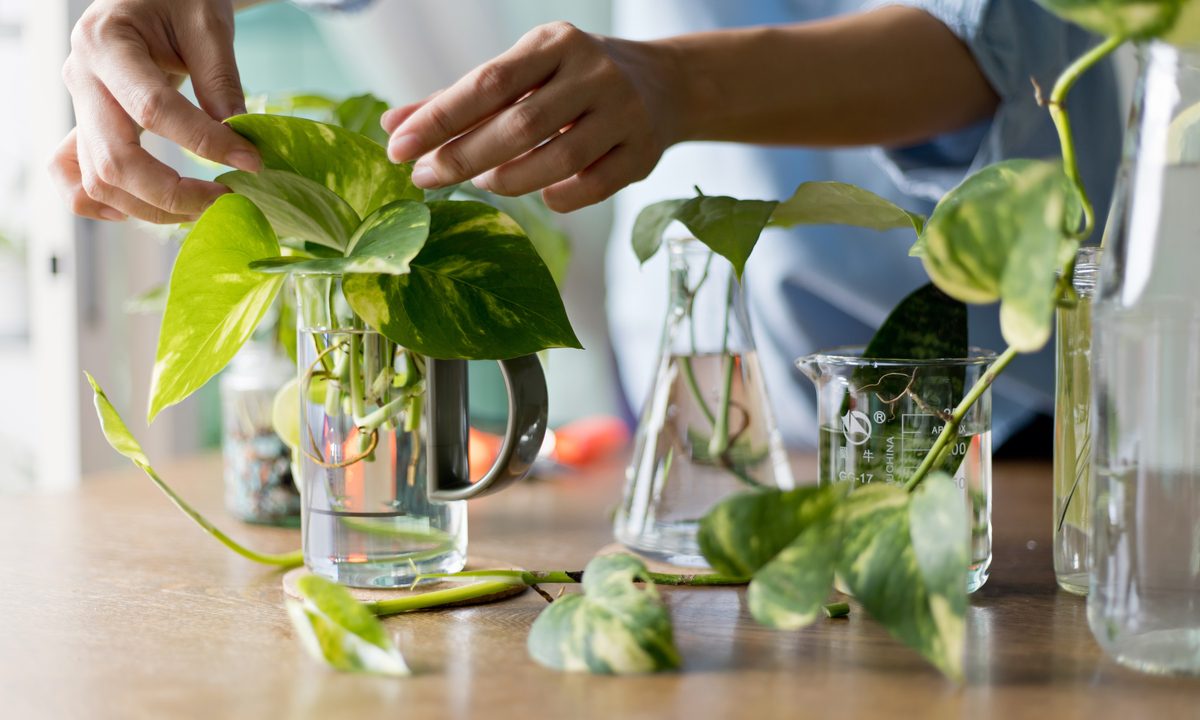
Once you've taken your cutting, here's how to encourage it to grow.
Step 1: Use a rooting hormone to speed up the rooting process.
Although cuttings will typically grow roots without rooting hormone, it does make things much easier.
Step 2: Place the cutting in bright, indirect light, not direct light.
Cuttings are generally more sensitive to light than adult plants, so leaving them in direct sunlight can cause damage.
Step 3: Keep the cutting in a warm, humid environment.

Plants to propagate in the fall
Some of the best plants to propagate in the fall are those you want more of next season or whose traits you want to carry over. When taking cuttings from any plant, you should make sure to use a sterilized pair of shears and take a cutting that has three to six growth nodes. Three of the best plants to propagate in fall are lavender, geraniums, and verbena.
Lavender: Since most lavender varieties hate cold weather (especially container varieties), they’re a great plant to take cuttings from at the end of the growing season before a frost hits. Fresh lavender cuttings can be softer or harder (more resistant to bending), depending on the time of year. Softwood cuttings are usually taken in spring, so if you’re looking to root and overwinter your cuttings, the ones you’ll take in the fall will be hardwood. They root slowly but have a higher survival rate than their spring counterparts.
Geraniums: Most varieties of geraniums root reliably in the fall, which means you can take cuttings from your favorite one to have even more to plant when spring rolls around. Geraniums don’t have the same kind of dormancy period as a lot of outdoor plants, exhibiting slower growth during the colder months (but growth nonetheless). Although this allows them to be propagated at any point in the year, fall is the best time if you’re interested in trying to plant more geraniums in the spring. To take a proper geranium cutting, be sure to use a sterilized pair of shears and make the cut just above a growth node.
Verbena: Trailing and upright varieties of verbena plants are often kept indoors during the winter, making them ideal candidates for fall propagation. Similar to lavender, you can take cuttings in the spring; however, the ones taken later in the season are more likely to survive even though they’re slow to grow. A proper verbena cutting is about three inches long with no flowers and only a top couple sets of leaves.

Tips for successful fall propagation
When you're propagating your plants in the fall, here are a few things to keep in mind to ensure the strongest cuttings:
- Retrieve cuttings from a healthy mother plant. Since your cuttings will be establishing roots over the course of fall and winter, you'll want to make sure that your cuttings aren't diseased or sparse.
- Take your cuttings before the temperatures get too cold. You want to avoid exposing fresh cuttings to any freezes. A good time of year for most areas is October, although you should check when your first freeze will hit.
- When the temperatures are cold, you're better off taking hardwood cuttings. While you can technically get both softwood and hardwood cuttings during the fall, hardwood cuttings will do better late in the season.
This is just the beginning. A lot of plants can be propagated during the fall, whether through cuttings or seed pods. It’s an ideal time to get them set up indoors before the cold hits and to make sure that your favorites can be replanted in your garden the following year.