

There are plenty of ways you can design a garden, from whimsical fairy gardens to clean minimalist ones. One popular landscaping design is the Japanese garden, which takes inspiration from traditional tea, stroll, and temple gardens in Japan. This design is simple, as it draws influences from natural landscapes, so it’s great for those looking for a low-maintenance layout. If a relaxing and gorgeous Japanese garden is what you want, here’s everything you need to know about low-maintenance Japanese garden design elements and how to incorporate them.
What are the principles of a Japanese garden?
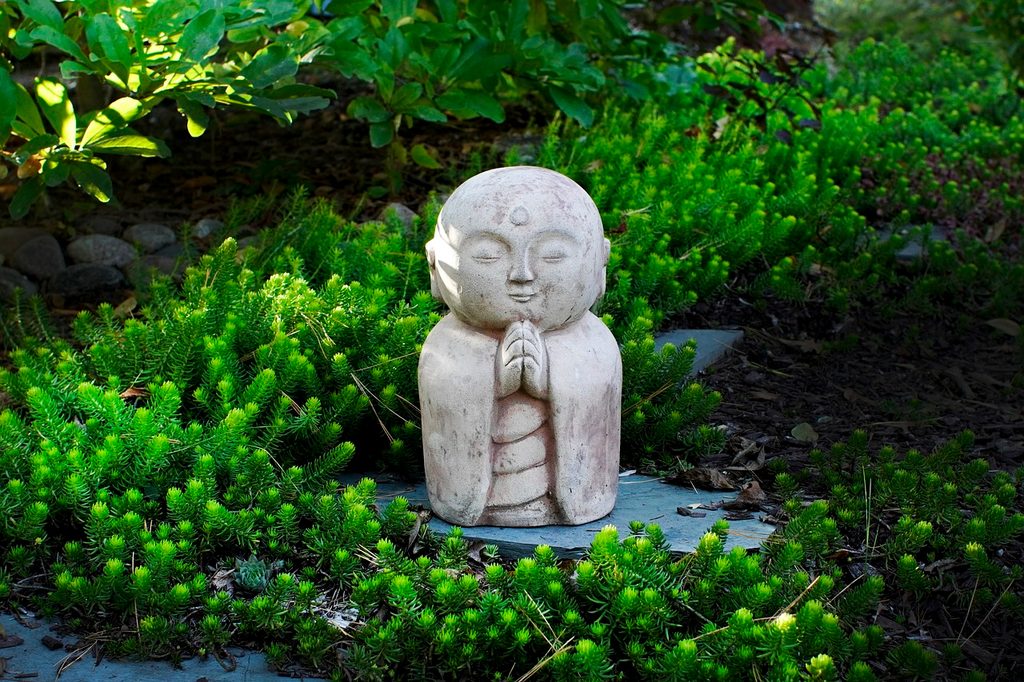
Japanese garden design is truly an art form, evolving over the years to branch out into many different styles rather than being one monolithic aesthetic. That said, traditional gardens in Japan do have some key elements. Generally, Japanese gardens are spaces that encourage reflection while capturing natural landscapes. They draw from many philosophies, including Shintoism, Taoism, and Buddhism.
They’re often asymmetrical but still balanced, featuring odd-number groupings of objects to develop a sense of natural harmony. Embracing simplicity and tranquility, many Japanese garden designs leverage three main elements: water, rocks, and plants. While you might not be able to duplicate a traditional Japanese garden exactly, you can draw ideas to incorporate into your garden.
1. Create a simple zen garden with rocks
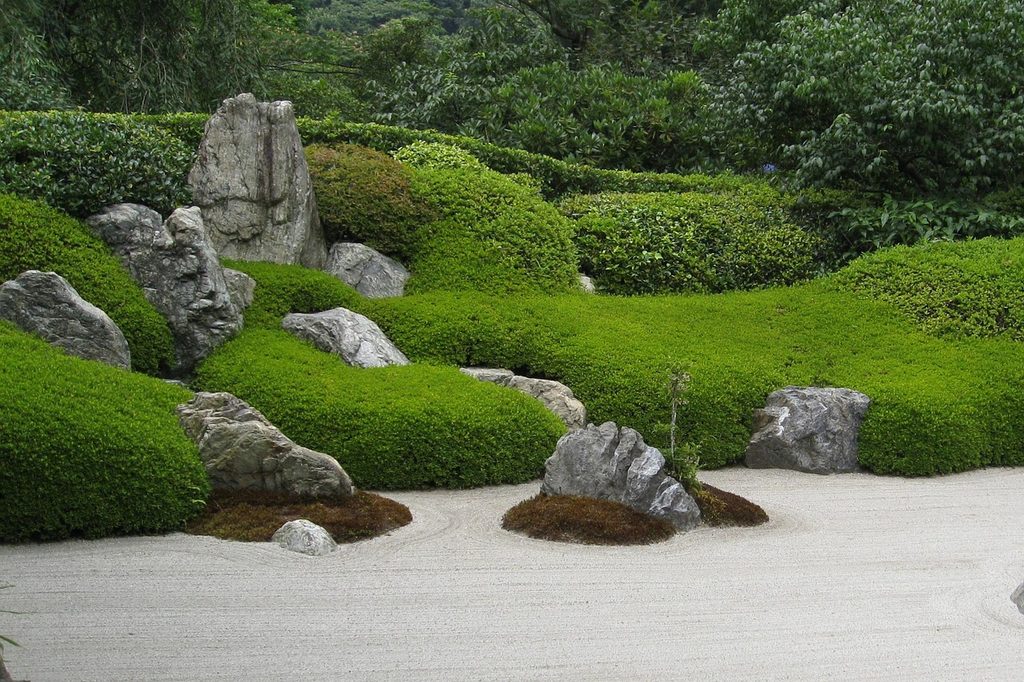
One type of low-maintenance Japanese garden design is a zen garden, which initially started around the 6th century B.C., as monks built gardens for meditation. With a zen garden, the focus is less on plants and more on rocks and gravel. When you visit a zen garden, it should be conducive to meditation. As such, zen gardens are relatively simple. You often have sand or gravel raked into a spiral pattern that resembles an ocean, with strategically placed boulders that symbolize islands.
When putting together a Japanese zen garden, your guiding principle should be simplicity. Stick to a monochromatic palette when picking out your sand and rocks. While some people skip greenery altogether, plants can definitely be integrated into your Japanese garden design layout. To bring foliage into your design, look into plants, such as Japanese maple trees, pine trees, and camellias. Although you want to keep your rockery neutral, plants are where you can bring in vibrant colors.
2. Incorporate winding stone paths
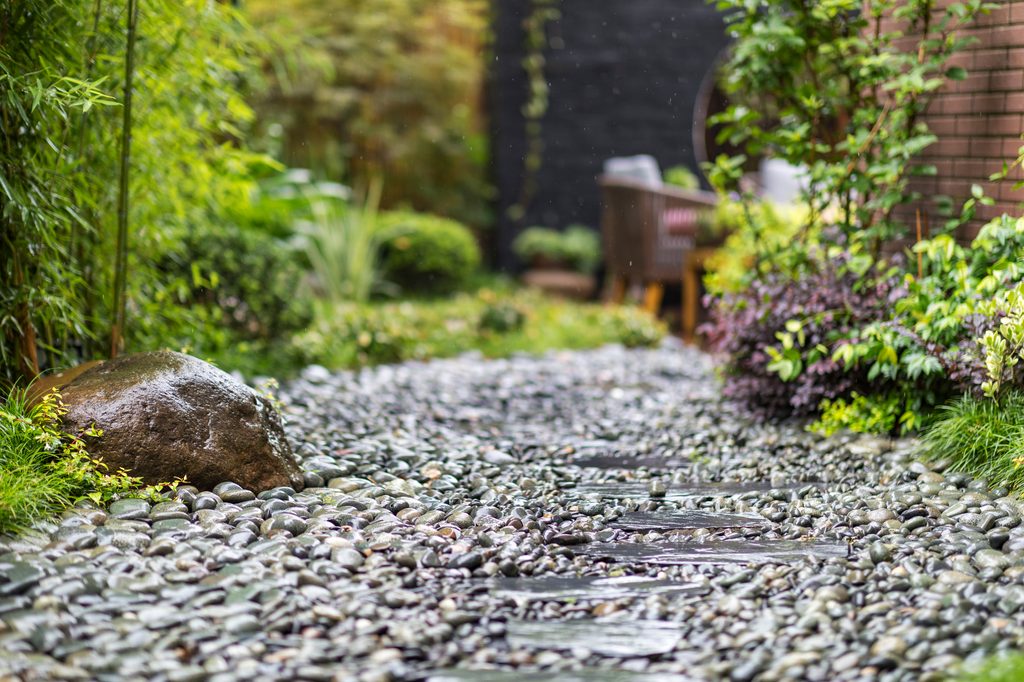
Stone pathways are common elements in Japanese gardens. While you might not have space to build a bridge in your garden, you can incorporate walkways, which symbolize the journey through life. On a practical level, garden pathways also lead people to structures, such as teahouses. Pathways fall into one of three ideals: Shin, Gyo, and So, which roughly translate to formal, ordinary, and informal. A Shin path might consist of neatly cut stones, a Gyo one of stepping stones and cut stones, and a So one of gravel.
Consider where the paths take you and what your vantage point looks like at those particular stops. You can, for example, place winding paths that lead to shrubs and hedges. You can incorporate stepping stones or cut paving stones into your design. In any case, you want to be careful with laying down uneven stones as you build your path. For additional texture, add ground cover plants around stones to blur out harsh edges. While you might want to pull weeds around your stones from time to time, moss is a welcome organic element in Japanese gardens.
3. Bring in a simple water feature
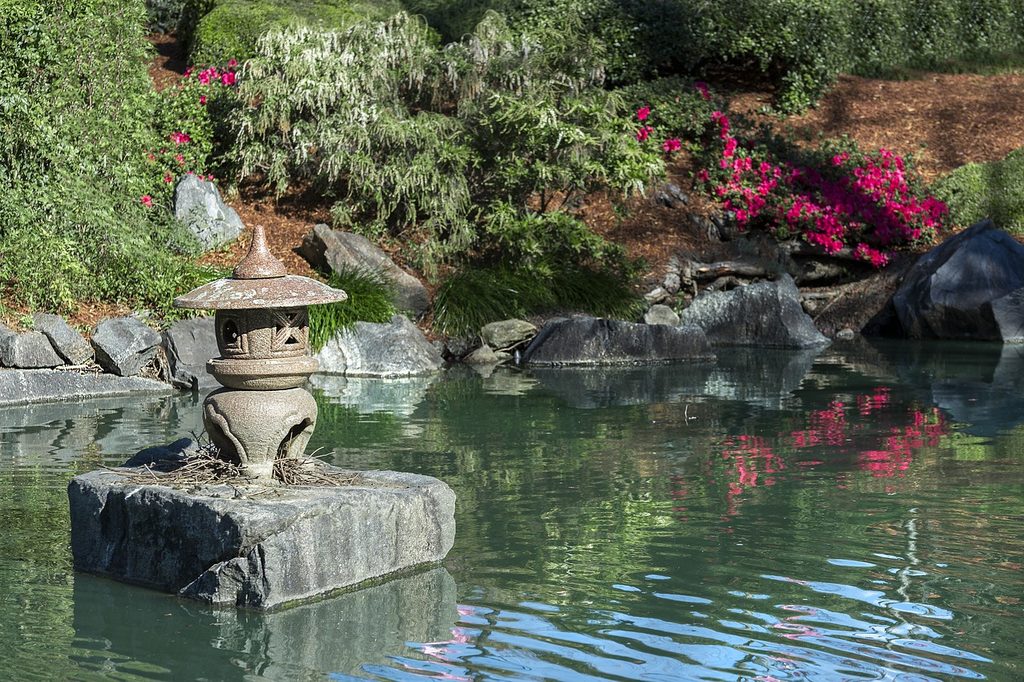
Water represents the flow of life as well as tranquility. Japanese tea and stroll gardens often have water features, such as ponds with koi fish and lily pads. Stone lanterns, bridges, and pagodas often complement them. But waterscaping, of course, may not be ideal for a low-maintenance garden.
If you don’t have the time or space to incorporate a pond or waterfall into your garden design, you can bring water into the picture with a simple shallow stone water basin (tsukubai) or a fountain. In traditional tea ceremonies, water basins were used for cleansing rituals, but they serve more decorative purposes nowadays. You can furnish water features in your own garden by surrounding them with plants, like hostas and ferns.
4. Conserve space with bonsai trees
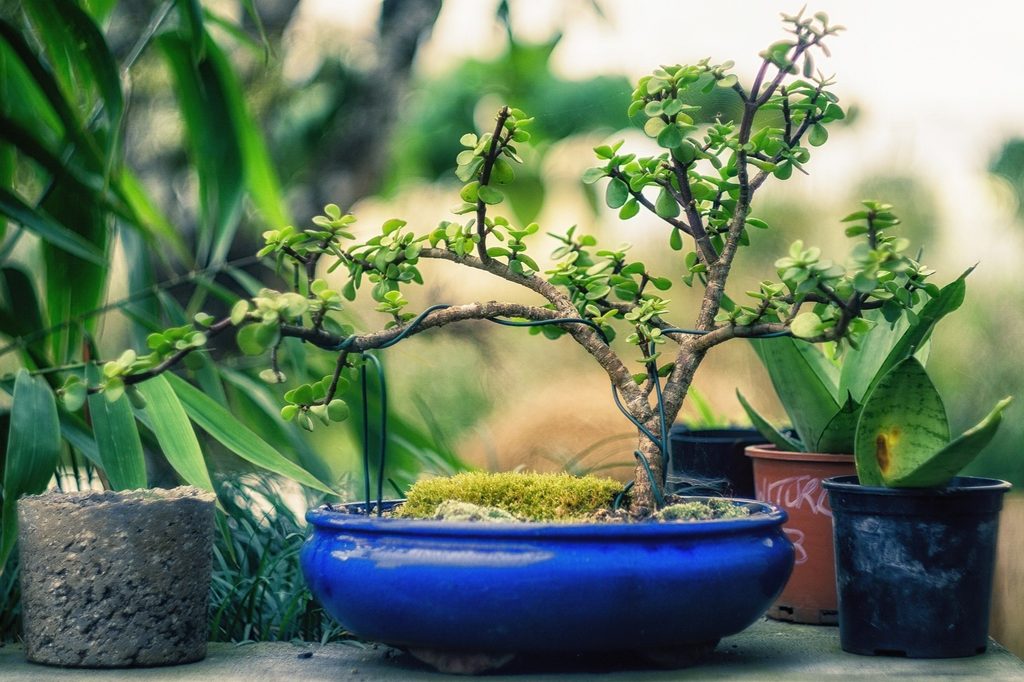
If you don’t have the space to create a large outdoor garden, you can use the same principles to create a beautiful Japanese bonsai garden. While shaping a bonsai tree can take quite a bit of time and patience, maintaining them isn’t as difficult as you might expect. While you can plant some bonsai trees on their own, you can combine others with small rocks, miniature water features, sand, and even other plants to create a container garden that mimics a full-sized garden. Using bonsai gardening techniques, you can create a low-maintenance Japanese garden design that can fit inside an apartment or on a patio.
Consider incorporating Japanese garden design elements into your landscape if you want a beautiful yet simple layout. There are three elements to consider as you take inspiration from a Japanese garden: rocks, water, and plants. Although you may need to put in the initial work to pull up weeds and put down gravel and ground cover, you should be left with a gorgeous garden that doesn’t require much maintenance in the long run and one that provides you with tranquility.