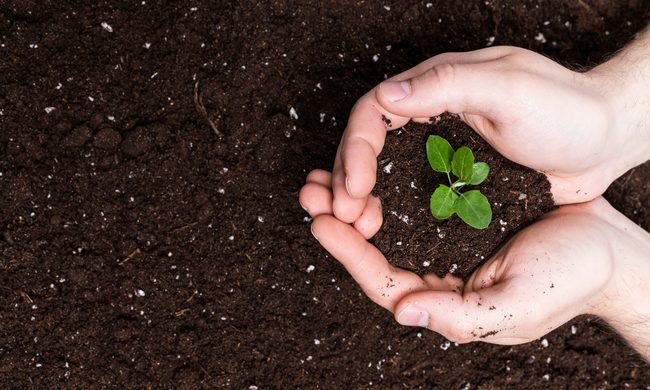
Making compost at home solves several gardening problems. It eliminates organic waste from the garden, landscape, and household without sending these materials to the landfill. It provides a steady source of nutrient-rich soil amendment. And, compost reduces the need for fertilizer, suppresses plant diseases, and encourages the growth of beneficial soil microbes throughout the garden.
But making high-quality compost requires the right mix of nitrogen, carbon, water, and air. And, enclosed bins and tumblers without access to soil may need extra time to become colonized by the microbes that convert waste into compost. This is where a compost starter can help.
Compost starters are designed to kick-start the process by inoculating hot compost bins with millions of hungry microbes. They immediately begin to gobble up waste, reproduce and generate heat that kills off plant disease spores and weed seeds within the mix. If you’re looking for a compost starter that will help cycle waste faster, keep bad smells away, and improve the quality of the compost, continue reading for our good, better, and best choices.
Good: GreenPig Compost Accelerator
If you want to boost the microbe count to start off a batch of compost, GreenPig Compost Accelerator is a good pick. It is loaded with aerobic bacteria cultures that begin working on contact. Just fill up a watering can with a gallon or two of freshwater, drop in one of the water-soluble packets, and soak the compost. One treatment reduces the compost processing time to just 30 days.
Each packet treats up to 9 cubic feet of compost. The 12 count package treats a total of up to 108 cubic feet. At only $12.61 on Amazon, this is one of the most cost-effective ways to start composting.
Better: Jobe’s Organics Compost Starter
Jobe’s Organics Compost Starter is a better pick because it’s formulated with microbes from three different kingdoms and 4-4-2 organic fertilizer. Archaea, bacteria, and fungi each work at different temperatures for fast, efficient decomposition. The fertilizer charge ensures the pile heats quickly and the microbes colonize thoroughly. When the finished compost is used in the garden, the included endomycorrhizae (beneficial fungi) boost plant health by extending the reach of their roots and protecting them from diseases.
This product is ideal for starting compost piles. Just spread it directly onto the pile at a rate of 2 cups per cubic yard (27 cubic feet) of compost. The 4-pound bag will treat up to 8 cubic yards of compost. Only $15.71 on Amazon.

Best: Gardener’s Supply Company Super Hot Compost Starter
Our best pick, Super Hot Compost Starter from Gardener’s Supply Company, gives new compost everything it needs to quickly convert garden waste into rich compost. It includes a proprietary blend of beneficial microbes for a fast breakdown of organic waste and a generous boost of nitrogen from organic sources to stimulate rapid colonization and fast heat-up. Use it in all kinds of composting systems.
The 7-pound bag treats up to 10 cubic feet of compost. Sprinkle it on liberally whenever you add new material and keep the pile moist and aerated for fast results. It sells for $24.95 at Gardener’s Supply Company.
These compost starters accelerate the decomposition of organic waste and improve the overall quality of the finished soil amendment. Use the compost in potted plants, in seed starting medium, as a booster for new trees and shrubs at planting time, as a mulch, and more. The added microbes and nutrients from the starter products improve garden soil wherever the compost is used, boosting the soil ecosystem and overall plant health. With any of these products, you won’t go wrong.