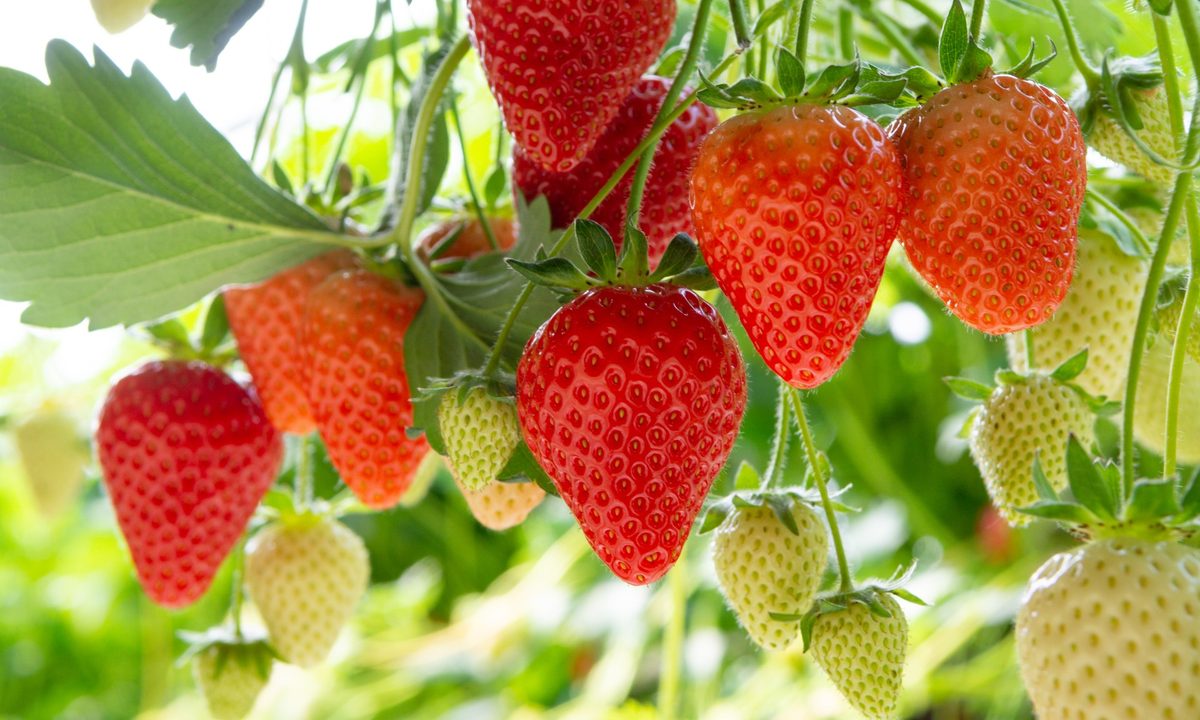
Known for their red, heart-shaped fruits studded with seeds, strawberries are popular summertime fruits that are part of the flowering Fragaria genus in the rose family. Sweet and tart, they're delicious on their own or added to desserts, salads, and other delicacies.
Tasty as they may be, these finicky fruits can be tricky to grow, especially if you're a novice gardener. To help you yield delicious results, we've compiled this comprehensive guide on how to grow strawberries, whether you start them from seed, plant them in a container, or set them up in a hydroponic system.
Types of strawberries
While associated with summertime, you can enjoy sweet strawberries year-round in warm climate zones. While difficult to grow, there are many ways to grow them, whether you choose containers, garden beds, or hydroponic setups. Here's how strawberries grow: Strawberry plants shoot out runners, or horizontal stems, that establish roots in soil and create new plants.
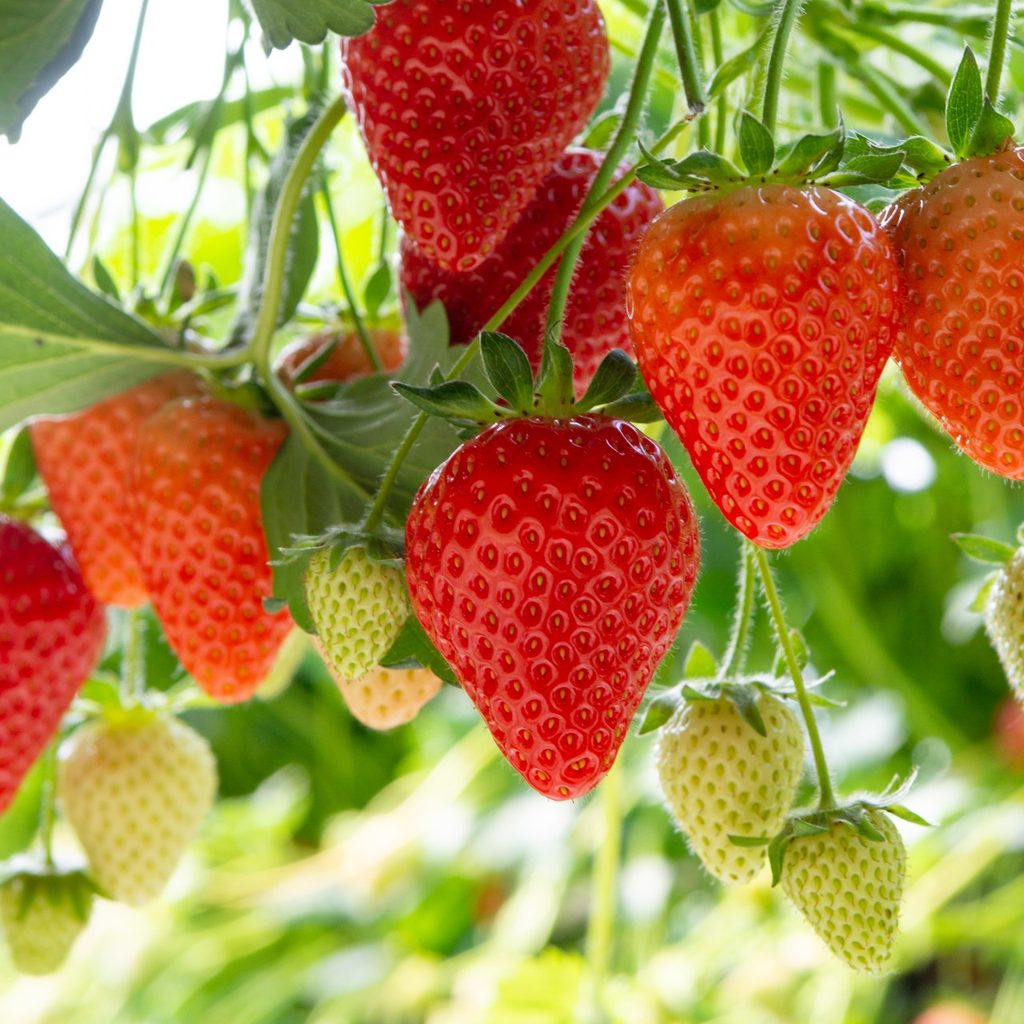
The main types of strawberries are June-bearing, everbearing, and day-neutral strawberries.
- June-bearing strawberries produce one large crop of fruit per season, typically in June — just keep in mind that these won't produce a lot of fruit in their first season.
- Flowering whenever there are 12 or more hours of light a day, everbearing strawberries produce small crops, but do so throughout the growing season.
- Not impacted by day length, day-neutral strawberries give out fruit throughout the growing season, as long as the weather permits growth. They tend to be bigger and firmer than their June-bearing counterparts.
How to start strawberries from seed
It's easy to grow strawberries from seed, but the process will definitely take some time — you may need to wait anywhere from two to three months to get delicious berries from seed. Strawberries started from seed are generally alpine strawberries, which tend to be somewhat small.
Prior to sowing them, you may want to give your strawberry seeds a chilling period for about a month in the freezer — this will help with germination. The best time of year to do this is around December if you want a spring and summer harvest. After this initial chilling period, here's what to do next.
Step 1: Add your seeds to a moist potting mix in seed-starting trays.
Step 2: Lightly cover the seeds with the potting mix.
Step 3: Leave your seed trays in a brightly lit area, and consider supplementing them with grow lights. This will help your seeds germinate.
Step 4: After you see three sets of leaves per plant, you can start hardening off your seedlings to acclimate them to outside conditions. However, note that the germination process can take anywhere from 7 to 45 days.
Step 5: Bring your strawberry plants outside if the weather is warm enough. Strawberries do best in temperatures between 50 and 80 degrees Fahrenheit, but they can survive down to 22 degrees Fahrenheit.
How to grow strawberries in containers
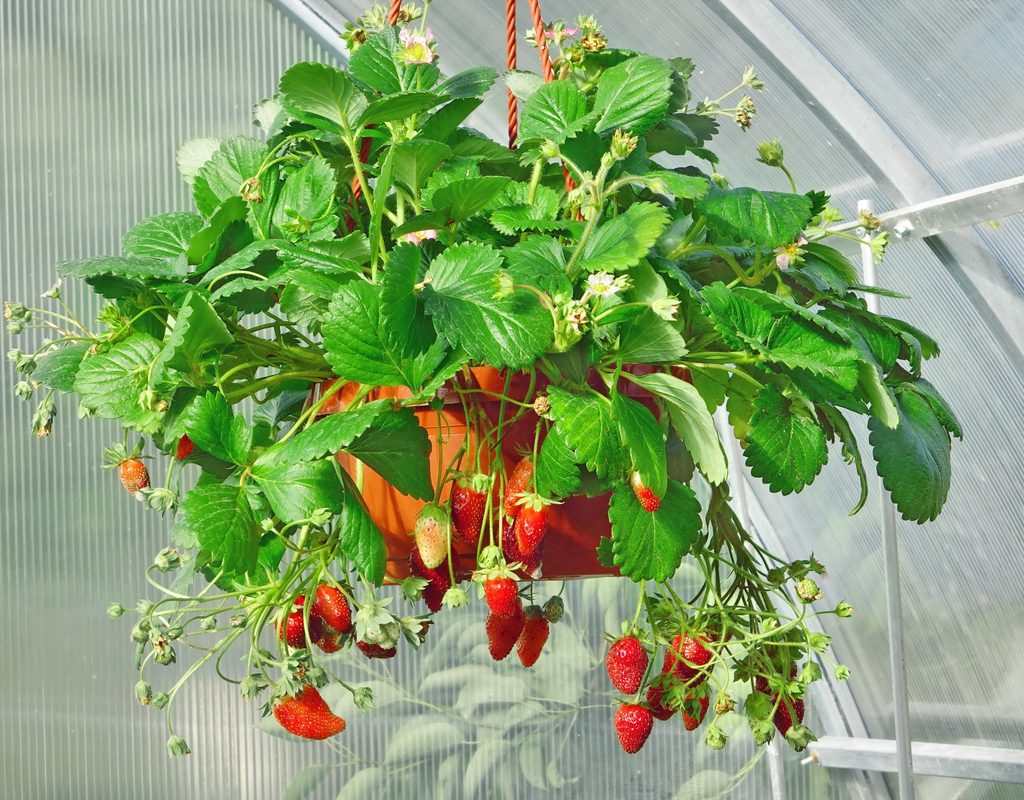
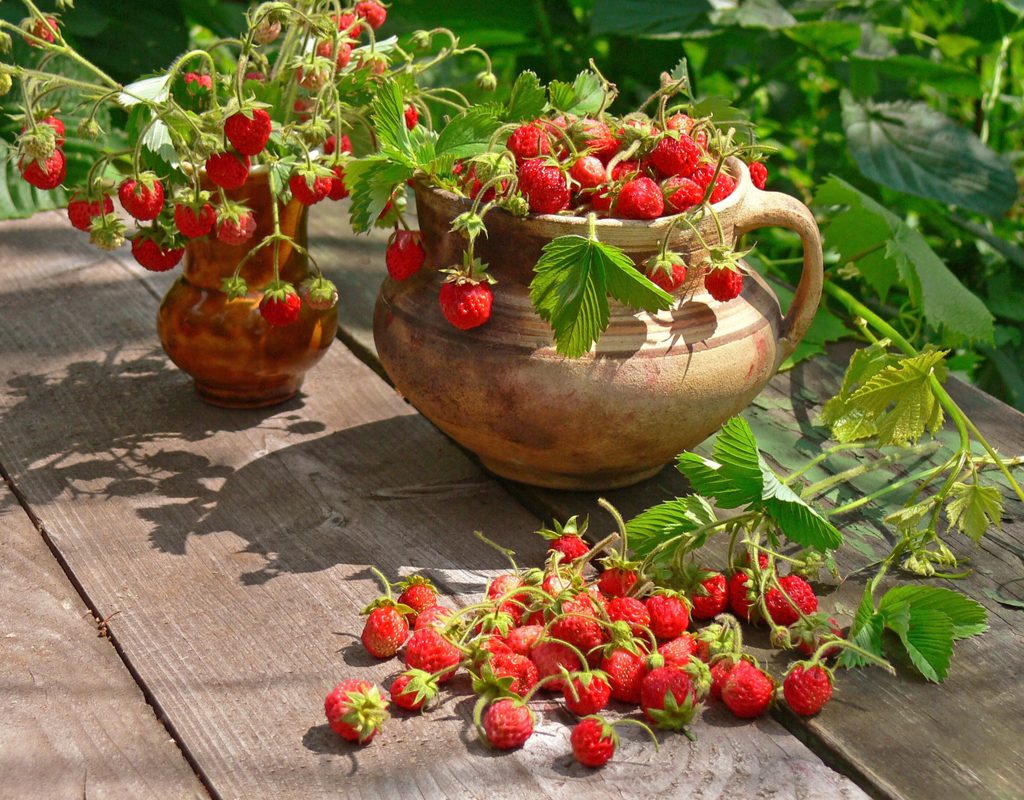
If you want a controlled environment where you can easily monitor weeds and diseases, growing strawberries in containers is the way to go. You can either buy ready-to-go small plants or get cheap bare-root plants.
Step 1: Add a loamy, well-draining, and slightly acidic garden soil to a container with a drainage hole. Strawberry roots are shallow, so you can get away with a container that's about 6 inches deep. Make sure there's enough room to give each plant about 12 inches of space.
Step 2: Mix in an organic, slow-release fertilizer, such as Berry-Tone — you'll want to use about 1 cup per foot of soil.
Step 3: Prepare your strawberry plants for planting. For bare-root plants, you want to soak the roots for around 30 minutes. For strawberry plants in soil, gently pry your plants out of their nursery pots.
Step 4: Plant your seedlings or bare-root plants. You want to keep the crown (where the stem meets the roots) above the soil.
Step 5: Dress the top of your soil with straw to prevent weeds and keep fruits from rotting on wet soil.
Step 6: Water your plants and make sure to water them again when the top inch of soil feels dry to the touch.

How to grow strawberries in a garden bed
If you have the space and budget for them, raised garden beds are ideal for strawberries. A raised bed allows for drainage and helps you keep weeds under control. With a bed, it's also easy to protect plants with nets and prevent foot traffic from damaging your strawberries.
To avoid diseases, don't reuse a bed that has been recently used for nightshades or melons.
The process for planting your strawberries in a garden bed is really similar to growing them in a container, except you'll have more space.
Step 1: Add a loamy, acidic soil to your raised garden bed. Mix in 10 pounds of slow-release fertilizer per 100 square feet. For already established beds, add about half that much.
Step 2: Set down your strawberry plants, keeping the crowns above the soil surface.
Step 3: Space the strawberries about 12 to 18 inches apart.
Step 4: Add straw on top of your soil to provide mulch for your strawberries.
Step 5: When you notice strawberries sending out runners, you may want to cut them back every week to keep your plant focused on producing fruit, not new plants.
That said, you can also allow the runners to create a few new plants and propagate them in soil to share.
Step 6: Consider growing companion plants, such as asparagus, bush beans, and borage.

How to grow strawberries hydroponically
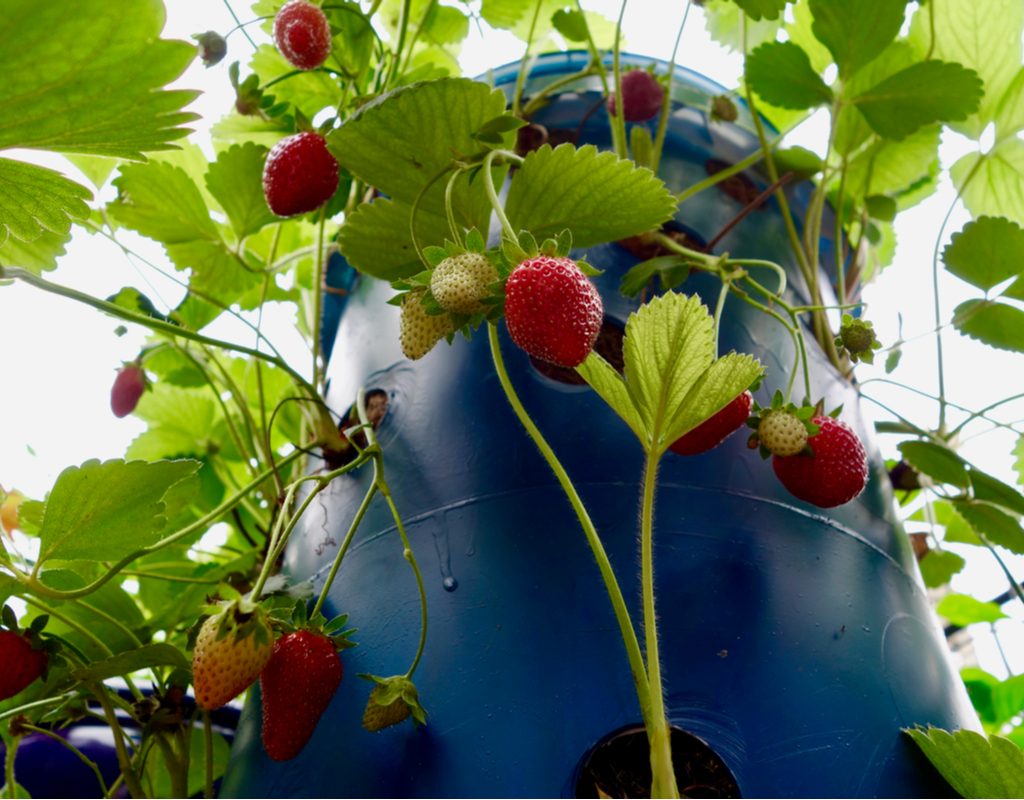
While the initial setup of a hydroponic system can be convoluted and pricey, you can save water in the long run because you're essentially recirculating nutrient water. Plus, a hydroponic system is a great way to prevent pesky pests that love soil.
When growing strawberries, you can use a hydroponic system to stack your plants vertically, so it's a pretty space-saving approach to edible gardening.
Step 1: Set up a hydroponic system, such as the ebb and flow system, for your strawberries.
Essentially, you'll have a water reservoir beneath the structure holding your strawberry plants. Then, a timer will determine how frequently a pump floods reservoir water into your structure.
Step 2: Remove soil from your strawberry plant roots and place your strawberries in net pots filled halfway with a soilless growing medium, such as coco coir or clay pebbles.
Step 3: Add a hydroponic-specific liquid nutrient solution to your water reservoir. Change it every two to three weeks.
How to care for strawberries
- Lighting: Strawberries appreciate at least 6 hours of direct sunlight a day in order to produce delicious fruit. The ideal amount of sun is at least 10 hours of direct light, but aim for a minimum of 6 hours. Strawberries grown indoors do best with support from artificial lights.
- Temperature: Perennial in climate zones 4 to 9, strawberries do best in temperatures between 50 and 80 degrees Fahrenheit. In temperatures below 20 degrees Fahrenheit, make sure to mulch your plants and use a frost blanket.
- Watering: Strawberries need about 1 inch of water each week — you want the soil to be evenly moist, but never soggy.
- Fertilizing: If you're using a slow-release fertilizer, feed your strawberries when you first plant them and then again after they produce fruit.
- Weeding: Hand weed unwanted plants, as strawberries do not fare well with competition.
- Pests and diseases: Strawberries can be high maintenance and prone to pests and diseases. When you come across a pest issue, you want to be careful and use gentle, organic solutions, such as neem oil. Birds may also be an issue, so you may want to use bird netting to prevent them from getting into your crops. To prevent fungal and rot diseases, water your plants early in the morning to allow leaves to dry off, and use a mulch to keep fruit from touching wet soil.
How to harvest strawberries
Depending on when and where you plant them, strawberries can be picked during late spring or throughout the summer. Generally, they're ready for picking four to six weeks after flowering. Here's how to pick your harvest.
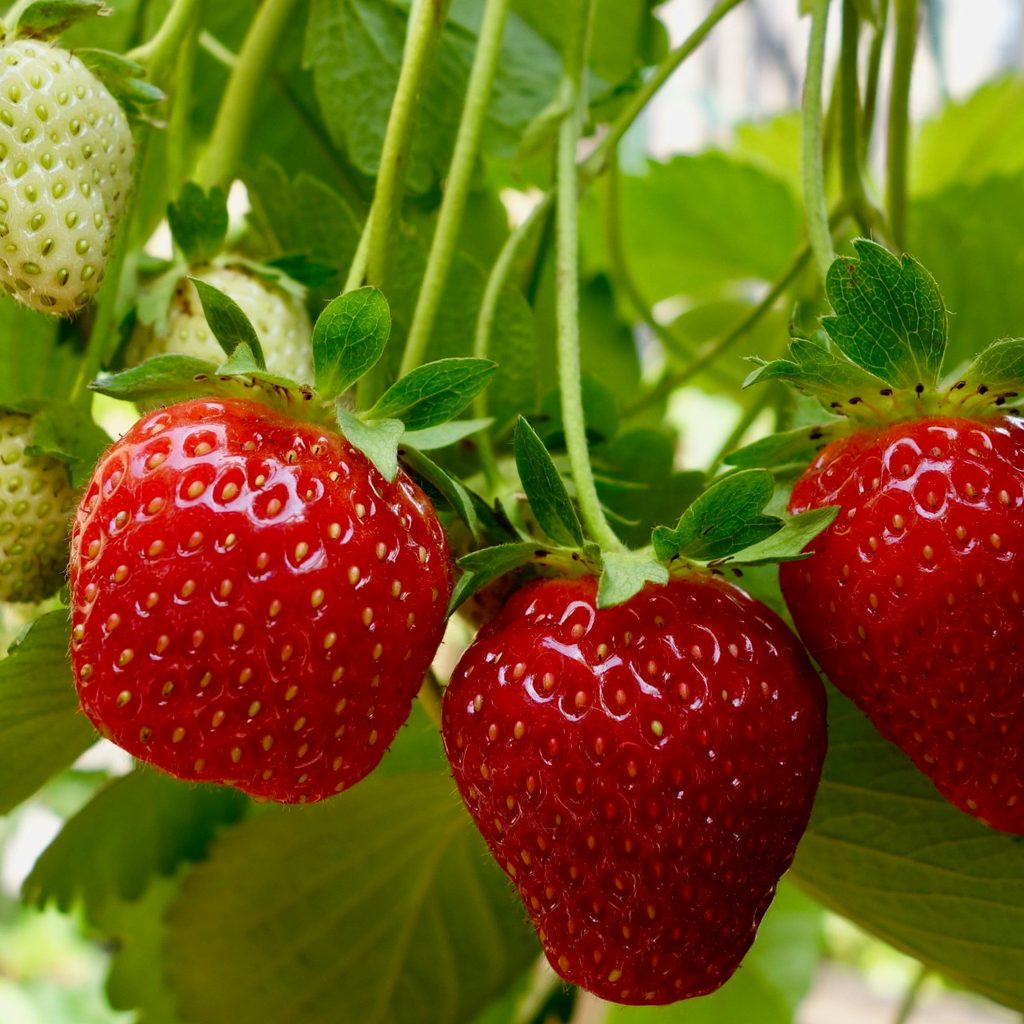
Step 1: Check to see that your strawberries are fully colored.
Step 2: After one or two days, get ready to pick them. Use a pair of scissors to cut them off instead of pulling them, as strawberries are quite delicate. Leave a quarter of the stem attached.
Step 3: Wash your fruit and taste test to see if your strawberries are sweet!
Clearly, strawberries are plants that require extra care and attention. But there are so many ways to get your crop started, and a diligent eye will help you keep issues at bay. If you're willing to put in the hard work, you'll be rewarded with sweet, delicious fruit during the growing season.