
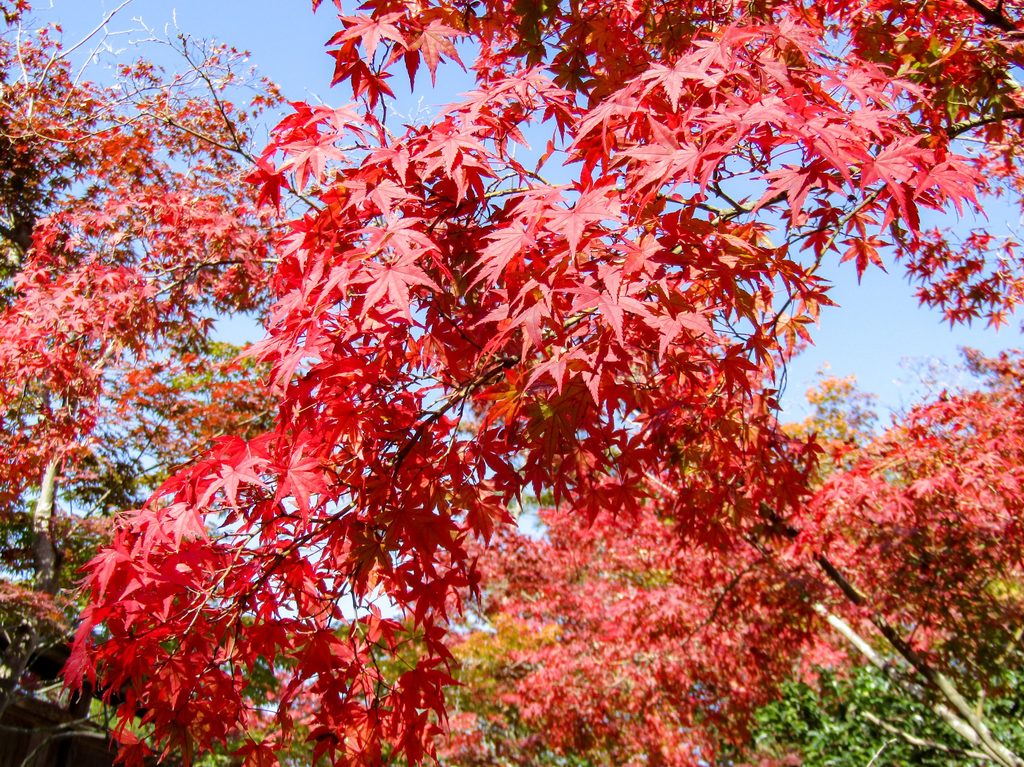
The Japanese maple (Acer palmatum), hardy in zones 5 to 8, is a stunning and uniquely shaped tree native to Japan, central China, and Korea. The trees were introduced in England in 1820 and have been used ever since as focal points in gardens all over the world for their stunning, brightly colored leaves and canopy growth patterns.
Typically, Japanese maples grow to about 15 to 20 feet tall, and their canopies reach out to about the same length. However, there are dwarf versions of these trees that are some of the best options for smaller gardens. They have bright, hand-shaped leaves that appear in the summer in a beautiful green color but then turn red, purple, or yellow in the fall.
If you’re looking to plant one of these beauties, just be aware first that they’re not fast growers. Japanese maples aren’t so slow that you won’t notice a change from year to year, but if you need something to grow up quickly to hide that electric meter, you may want to choose a different plant. Still, they have a lot going for them — they vary broadly in terms of size, colors, and shapes, making them ideal choices for landscaping. If you introduce one to your garden for aesthetic appeal, one of the most important things you should know is how to prune a Japanese maple tree.
Why you should prune a Japanese maple tree
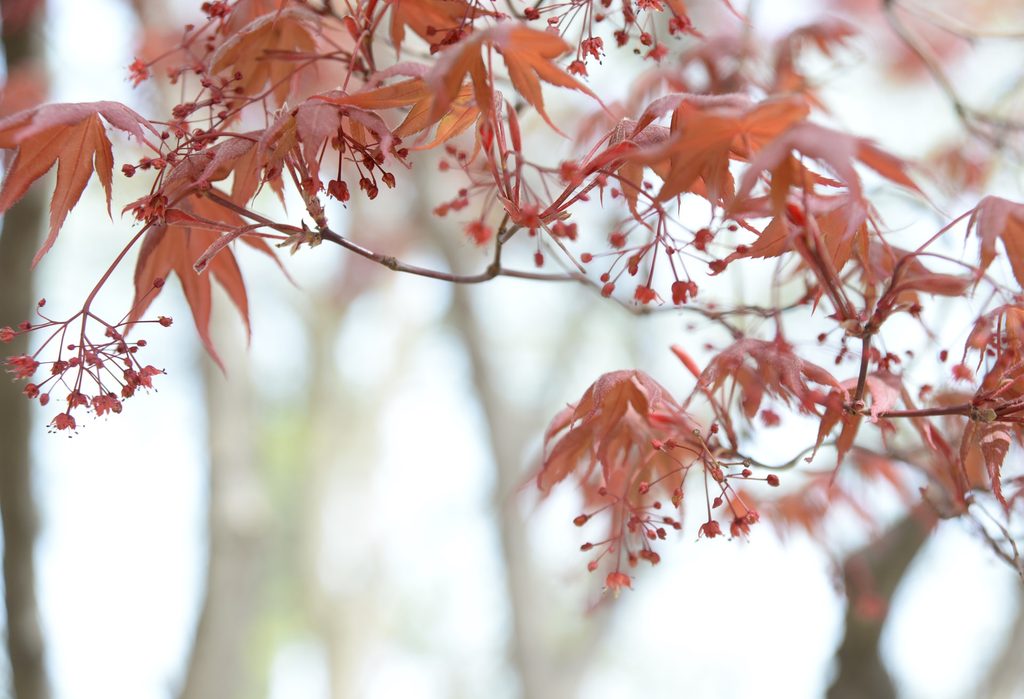
There actually is no real reason you should ever need to prune a Japanese maple for health reasons. These trees are healthy and grow in a unique way that’s just a part of their charm. However, when growing them for landscaping purposes, sometimes it’s necessary to prune a plant to keep it in the shape you want, protect the plant, cut off dead or diseased limbs, or guard the plants around it. For example, the broad canopy of the tree might put your sun-loving flowers in the shade for too long and inhibit their growth.
When to prune a Japanese maple
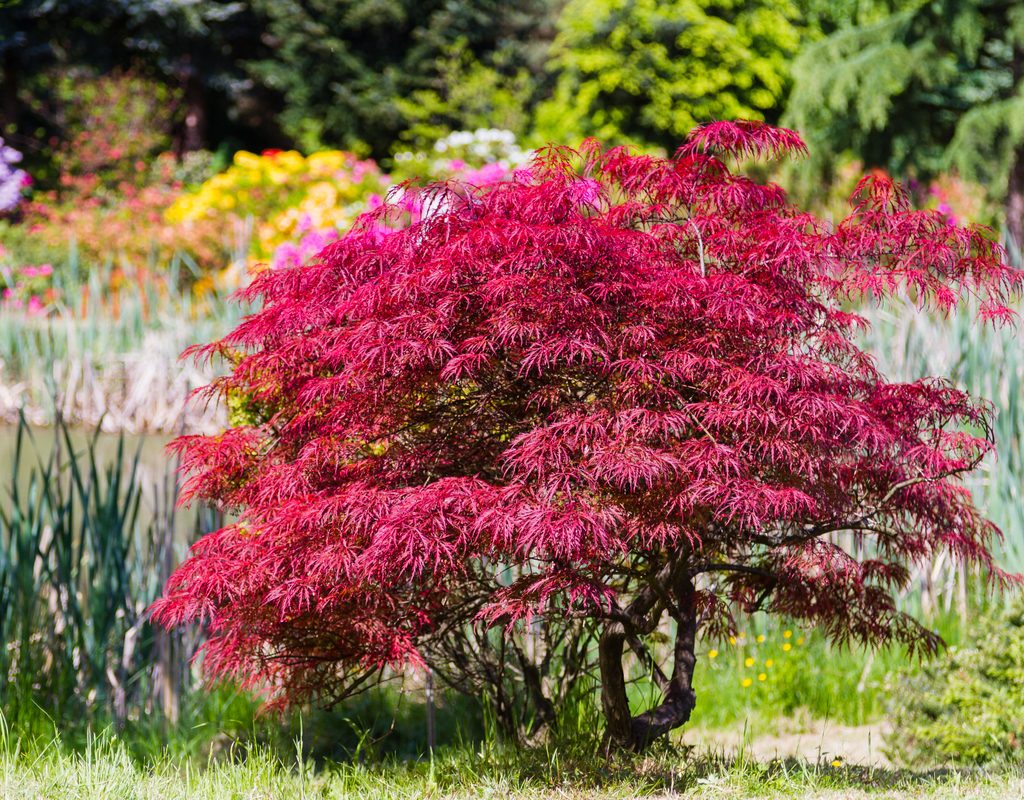
When you start thinking about pruning the plants in your garden, it’s vital to their health that you do your research and find out what time of year is best for that specific plant. If you’re just going to be snipping off a few branches of your Japanese maple, you can do that any time of year without affecting the tree’s overall health. However, if you plan to prune a lot of branches to change the shape or size of the tree, you’ll want to prune in the winter. Other than that, the old gardener saying “prune when the shears are sharp” rings true here, too. As long as you have clean and high-quality gardening tools, you can lightly prune your tree any time of year.
How to prune a Japanese maple tree
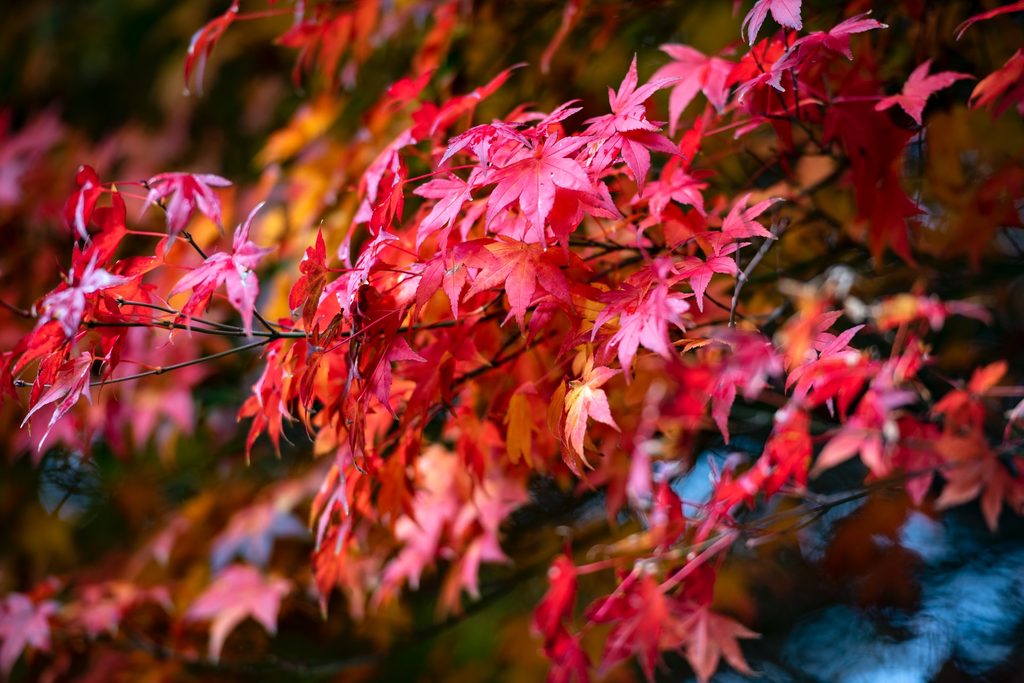
The most important part of pruning your Japanese maple is what you use the cut it. To ensure the plant doesn’t get sick, only use disinfected and sharp pruning shears. A sharp tool creates a clean cut and makes the process easier for you and the tree!
When you go to cut the limb or branch, you’ll want to cut close to the trunk, but not flush to the bark. Not much of the cut-off branch should be left on the plant, but you should be able to see a small stump where it once was. If the limb is too thick for pruning shears, you can use a small handsaw instead. Again, you’ll want to be sure your saw (or whatever tool you use) is clean, disinfected, and sharp enough to make a clean cut. A jagged cut does more harm to the tree and leaves an eyesore behind.
If you have a lot of pruning to do, it might need to take a year or two to do it. Don’t cut off a large portion of the tree at once. This can send the plant into shock and kill it. Instead, cut a few branches one year, then wait until the next year or the year after that to cut the rest of the branches. This gives the plant plenty of time to recover from the first pruning and easily handle another pruning the following year.
Where to cut when you prune your Japanese maple tree
It can be daunting to cut your Japanese maple tree, but targeting a few specific areas can make the process much more manageable. First and foremost, start with any branches that look diseased or dead. Then, tackle any tree branches that look like they’re crossing or growing in the wrong direction.
As you begin pruning for aesthetic appeal, think of the canopy of your maple tree like an umbrella and trim off any parts that stray too far from that silhouette. Starting with the lower branches, consider cutting any parts of the tree that look too crowded — this will also improve airflow around your maple and prevent disease.
So if you were nervous about pruning your prized Japanese maple or hesitant to plant one because you thought it needed a lot of maintenance, rest assured that these lovely trees are generally easy-to-grow, low-maintenance plants. The Japanese maple rewards you with stunning color and distinct growth patterns, making it the perfect landscape centerpiece in your garden for years to come.