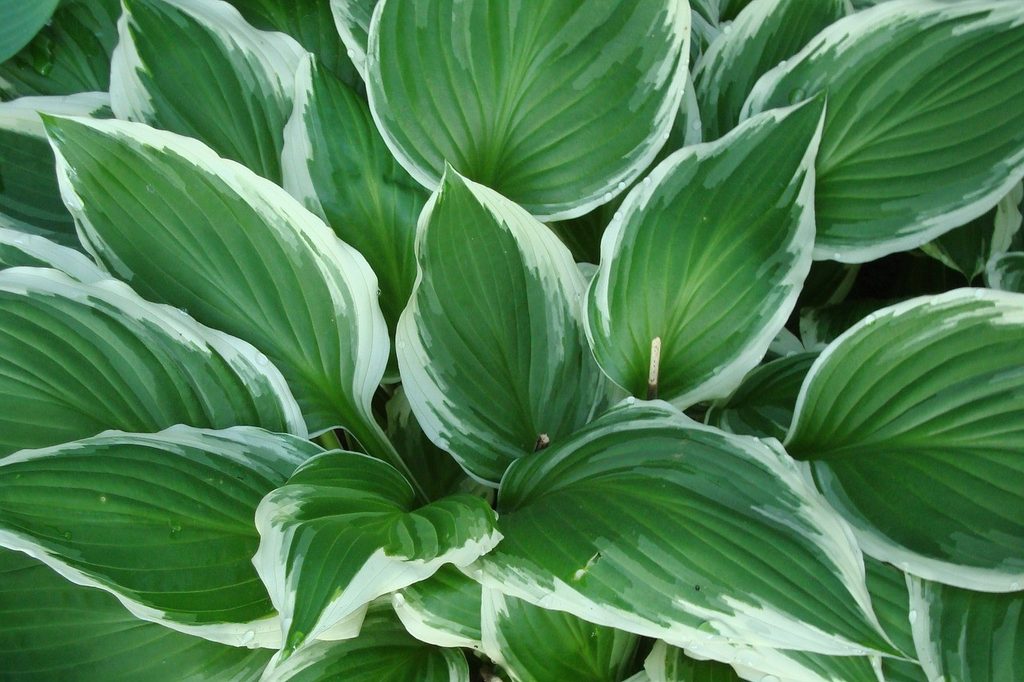
Shade gardens can be tricky to plant in sometimes, but you can always count on hostas. Hostas are easy to grow, can be found in most nurseries and garden centers, grow well with many other plants, and are quite beautiful. The only question is which hosta variety will you plant? This guide to five incredible types of hostas will walk you through our favorite hosta varieties. No matter what type of shade garden you’re planning, one of these types of hostas is sure to fit.
Deja Blu
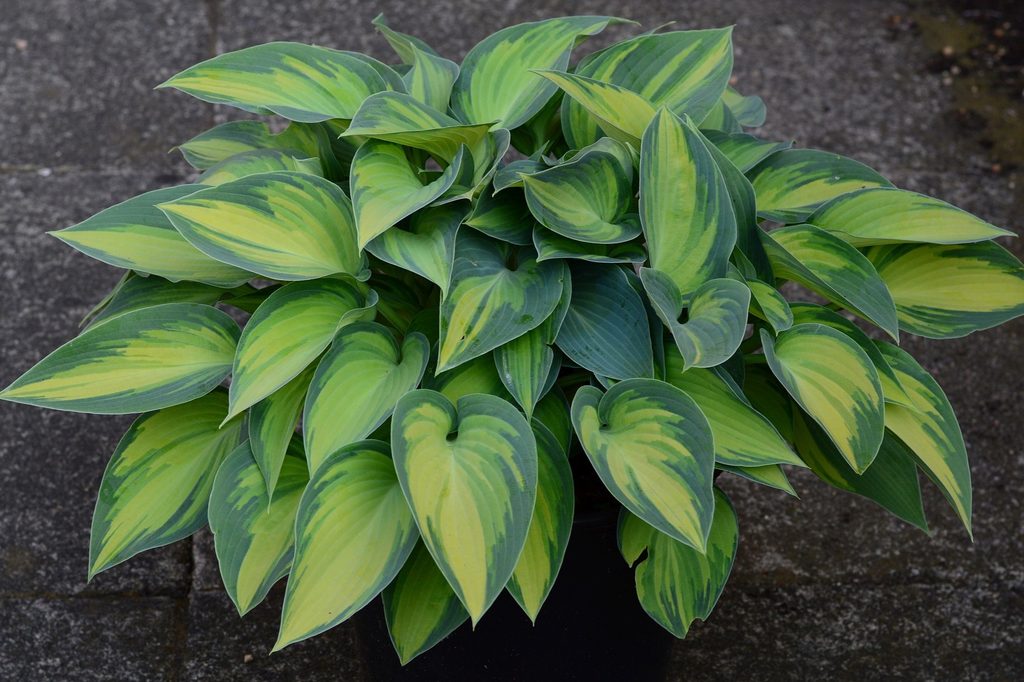
Deja Blu hostas are known for their blue-green leaves, which are bordered with yellow-green. If you look closely, you’ll find that there is a jagged stripe of cream, pale yellow, or white in between the blue and yellow parts of the leaves. This gives Deja Blu a unique layered appearance that sets it apart from other types of hostas. It is a fast-growing hosta, but stays in the small to medium size range. Beginning in the middle of summer, Deja Blu hostas put out pale purple flowers, which add to its overall sweet appearance.
Pathfinder
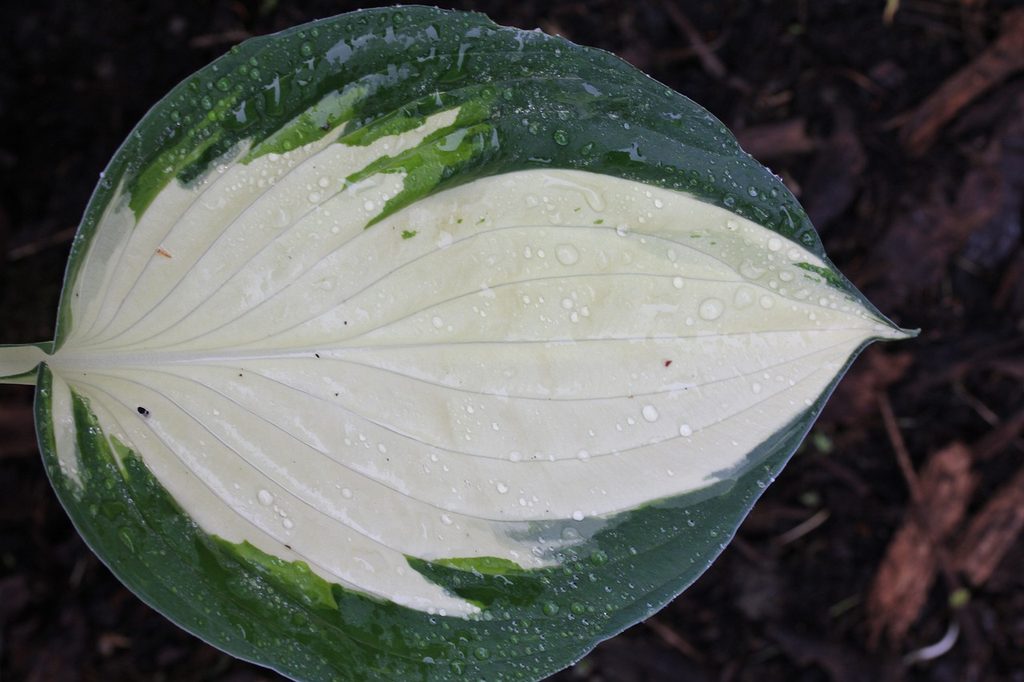
Pathfinder hostas are simple, elegant, and relatively large. Their leaves have a cream center, sometimes with green flecks or spots and dark green edges. Pathfinder hostas have thicker leaves than other types of hostas, giving them a robust or sturdy appearance. These leaves are also slightly textured and glossy. This hosta typically blooms in late summer, and its flowers are white and light purple. These white flowers speckled with purple look charming in dappled shade or as part of a cut flower display.
Great Expectations
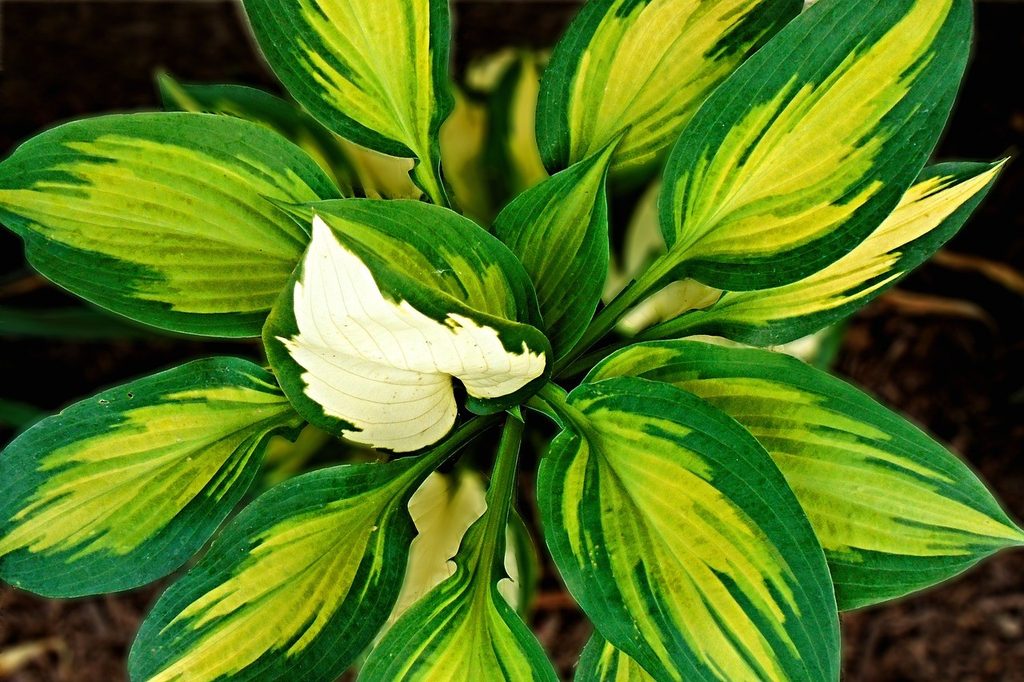
Great Expectations hostas certainly live up to their name. These are one of the most popular types of hostas, because of their large size and interesting leaves. They have thick, curved or curled leaves that change colors with the seasons. The leaves have yellow centers with blue-green edges. During the summer, the yellow centers brighten before fading in autumn to a lighter yellow, cream, or white color. Great Expectations are ideal for partial shade, as their colors are more pronounced when they have some sunlight. This is also a relatively early blooming hosta, typically putting out flowers in mid-spring to early summer.
Whirlwind
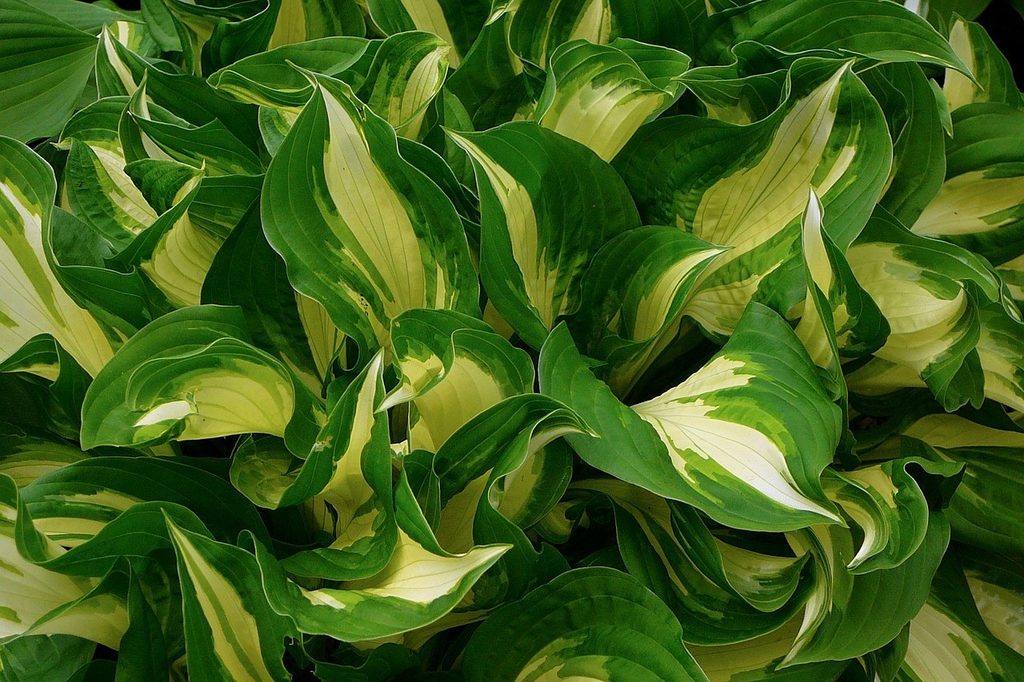
Whirlwind hostas are set apart from other types of hostas by their leaf shape. Rather than unfurling and spreading, Whirlwind hostas stay mostly vertical and curled, like a funnel. This gives Whirlwind hostas a unique shape and silhouette, as well as making them easier to grow in smaller spaces. The lack of spreading leaves and its relatively small size mean you won’t need to worry as much about its leaves being bent by other nearby plants. This also makes it a great choice for container gardens. Similarly to Great Expectations, Whirlwind hostas change color through the seasons.
Pandora’s Box
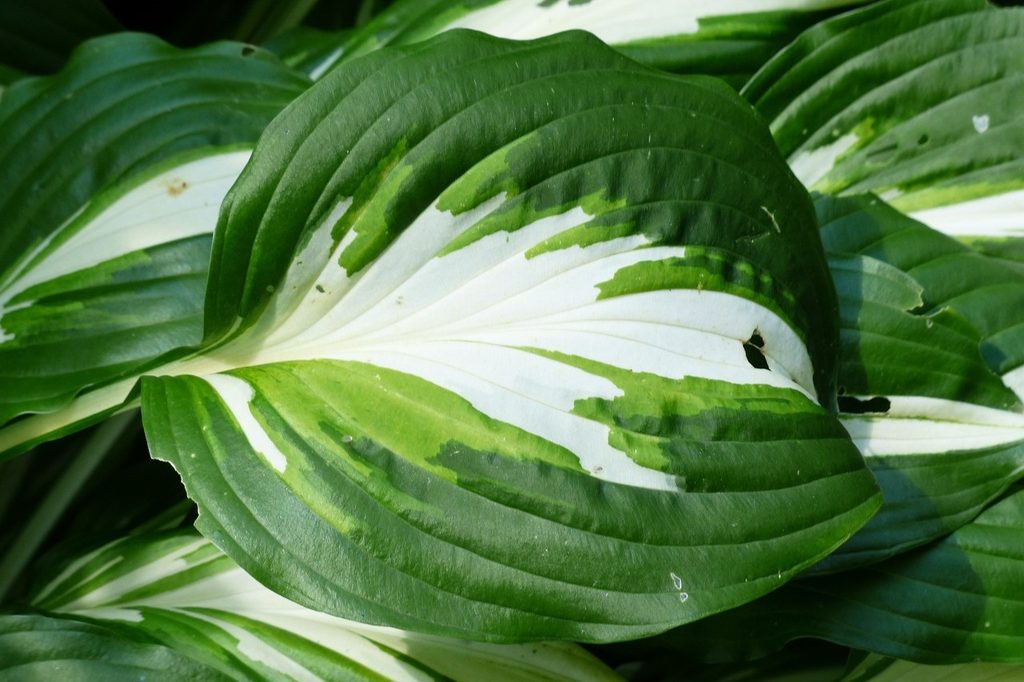
Pandora’s Box is a great option if you want a hosta for a container garden, a row of hostas to serve as a garden border, or just need a small hosta to fill in the gaps between other plants. It has a classic hosta appearance, with oval leaves that are cream or white in the center and green or blue-green at the edges. It blooms in early summer, and its small size makes it a cute and versatile addition to any shade garden.
These five types of hostas are just the beginning, but they cover a nice range of needs. Whether you want a large and grand hosta like Great Expectations, something small and cute like Pandora’s Box, or something a little bit odd like the Whirlwind, one of these hostas will certainly appeal to you.