
Tulips are beautiful, low-maintenance flowers that add color and elegance to any garden. If you’re trying to maintain a garden year-round, then tulips are a great, hardy spring perennial to plant. You can even cross-pollinate your tulips for new colors and patterns! While you can have a garden of just tulips, they pair well with many plants, as long as they have the same love of full to partial sun and dry soil.
If you’re wondering what to plant with tulips, we’ve selected nine amazing plants that pair well with tulips for different reasons. No matter what you’d like out of a companion plant, some of these plants are sure to appeal to you.
Brunnera and hostas
After tulip blossoms fade, their leaves are left standing for a while. Over time, the leaves dry out, turn yellow, and die. It’s necessary for the tulips, but it isn’t very pretty. This is one area that these two companion plants can help. Both brunnera and hostas have large, lovely leaves that can help cover the tulip leaves as they die. You can plant both in early spring, but with hostas, you can plant in early fall as well.
During the spring, while tulips are blooming, hosta flowers rise above them, creating a layered look to your garden. Brunnera, also called false forget-me-nots, put out swaths of bright blue flowers that contrast nicely with many tulip varieties. Both hostas and brunnera prefer partial shade over full sun, which makes them suited for tulip beds beneath large trees. If you plant smaller varieties of hostas and brunnera, then the tulips will offer them some shade as well.

Crocus and Virginia bluebells
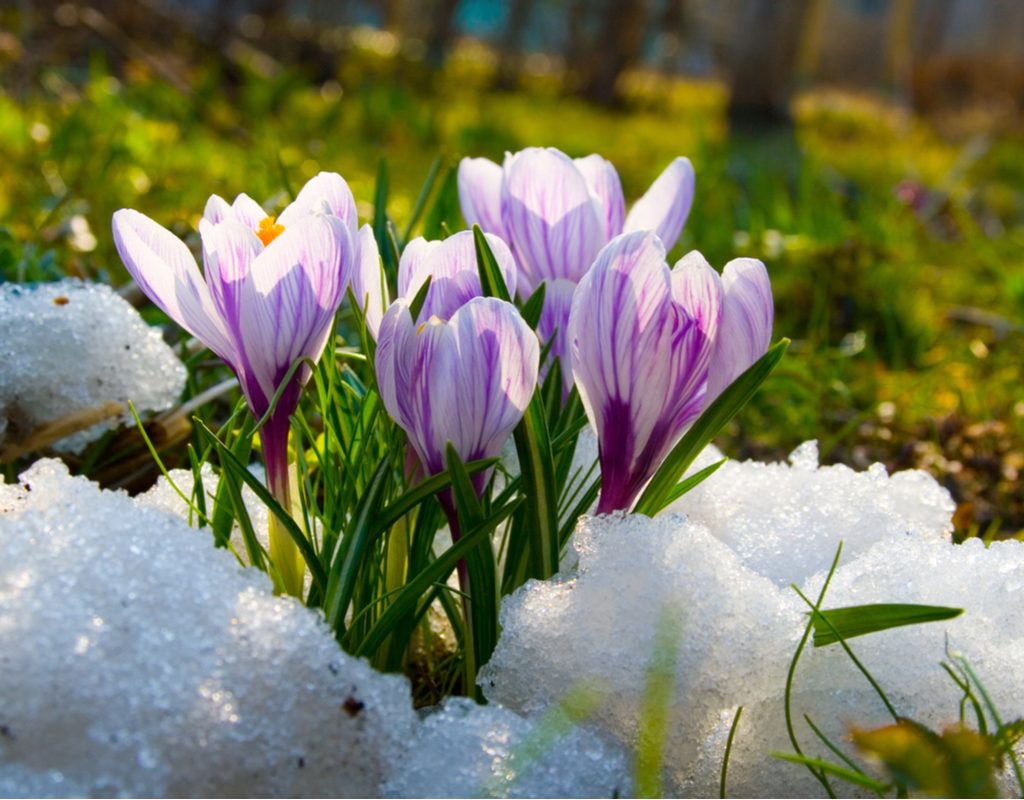
If you’re looking for companion plants that look beautiful blooming beside your tulips in the spring, then crocuses and Virginia bluebells are two fabulous options. Crocuses are one of the earliest spring blooming flowers, so they tend to bloom just before tulips. If you want a lovely lead-in for your tulips, then crocuses are a great choice.
Crocuses grow from bulbs, much like tulips, but they are smaller, so you can mix them with your tulips without worrying about crowding. Virginia bluebells are a little bigger, but they’ll bloom at roughly the same time as your tulips. However, both crocuses and Virginia bluebells die back and go dormant during the summer. Although they look lovely in the spring, you’ll need additional companion plants to keep your garden vibrant during the summer.
Crocuses use cold weather to signal when it’s time to begin growing, so plant them during the fall — six to eight weeks before a hard freeze or frost is ideal. This gives them time to establish roots before the cold weather puts them into dormancy. You can plant Virginia bluebells in the fall or spring. You may even be able to find Virginia bluebell seedlings at your local nursery.
Columbine and speedwell
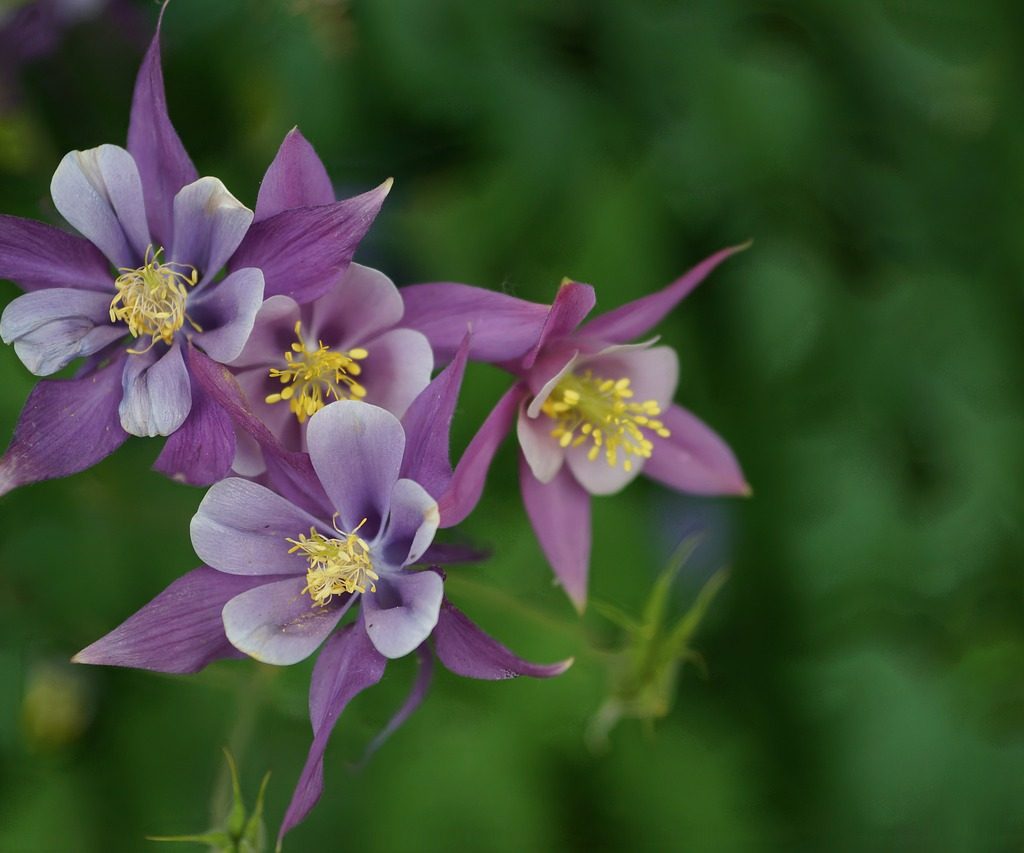
If you’d like to keep your garden vibrant throughout the summer, but want something a little flashier than foliage, then columbine and speedwell might be the right choice for you. Both of these gorgeous flowers bloom just after tulips, keeping your garden colorful even after your tulips fade. Columbine flowers come in a wide array of colors, including two-toned shades, so you can match them to your tulips with ease.
Speedwells, also called Veronicas, come primarily in blue and purple, but they’re available in many sizes. There are short, ground-cover speedwells and those that grow tall flower spikes. You can plant both speedwells and columbines in the early spring, and you can plant columbines in the fall as well.
Catnip, sage, and rosemary
Catnip, sage, and rosemary make up the last category of companion plants on our list. All three are herbaceous perennials, and they offer benefits to your garden year-round. They enjoy the same conditions as tulips, but they grow quite a bit larger. For this reason, they make great backdrops for your tulip garden. They have beautiful light blue flowers, but most gardeners grow them for their scent and herbal uses.
Catnip is a favorite of many cats, of course, but it’s edible for humans as well. Catnip tea is a common home remedy for sore throats. Sage and rosemary are both flavorful herbs that you can add to many dishes. As companion plants, they are sedate but steadfast. While the tulips are in bloom, catnip, sage, and rosemary won’t steal the show from them. During the summer; however, when the tulip leaves are drying out, these herbs draw plenty of attention.
These nine amazing plants make great company for your tulips. They all enjoy full sun and well-draining, drier soils. They’re low maintenance as well, so you don’t need to worry about draining your resources to care for extra plants. Whether you decide to partner your tulips with one of these plants, several of these plants, or your own personal favorite companion plants, we wish you luck getting your garden started this year!