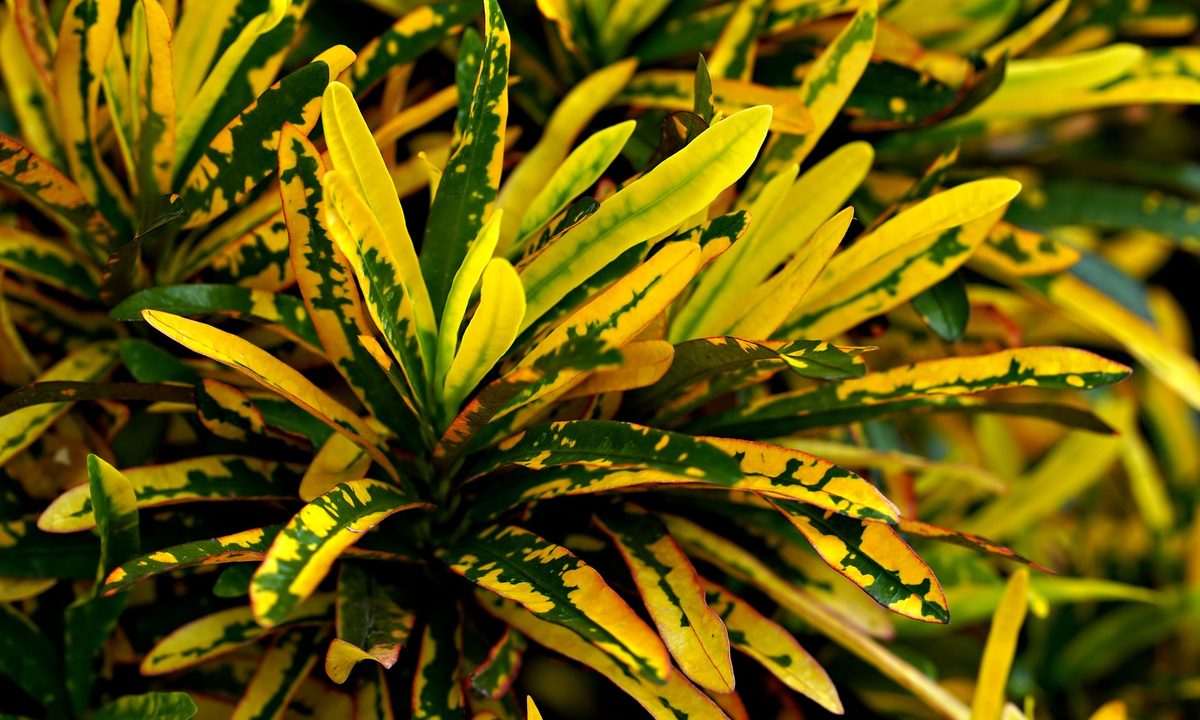
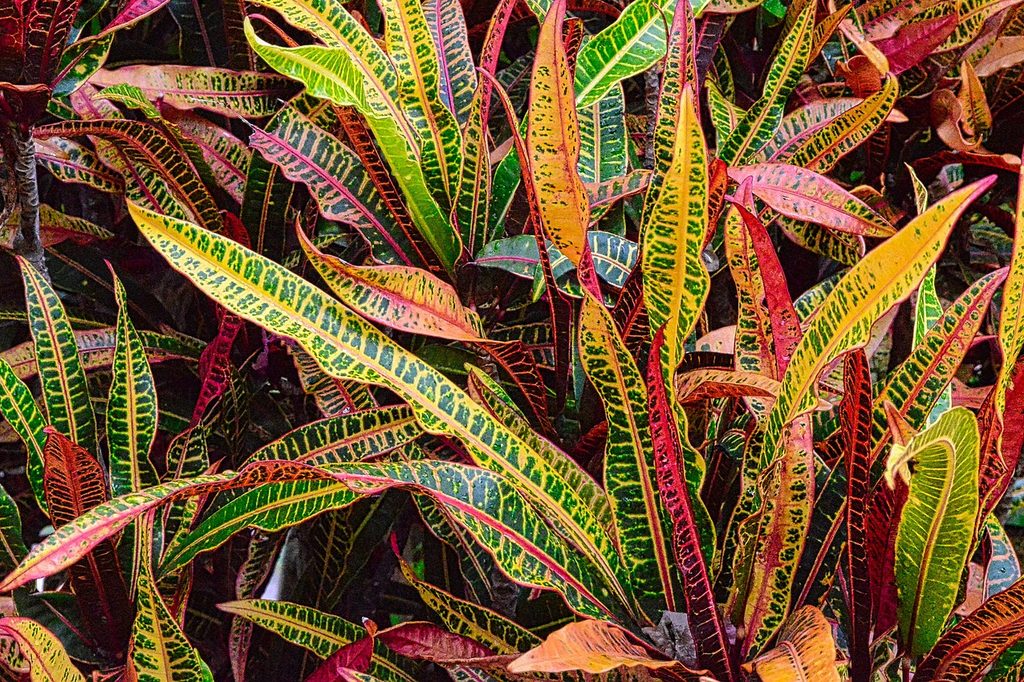
When it comes to bringing vibrant colors into your home, colorful houseplants are an excellent option. There are many fantastic choices, with flowers and foliage plants that come in a wide array of colors. Crotons are one of the most popular plants for this, as their mottled leaves are colorful and unique, with a lovely tie-die-like pattern.
If you want to add a gorgeous croton plant to your indoor garden, then you’re in luck! We’ll explain everything you need to know about growing and caring for these stunning plants in this guide to croton plant care guide.
Planting crotons
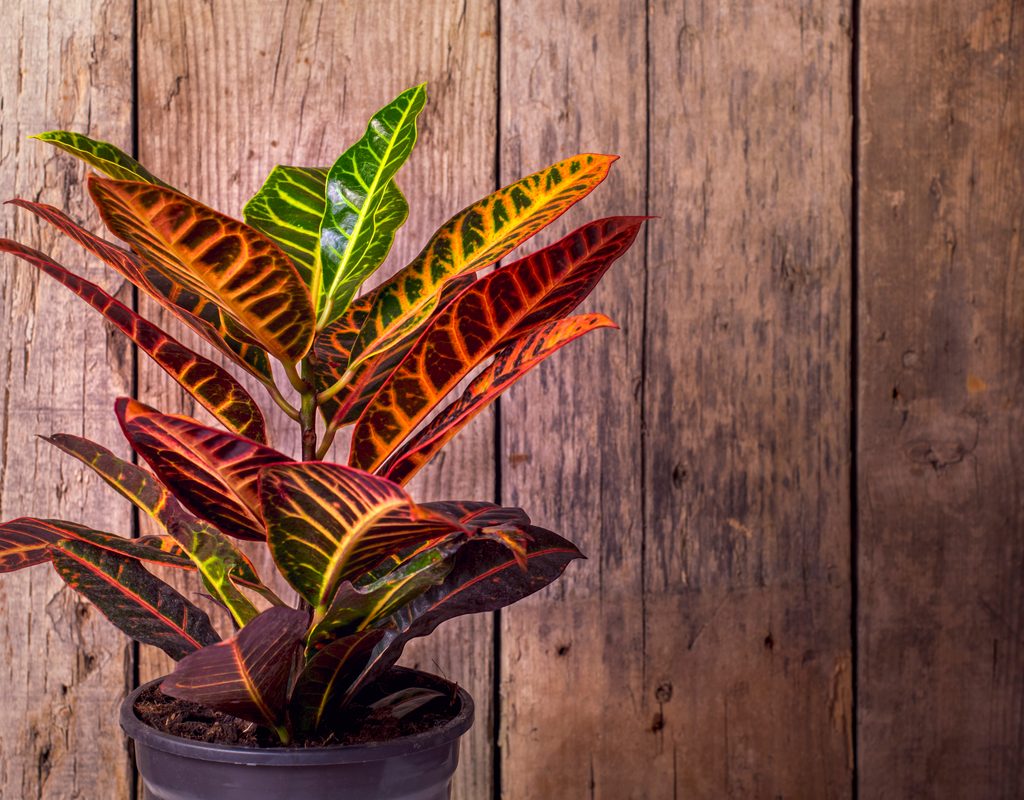
Crotons are only hardy outdoors in USDA zones 10 and 11, so growing them as a houseplant is typically better. The good news is that since they are indoor plants, you don’t need to worry about starting them at a specific time of year. Start with a container that has plenty of drainage holes and is slightly larger than the nursery pot. Fill this container with rich, loose, well-draining soil. A loamy potting soil with perlite and compost is ideal for these plants.
Place the container in bright, indirect light. While crotons can tolerate some shade and some direct light, bright, indirect light is the best for maintaining their health and colors. Too much shade will result in faded colors and weak leaves, while direct light can burn the leaves. Indirect light will ensure that your croton has enough sun to stay vibrantly colored without leaving crispy brown marks on the leaves. Avoid placing your croton near drafts or directly under or beside air vents, as the cold and dry air can damage them.
Croton plant care
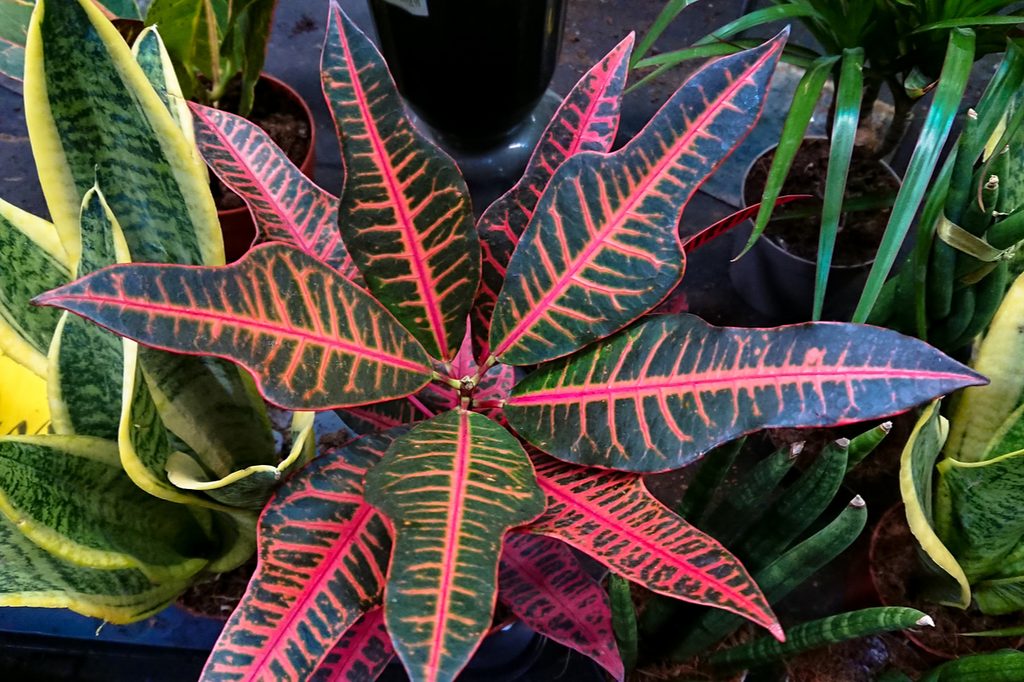
Crotons need fairly frequent watering, but it is still possible to overwater them. To maintain a healthy balance for your plant, water your croton when the soil is mostly dry. Avoid letting the soil stay dry for too long, as these tropical plants grow best in soil that’s moist but not soggy. In addition to watering their soil, crotons prefer moderate to high humidity. Using a mister, humidifier, or humidity tray can all help keep your croton plant happy. If you enjoy taking hot showers, placing your croton plant in or near the bathroom so it can enjoy the steam is also an option.
Crotons do prefer to be fertilized during the growing seasons, and regular fertilization can encourage your crotons to grow new leaves and maintain their bright colors. Some gardeners find success with a balanced houseplant fertilizer, but you can also use a foliage plant fertilizer with higher nitrogen and lower phosphorus.
Croton plants do not need pruning, but you can prune them if you prefer. Focus on removing dead or diseased stems first, then lightly trim branches that are growing too long. Avoid pruning your croton more than once per year, and don’t remove more than one-third of the plant at a time.
Common pests and problems
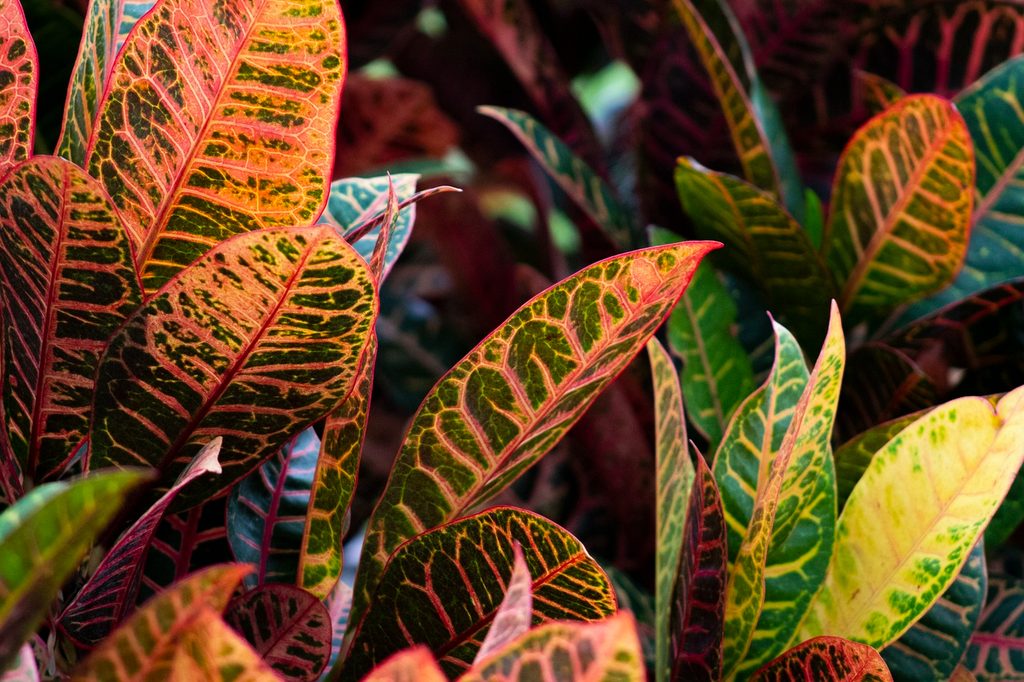
As houseplants, croton plants are protected from most larger plant pests like slugs and snails, but there are still some small indoor pests that might bother your plant. Aphids, mites, mealybugs, and scale can all target your croton plant. In small numbers, these pests are more of a nuisance than a real threat, but larger infestations can do serious damage, including cosmetic damage.
Luckily, these pests are also fairly easy to control. Neem oil or an insecticidal soap can prevent the largest infestations, and keeping up with regular croton plant care will keep your plant healthy enough to fend off smaller groups. Additionally, misting your croton plant and wiping the leaves with a soft cloth can keep the leaves clear of any pests. Don’t forget to wipe the undersides of the leaves as well, as many pests lay eggs there.
Other common problems come from improper care. Overwatering can lead to root rot, while underwatering will lead to faded and lost leaves. Too little sun will make your croton plant faded and weak, while too much direct sun will leave brown burns on the leaves. Watching your plant for signs of these problems and adjusting your care will help you ensure your croton plant thrives.
Can you propagate crotons?
Croton plants are actually fairly easy to propagate! Start by taking a cutting from a healthy stem. The cut section should be roughly 3 or 4 inches long and have several leaves. Apply rooting hormone to the cut end to help speed up the process, then place it in a pot of fresh soil. If the cutting has leaves close to the cut end, remove them so that the cutting doesn’t have any leaves underground. All that’s left is to care for the cutting as you would a croton plant and be patient. After a month to a month and a half, your new croton plant will be growing roots.
Croton plant care is simple, which is great news if you want to add this stunning, colorful plant to your home. With only a bit of water, sunlight, and patience, you can grow as many gorgeous croton plants as you have room for. If you find yourself with a few too many, don’t worry — croton plants also make great gifts.


