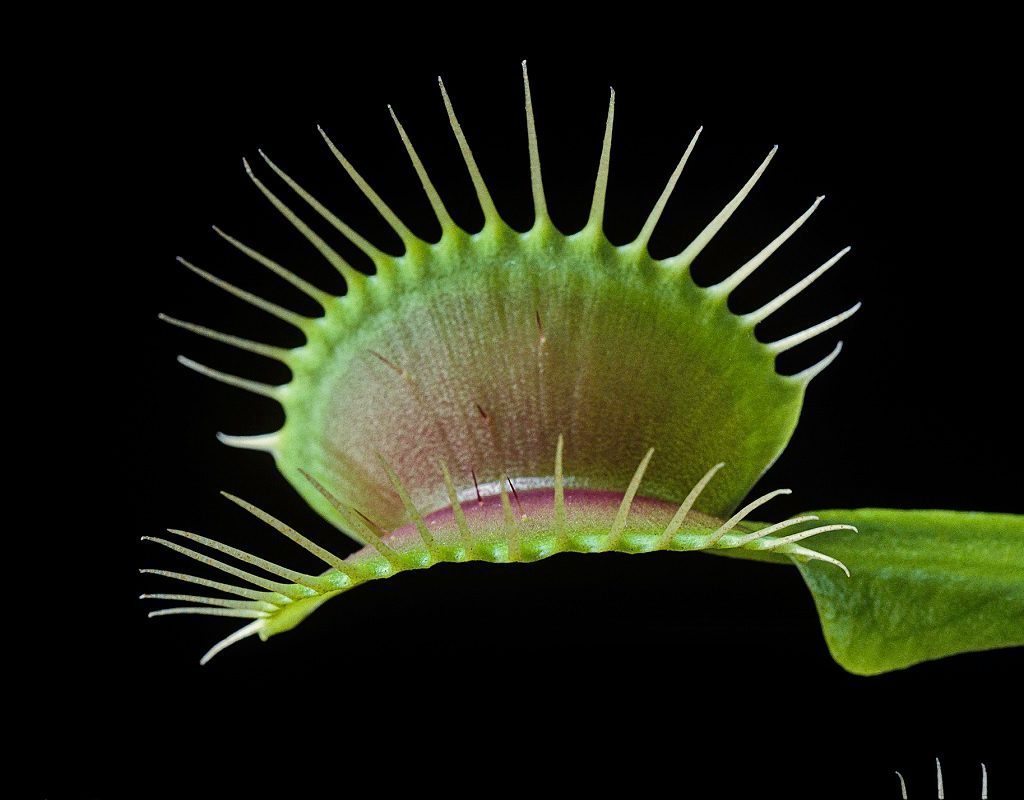
Venus flytraps are carnivorous (yes, you read that right) plants that are perhaps one of the coolest additions to your collection not only because they look unique, but because of their main function: They dine on bugs. Venus flytraps have what’s known as “modified leaves,” as do the carnivorous pitcher plants, that are connected by a hinge. When the bug is inside, the leaves snap shut, and the digestion process begins. A single plant can have up to eight traps at a time. Because it feasts on bugs, though, growing a Venus flytrap isn’t the same as, say, your favorite pothos.
How did it get its name?
The origins of the Venus flytrap’s (Dionaea muscipula) colloquial and scientific names are about as unique as the plant itself. The first part, Venus or Dionaea, are callbacks to the Roman goddess of love and the slight resemblance the modified leaves have to a woman’s genitals. The second part, flytrap or muscipula, are quite the contrast, though given to the plant due to the trapping nature of the leaves. Muscipula is Latin for mousetrap, but since the plant traps flies instead of mice, it was adapted for the common name.
Is it safe to grow?
Venus flytraps are native to North and South Carolina and are quite popular as far as potted plants go; however, the unfortunate side to this plant is that because it has a limited native environment, populations are considered by some to be endangered—and most of the Venus flytraps grown indoors have been collected from the declining native populations.
That said, if you do choose to grow one indoors, it poses no harm to you! Venus flytraps are only interested in eating pests, not humans (thanks Little Shop of Horrors for that irrational fear), even if you accidentally get your finger inside the trap while trying to care for the plant. With the right care, Venus flytraps can potentially live longer than 20 years.
Caring for your Venus flytrap
First off, how big can Venus flytraps get? Adult flytraps can be anywhere from six to 12 inches tall and six to nine inches wide when cared for and tended to properly. Some key things to remember when taking care of a Venus flytrap are:
- Don’t fertilize. Venus flytraps love low-nutrient soils.
- Use a mix of horticultural sand and peat moss for the potting mix.
- Water with rainwater collected in a bucket or barrel. If you don’t have the ability to use rainwater, do your best to use filtered water. Remember: Venus flytraps like a moist environment.
- Choose a location with 12 hours of direct sunlight per day.
- Unless you’re experienced with Venus flytraps, remove the flowers from mature plants once they start growing. This lets the flytrap continue directing its energy to stronger growth.
- Although they don’t need to be in a terrarium, they’ll love you for the high-humidity environment.
To grow a Venus flytrap successfully as a houseplant, it’s important to meet as many of these conditions as possible.
Feeding your Venus flytrap
Feeding is where plant care can get a little bit tricky; however, it’s not all that difficult a process. You just need to be mindful about keeping track of when you feed the plant and the number of times you feed each trap.
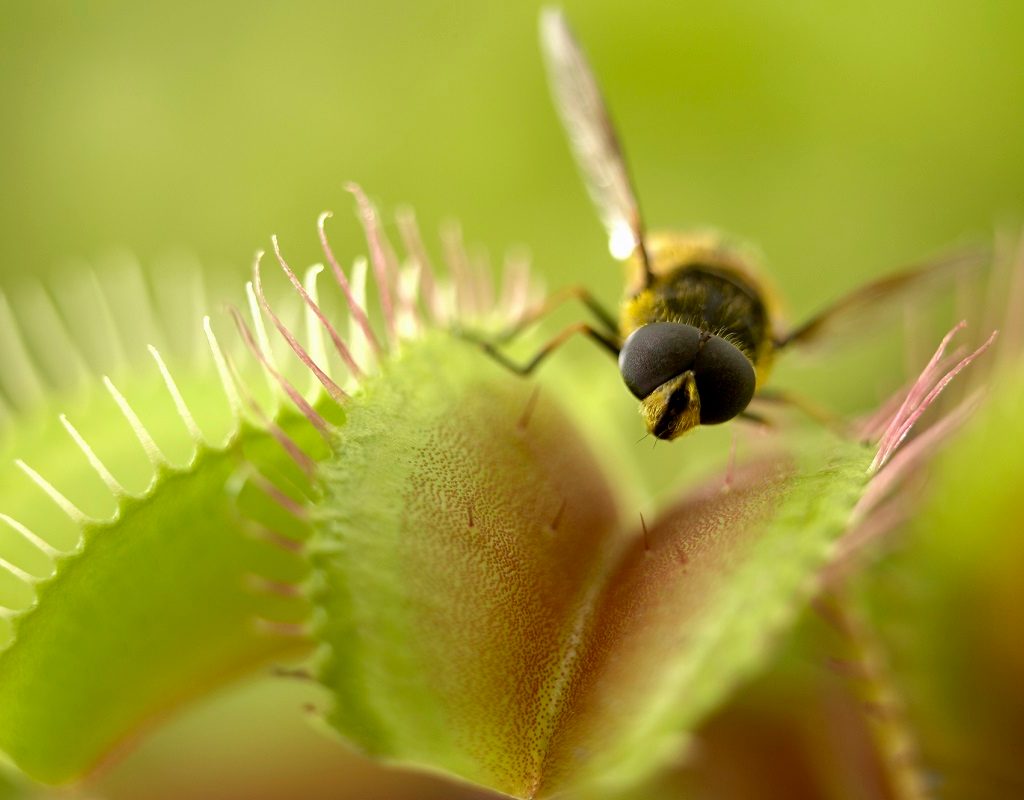
Each trap on a Venus flytrap plant can open and close somewhere between six to ten times before it dies. Because a single plant can only have eight at a time and needs energy to grow new leaves, you can see how it wouldn’t make sense to feed a trap once per week. An indoor-grown Venus flytrap should be fed about four times per year, according to the New York Botanical Garden, giving the trap a single bug per feeding. Overfeeding your plant can cause it to die prematurely, due to both the loss in energy and the fact that each trap has a limited number of times it can open and close.
It’s preferable to feed your plant live bugs, including ones like flies, gnats, and mosquitoes. Simply take a pair of tweezers, gently pick up the bug, and carefully put it into the trap so that it makes contact with the hairs on the leaves at leaves that trigger the trap. To remember how often you feed each trap, you can opt to use a spreadsheet or keep notes in a plant care journal.
Respecting the winter dormancy
Like other houseplants, Venus flytraps have a winter dormancy period; however, the requirements for theirs are a bit different than your leafier friends. You’ll want to match the winters in their native habitat as closely as possible. Venus flytraps should be moved somewhere chillier from November to February, like a window in a garage, shed, or cooler room in your house. This will let them enter their resting period, during which the plant will die back to just the rhizome. This is perfectly normal, so try not to panic and over-care for the plant when you see the leaves start to drop.
Are there multiple varieties?
Yes! Although there’s only one species of Venus flytrap, there are a few different cultivars that have been developed and add to the already unusual look of the plant. Each cultivar is distinguished from the others, but the care is similar across the board. If you’re looking to add a Venus flytrap to your houseplant collection, you can’t go wrong with any variety.


