
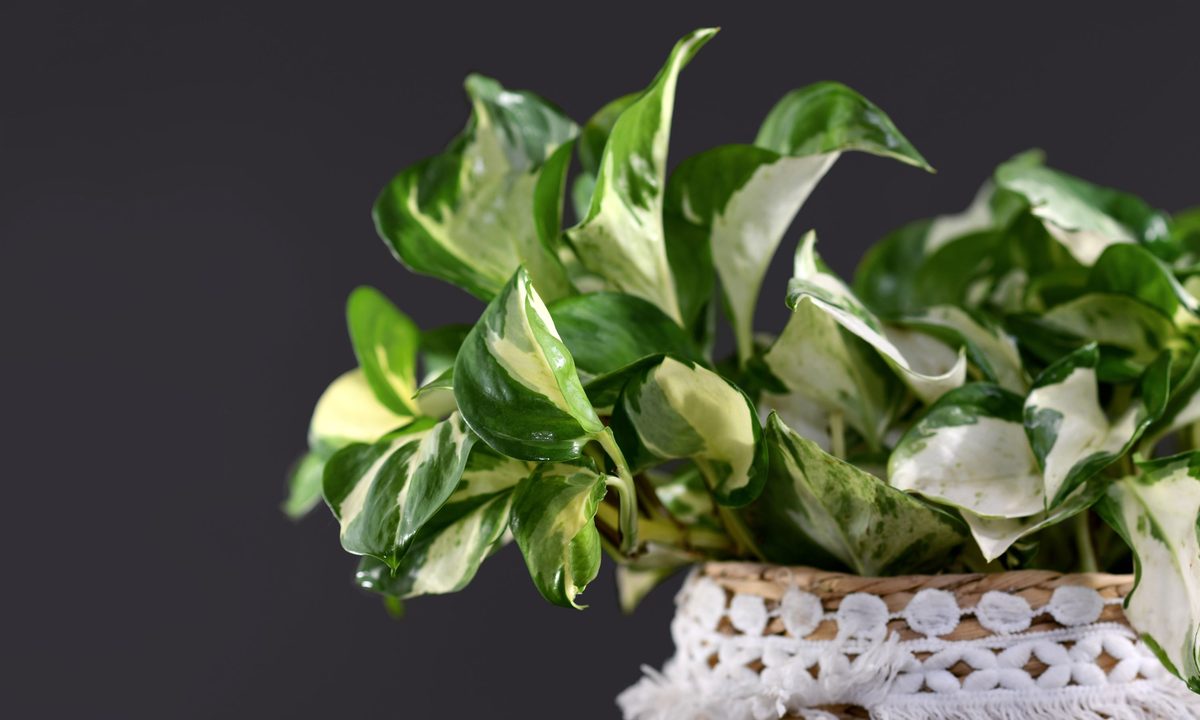
Pothos are well-known plants and loved for their stunning foliage and hardy, low-maintenance reputation. They need little care to thrive and are perfect for beginners and experts alike. There are so many fantastic pothos varieties available, from the elegant marble queen to the classic golden pothos. Manjula pothos are one such variety, and they’re becoming increasingly popular. They’re easy to find online and in many nurseries, and they’re just as easy to add to your houseplant collection. Want to try growing your own? Here’s what you need to know about manjula pothos care.
What makes manjula pothos unique?
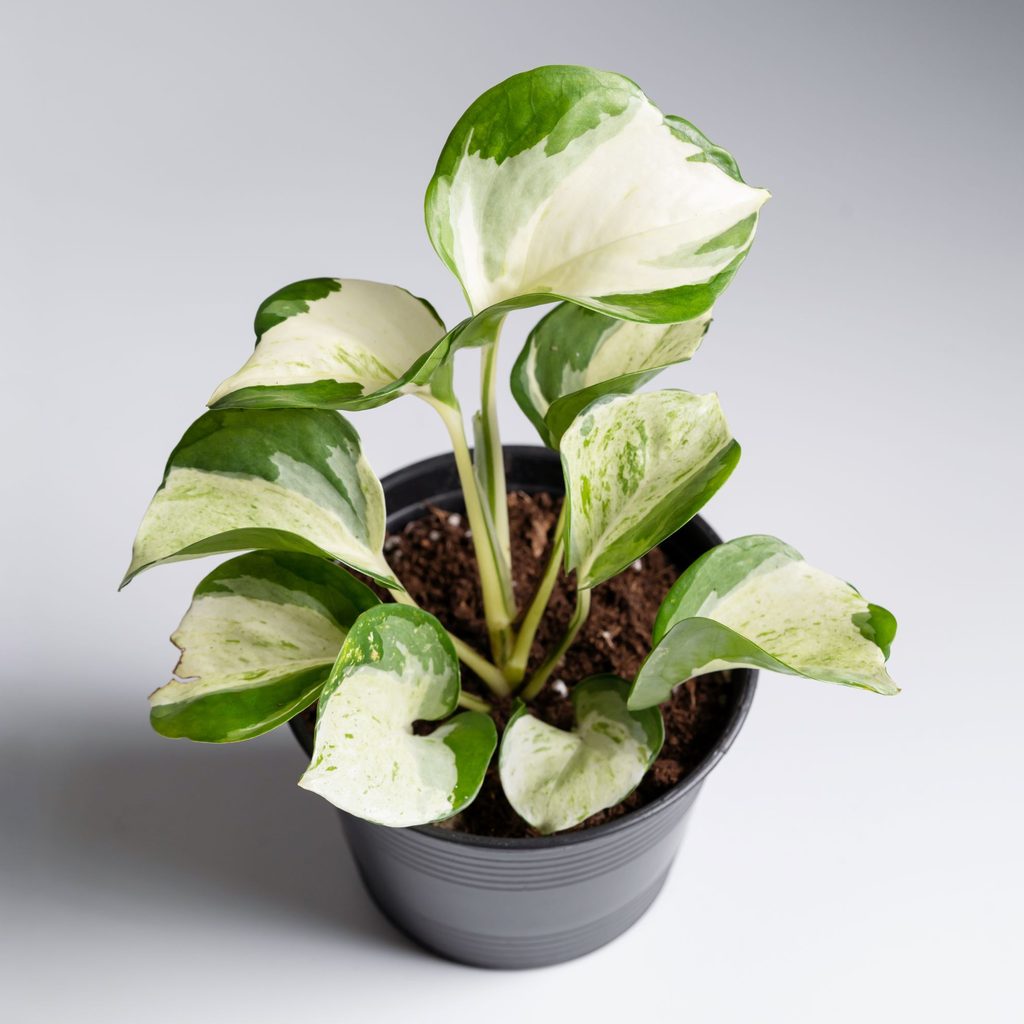
Manjula pothos is a variegated pothos with green, white, and sometimes silver leaves. Unlike some pothos varieties with cleaner patterns, the variegation on manjula pothos plants is often mixed together, making the patches irregular and more unique. The variegated patches often include flecks or spots of other colors, and there can even be multiple shades of the same color to create a gradient effect.
This irregularity makes each leaf different from the next, creating an entirely unique display. In addition to this patterning, the edges of the leaves are slightly crinkled or curled, making more bowl-shaped leaves than other pothos varieties. This curling can be uneven, just like the leaf patterns, increasing the unique beauty of the plant.
Planting manjula pothos
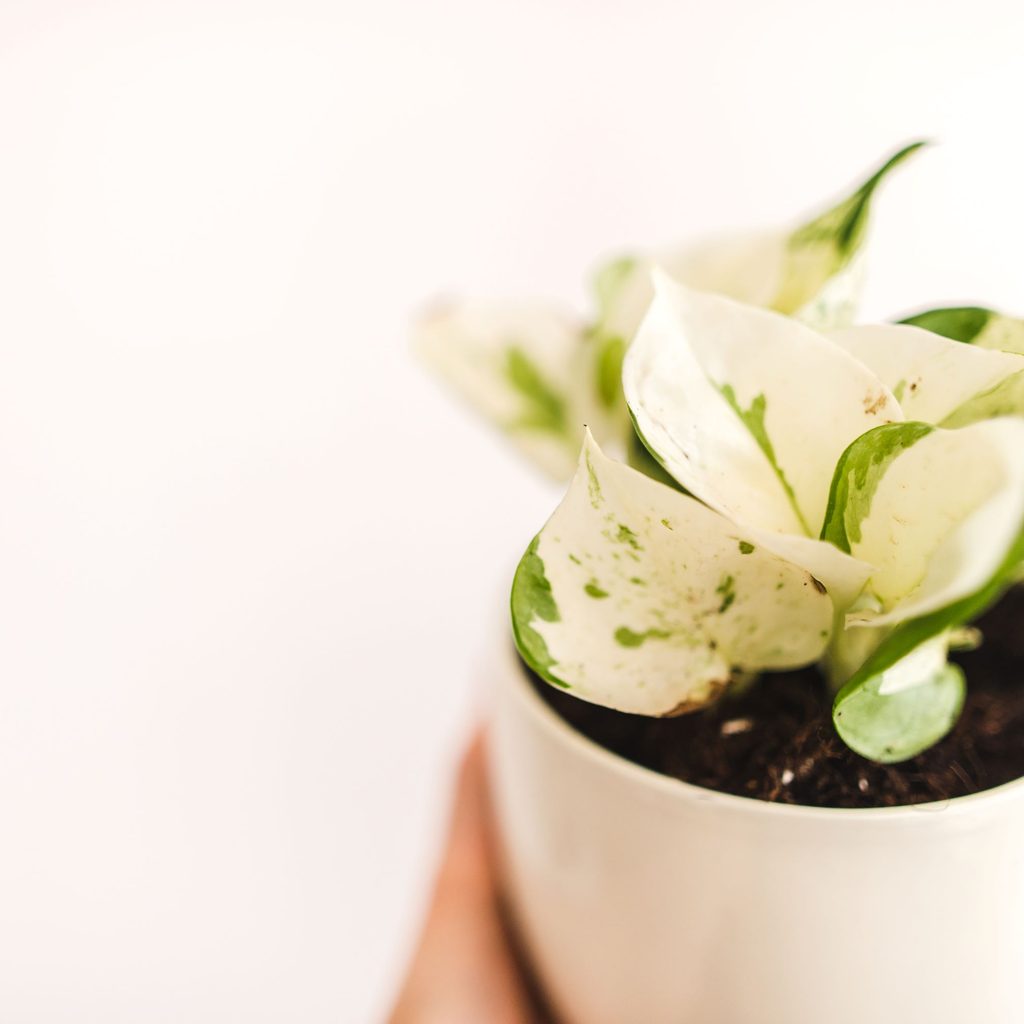
Choose a container with plenty of drainage holes, and use well-draining soil but not excessively so. Regular potting soil with perlite or vermiculite is perfect for these plants. Perlite and vermiculite improve water retention without leaving your manjula pothos sitting in damp soil for too long.
Place your manjula pothos in bright, indirect light, but keep it away from drafts or air vents. Direct sunlight can burn the leaves, and too much shade can cause the variegation to fade, so bright, indirect light is ideal. If necessary, manjula pothos can tolerate some light shade or occasional direct light, but this should be limited. Air vents and drafts can blow cold air on the leaves, chilling your plant. However, you should also keep it away from heating vents. This is because vents and drafts typically blow dry air, which dries your plant out and leaves it vulnerable to pests.
During warm weather, you can take your pothos outdoors. Manjula pothos should only grow outdoors permanently in zones 10 to 12, but can otherwise be outside if the temperature is above 70 degrees Fahrenheit. Since the sunlight is more intense outdoors, your pothos should be in light shade in the afternoon and sun in the morning.
Manjula pothos care
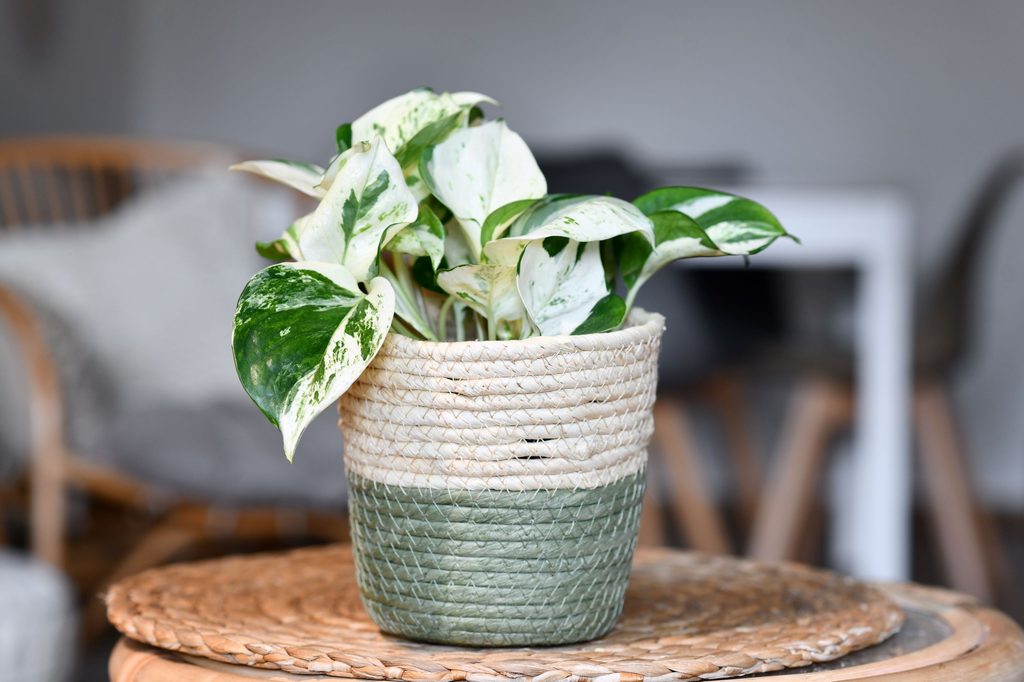
Water your pothos plant whenever the soil is dry, and avoid watering it if the soil is still damp. For indoor manjula pothos plants, this is typically every week or every other week. Manjula pothos plants that are outdoors may need more frequent watering, as the water will evaporate faster in the hotter weather and brighter sunlight.
During spring and summer, you can fertilize your pothos with a balanced houseplant fertilizer to encourage it to grow. Pothos plants are not particularly heavy feeders, and manjula pothos plants are no exception. They will live without regular feeding, and overfertilization can actually cause more problems than underfertilization. If you fertilize your manjula pothos, stick to smaller doses of liquid fertilizer incorporated into your watering routine.
Manjula pothos propagation
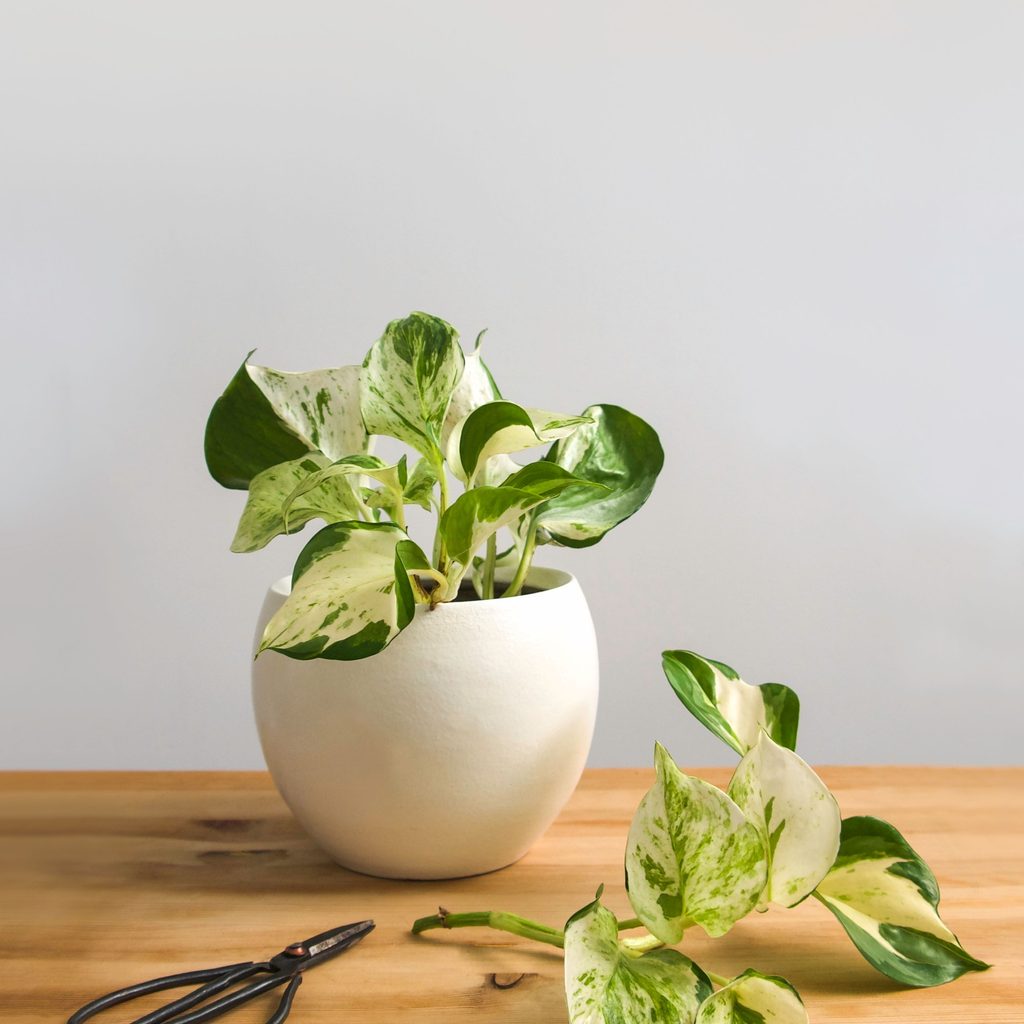
Like other types of pothos plants, the manjula pothos is easy to propagate. Select a stem that has at least one leaf and is healthy. If you want this second propagated plant to also be a variegated variety, be sure the stem and leaf both have variegation on them. Use sharp, clean scissors, shears, or a knife to cut the stem away from the parent plant, making one cut at an angle through the entire stem.
You can apply rooting hormone to the cut end to speed the propagation up, but this typically isn’t necessary for pothos plants. Then, place the cut end of the stem in either soil or water. Submerge enough of the stem for it to be stable, but leave at least one leaf above the soil or water. Keep your manjula pothos cutting in bright, indirect light. If your cutting is in soil, water it lightly when the soil is dry. Before long, you should have roots. If the cutting is in water, you can transplant it into soil when the roots are a couple of inches long and thicker than the tip of a pencil.
Manjula pothos plants is a beautiful variety of pothos, and it’s easy to see why this variety is gaining popularity. Whether you’re a complete beginner or a gardening expert, you’ll have a great time growing this lovely and easy-going houseplant. So get started growing yours today, and enjoy the beautiful spotting and stripes of this variegated beauty.


