
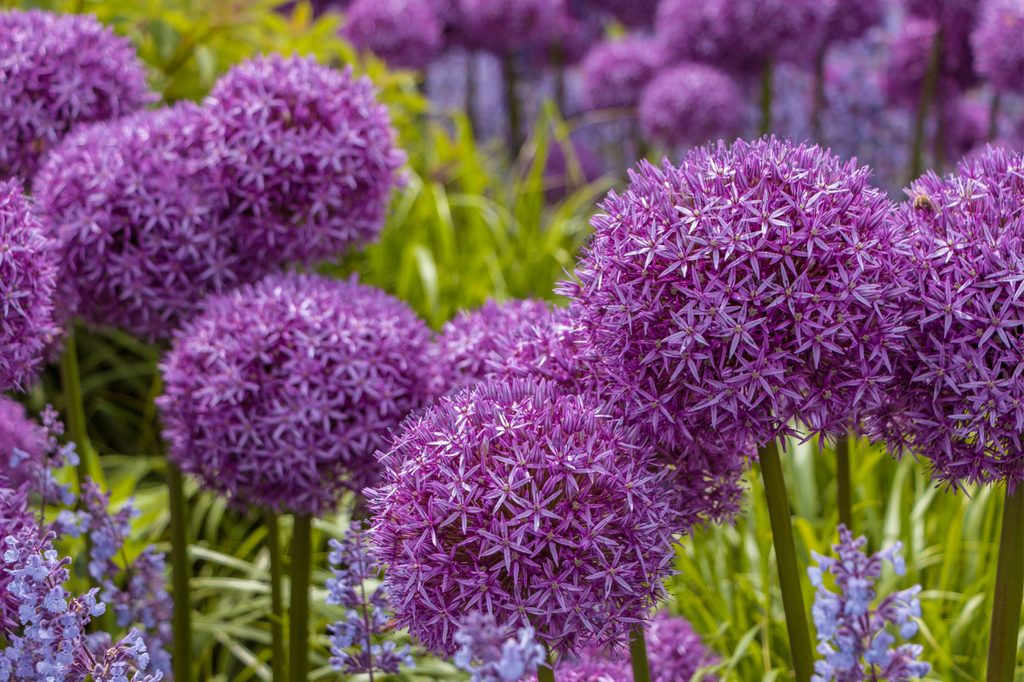
Ornamental allium flowers can be a lovely fixture in everything from lush cottage gardens to space-friendly container ones. Known for their globular bloom clusters, they come up between spring and summer, making them perfect as transitional flowers when you wait for your summer blooms to emerge. These unassuming flowers are also incredibly easy to care for, so there’s no need to fuss over them once you’ve planted them. If you’re wondering how to incorporate allium flowers into your home garden, here’s a comprehensive guide to help you get started.
What are allium flowers?
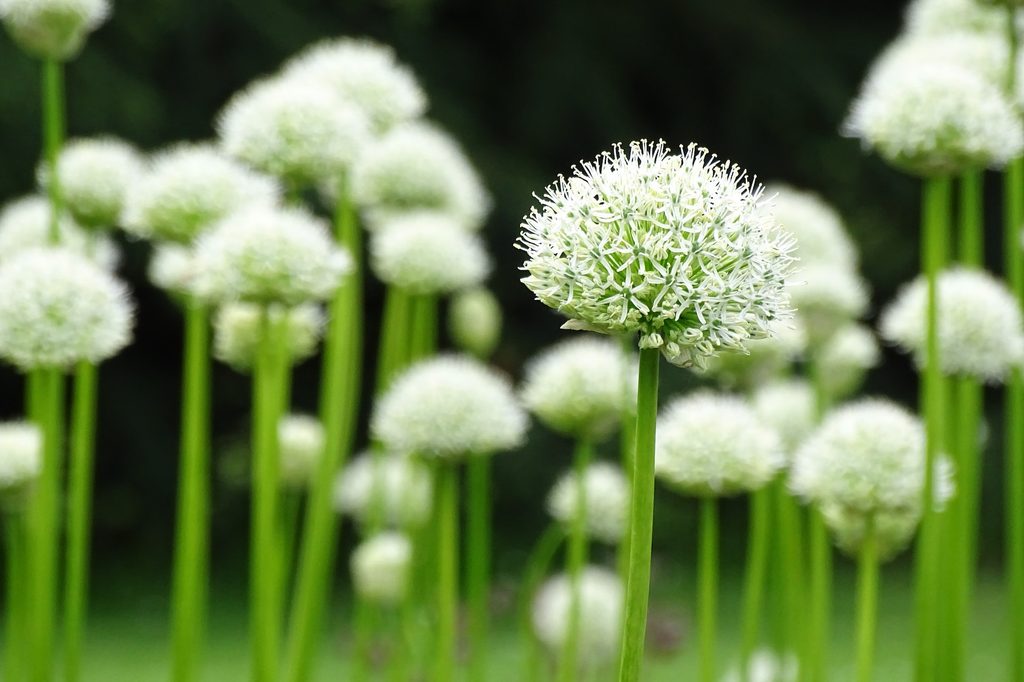
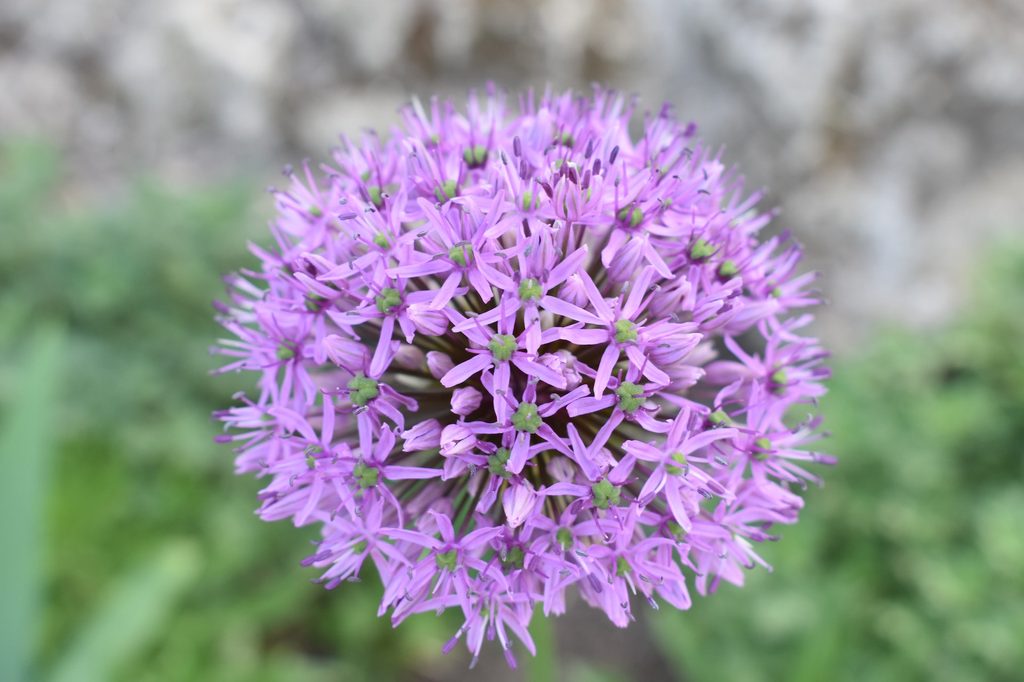
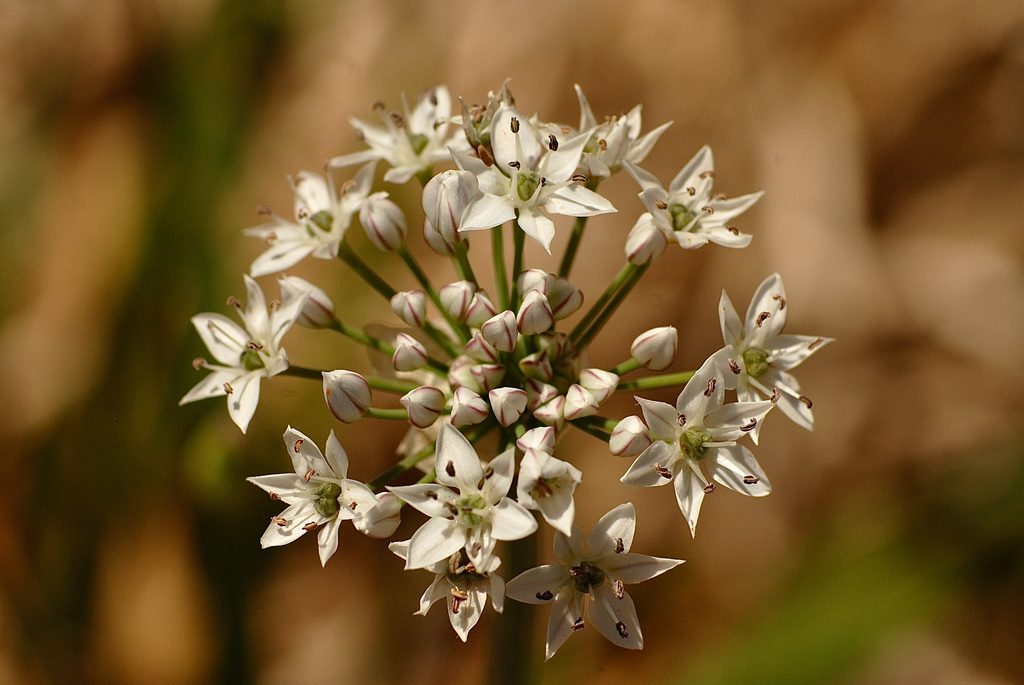
Perennial in many areas, ornamental alliums belong to Allium genus, which features over 500 species and includes plants such as onions, shallots, leeks, and garlic. They have either compact or loose clusters of flowers, but many gardeners associate them with globular blooms in colors like white, pink, yellow, and purple.
Allium flowers vary widely in height, ranging anywhere from 6 inches to 5 feet tall. They can be fragrant or give off a smell similar to onions. In fact, alliums repel rabbits, mice, deer, and other pesky unwanted pests from feasting on your garden because of their scent, which often comes from their bulbs and leaves rather than their blooms.
Different types of allium flowers
With so many types of ornamental allium flowers available, how do you choose the right one for your garden? If you’re just getting started on growing alliums, here are some of the best flower varieties to keep an eye out for when you shop for bulbs.
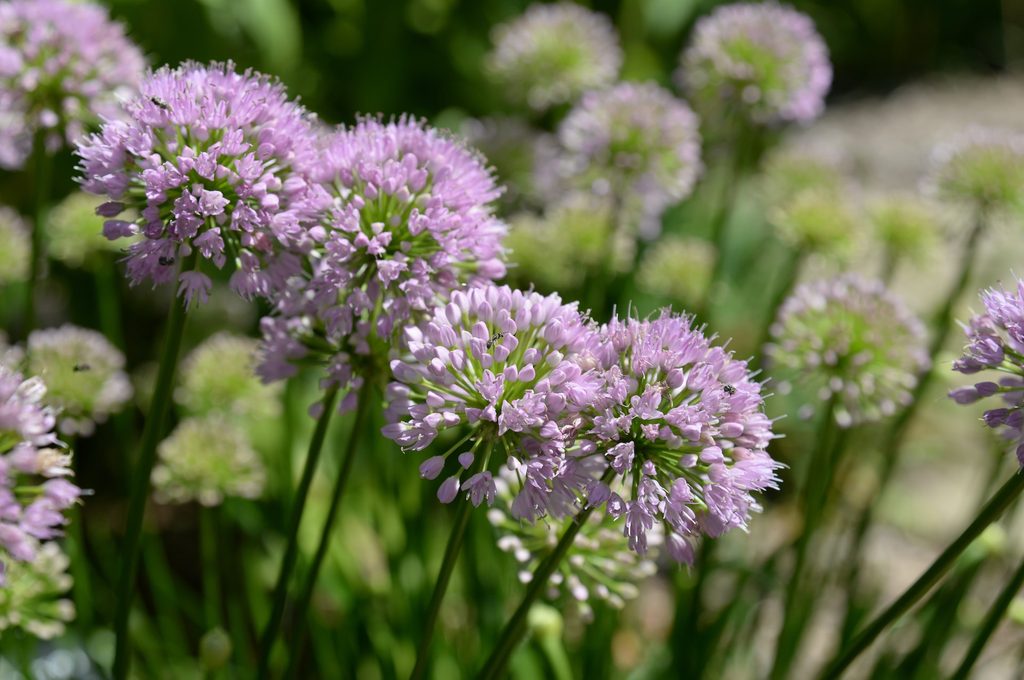
- Allium millenium: These midsummer bloomers feature 2-inch wide purple flowers atop 15-inch stems.
- Allium sphaerocephalon, or drumstick allium: Though they start out with green blooms, these allium flowers eventually resemble purple drumsticks as they mature from early to mid-summer.
- Allium cristophii, or star of Persia: Appearing in late spring, these showy globe-shaped flowers feature purple bloom clusters that can grow anywhere from 0.5 to 1.5 feet wide.
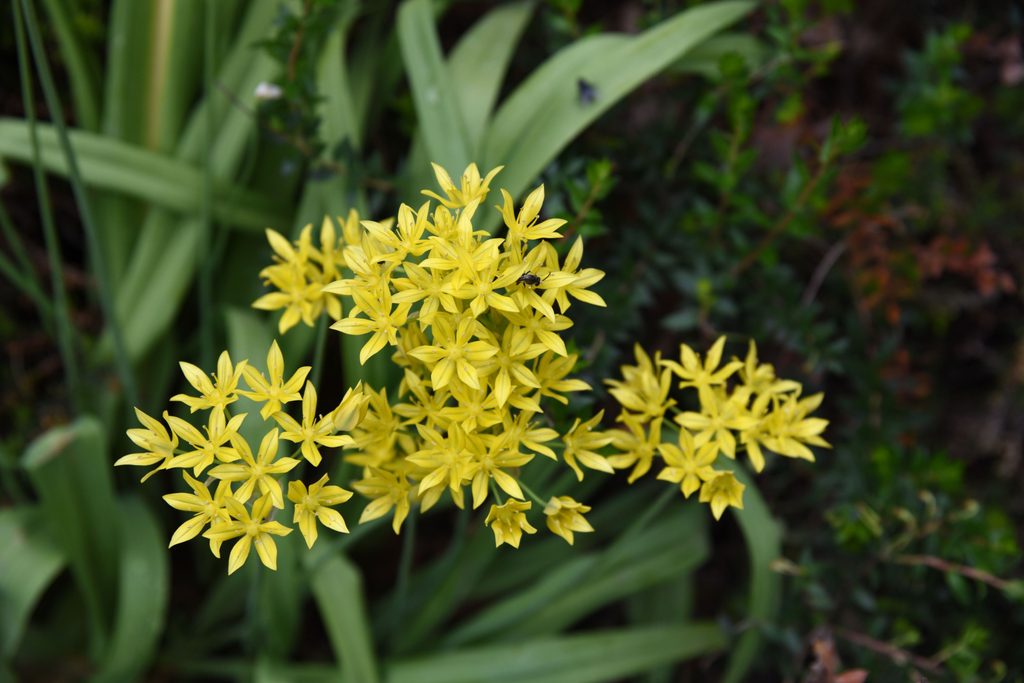
- Allium moly, or lily leek: An early summer bloomer, this drought-tolerant allium features clusters of dainty, star-shaped yellow flowers.
When to plant allium flowers
The best time of year to plant allium bulbs is during autumn between September and December — you want to plant them before the ground freezes so the roots have time to establish and push out blooms by spring and summer. Ornamental alliums are generally hardy down to climate zone 4, so you don’t have to worry too much about protecting them when it gets cold.
How to plant allium flowers
A good rule of thumb is to plant your ornamental allium bulbs 5 to 8 inches deep and 4 to 12 inches apart. Larger varieties may need to be up to 2 feet apart, so check any care instructions that come with your bulbs. You want to plant the pointy side facing upward and water your soil deeply after burying your bulbs.
How to care for allium flowers
Allium flowers are relatively low maintenance and known to be incredibly hardy in tough conditions. Of course, you’ll still find that providing them with a little extra care will lead to prolific blooms, so here are care tips to consider as you establish them in your garden.
- Lighting: You can grow allium flowers in both full sun and partial shade.
- Soil: When it comes to where they like to live in the ground, they can actually thrive in poor soil as long as you have sufficient drainage in your growing medium. Originally from regions such as Eastern Europe and Siberia, they do best in sandy, gritty soil.
- Watering: You want your soil to be moist but never soggy, as alliums hate wet feet. A once-a-week watering cadence is a good rule of thumb, especially when you’re first trying to establish roots. If you have your plant inside a container, you may need to water it more throughout the growing season.
- Fertilizing: Alliums aren’t particularly heavy feeders, but you can always fortify your growing medium with compost, bonemeal, or manure at least once a year.
- Temperature: Most alliums are winter hardy, and some can even tolerate temperatures below -30 degrees Fahrenheit. Typically, when you plant them, they do best with a soil temperature of 60 degrees Fahrenheit.
- Staking: Although tall allium flowers generally don’t need to be staked, you might want to consider support systems if you live somewhere affected by strong winds.
How to propagate allium flowers
Given a few years, many allium flower bulbs start to multiply. The best time to divide your bulbs is around early autumn or early spring — you can either set them in the ground again or store them in a cool, dark place if you don’t plan to plant them immediately. Other than division, you can also grow allium flowers from seed. When your flowers set seed, you can let them self-seed or collect the seeds to sow. Just note that growing allium flowers from seeds will take several years.
Alliums are some of the easiest flowers to care for — they don’t even need to be deadheaded! After enjoying their lush blooms, you can collect them for whimsical dried flower arrangements inside your home. If you’re a beginner when it comes to flowers, their bountiful benefits and minimal care requirements make them easy go-to plants for lovely spring and summer blooms.