Flowering herbs are useful for many reasons. Herb flowers are typically popular with pollinators, and the herb itself can be used for culinary or medicinal purposes. Borage is one flowering herb you may not have heard of, as it is less common than rosemary and thyme, for example. Still, borage can make a great addition to herb gardens, and it’s nice to have around.
If you’re not familiar with borage and want to know more about this lovely plant, this is the guide for you. We’ll explain everything you need to know about growing and caring for borage.
What is borage?
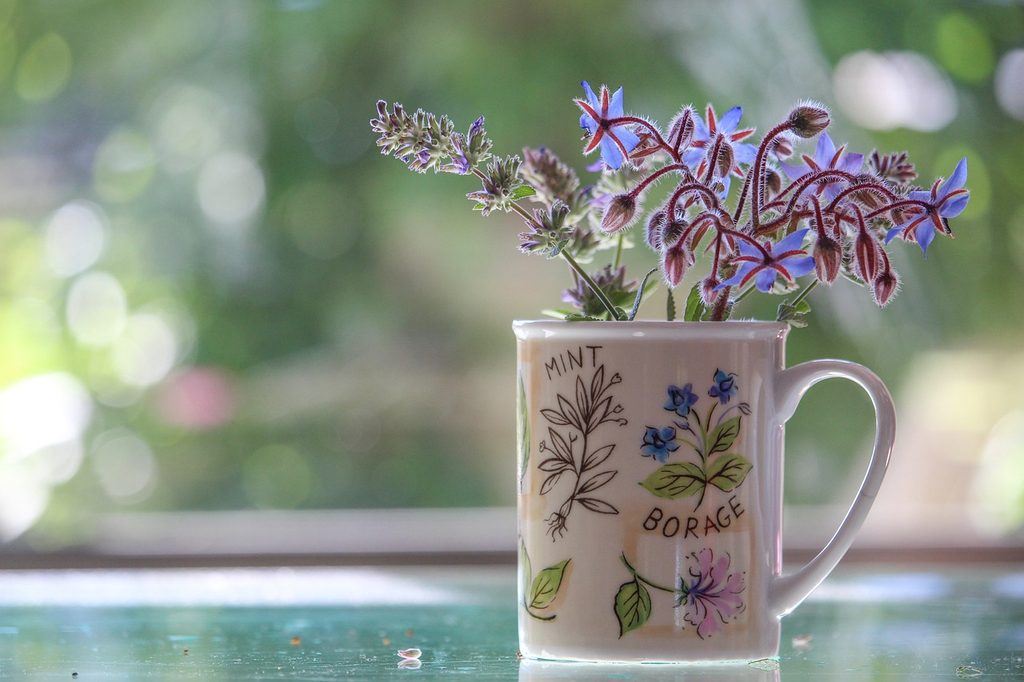
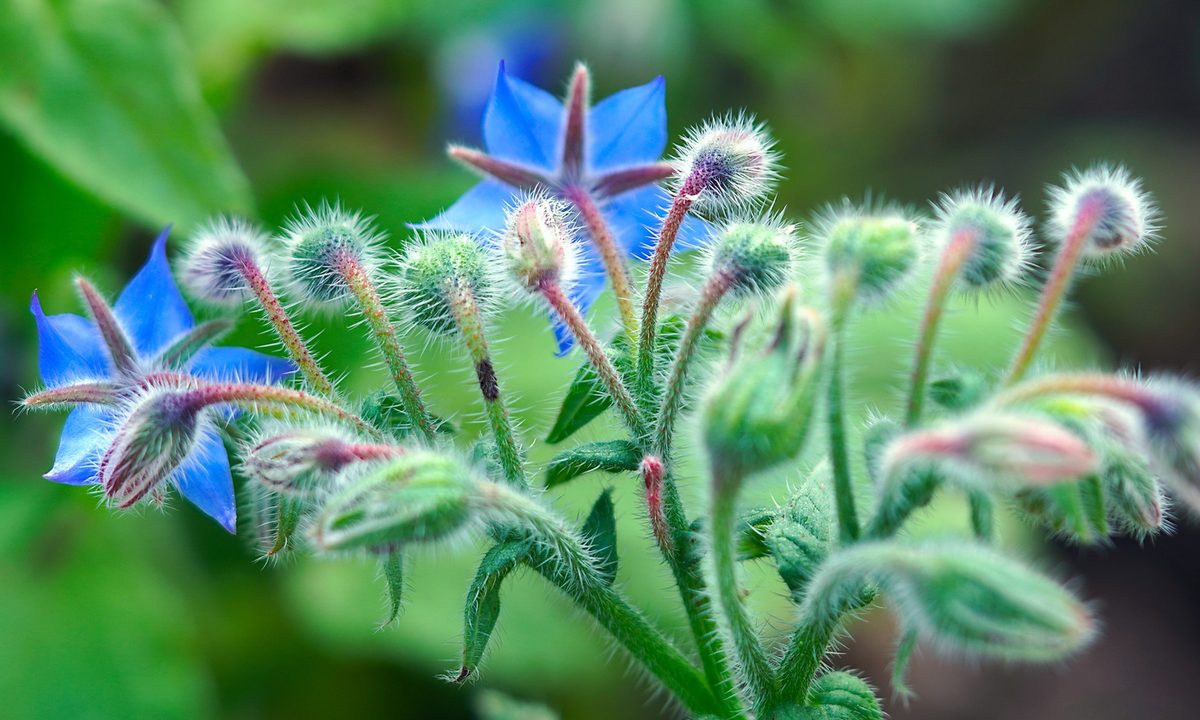
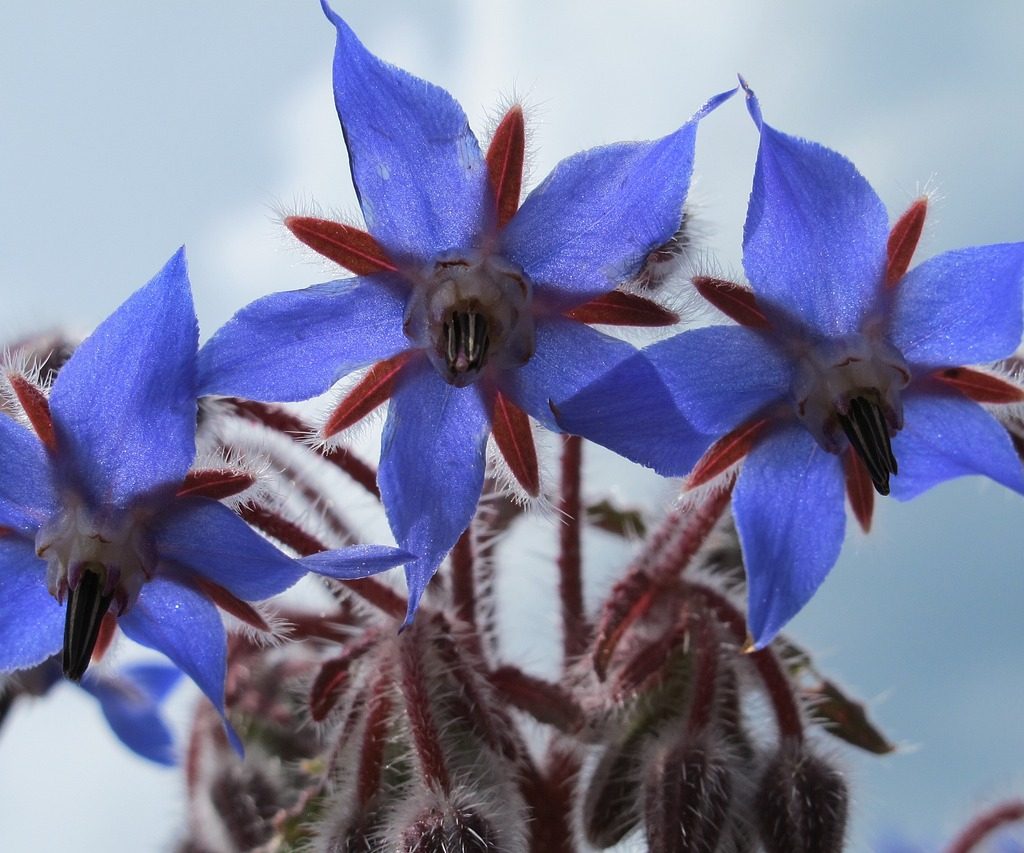
Borage is an annual flowering herb native to the Mediterranean. It stays fairly small, with fuzzy leaves and stems. The flowers are typically blue (but can occasionally be pink or white) and shaped like stars. With the leaves, you can sometimes eat them like lettuce, and they reportedly have a flavor similar to cucumbers, and you can use the flowers as a garnish.
The primary reason that most people grow borage, though, is for the seeds, which can be pressed to make borage oil. Borage oil is high in GLA, so it’s sometimes used as a supplement for people who are low in GLA. However, borage also contains a few chemicals that can be harmful to the liver. Borage only contains these chemicals in small amounts, but doctors still typically recommend that people with liver conditions or who are already taking medications or supplements that could damage their livers avoid borage.
Planting borage
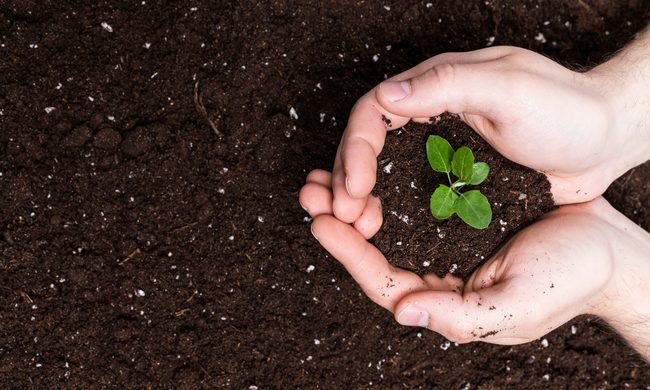
Start planting your borage outdoors in spring, after the last frost of winter has passed. Like most plants from the Mediterranean, borage is accustomed to warmer winters than many parts of the U.S. get, so wait for the weather to turn mild before planting borage outdoors. If you want to start your borage earlier, you can do so by starting it from seeds indoors.
Borage should be planted in light, rich, well-draining soil for the best results. However, it is quite tolerant of poor soil and will grow even in dry, rocky soil. Avoid planting it in dense, slow-draining soil if possible, though, and consider amending poor soil with compost before planting your borage.
To get the most flowers and encourage strong growth, plant your borage in full sun. Borage can tolerate partial shade, but it won’t grow quite as intensely as it does in full sun. You can use this to your advantage if you are trying to keep your borage from spreading too much.
Borage care
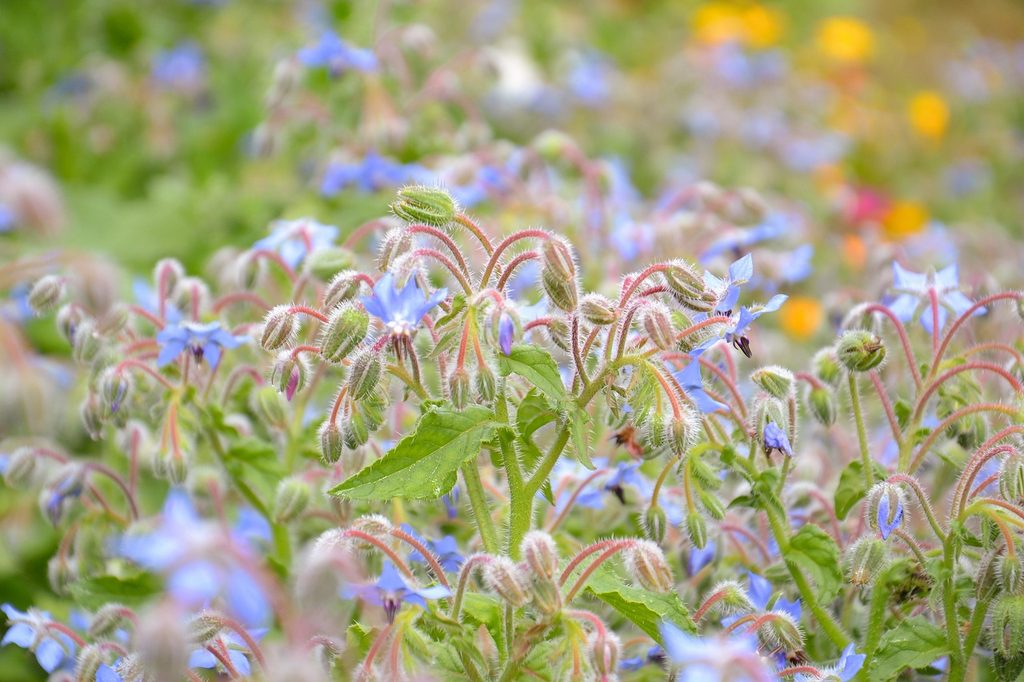
Regular watering will help your borage plant thrive, although borage plants can often survive on rainfall alone. Wait for the soil to be mostly or entirely dry before watering your borage, and avoid watering it if there is rain on the way. If you don’t plan on watering your borage regularly, consider at least watering it during droughts. Otherwise, your borage may wither entirely.
Borage typically doesn’t need fertilizing, either. In fact, it is sometimes used as a fertilizer (in the form of a green mulch or cover crop), due to its tolerance of poor soil. If you do choose to fertilize your borage plant, do so lightly and with a balanced fertilizer. Avoid nitrogen-heavy fertilizers, unless you plan on growing borage to eat the leaves. Nitrogen promotes leaf growth, so overfertilizing with nitrogen typically leads to a plant producing more leaves and fewer flowers.
Some outdoor pests will snack on borage leaves as well, and while the damage is typically not severe, it can be frustrating. Aphids, mites, flies, and even snails and slugs may find your borage plants appealing. Neem oil, insecticidal soap, or another organic pest control method can be used to keep these pests at bay.
Can you grow borage indoors?
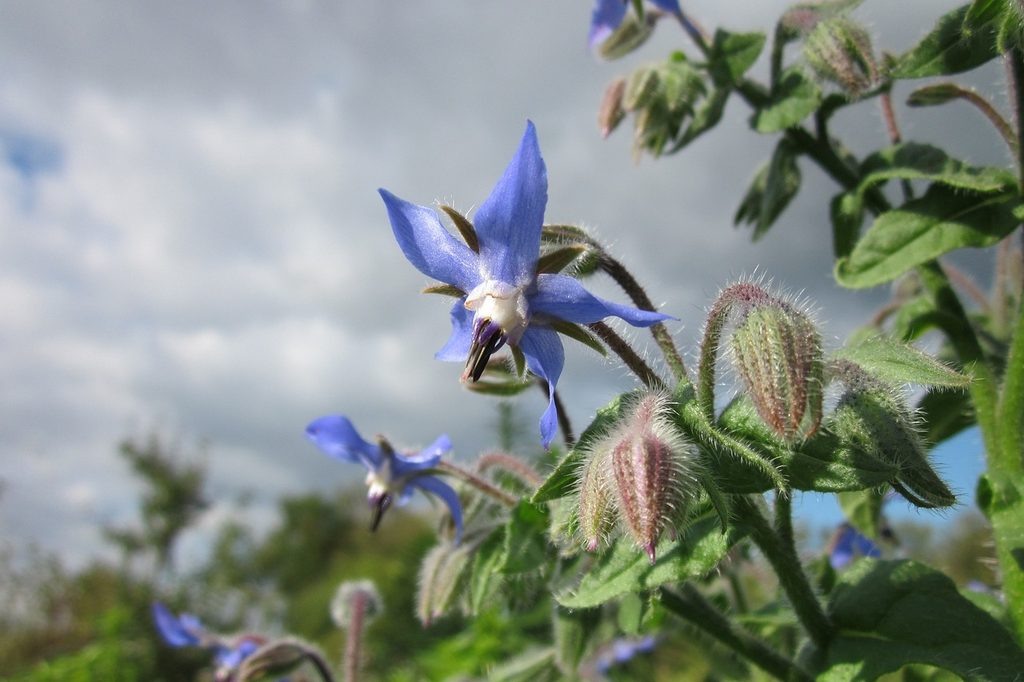
As you might guess from this hardy and adaptable herb, borage plants actually do quite well in containers. This is also a good option if you want to limit the risk of your non-native plant escaping your garden.
Choose a container with drainage holes, and fill it with well-draining potting soil. Plant your borage in it and place it in a sunny window. Give it as much sun as you can, and supplement natural sunlight with artificial light if your borage begins looking faded or leggy. Keep your borage warm. Before long, you’ll have lovely borage flowers in your window.
Whether you prefer snacking on its leaves, using its seeds for oil, or simply admiring the flowers, borage is a delightful herb to add to your garden. Both outdoor and indoor herb gardens can benefit from borage. Just be careful to control its spread if you’re growing it outdoors, as this plant is not native to the U.S.