Plants can liven up the inside of your home in so many ways. Not only do they bring bits of green and color to your space, but their natural process of photosynthesis can help purify the air — even in the bathroom! When deciding which ones to use as bathroom plants, you’ll want to choose ones that have a high humidity tolerance (given the overall nature of the room). Let’s break it down.
How do plants naturally purify your space?
All plants, both inside and outside, go through a process called photosynthesis in which they turn carbon dioxide into oxygen. In a famous experiment done by NASA — in hopes of finding ways to effectively detoxify space stations — it was found that some indoor plants have the ability to remove other harmful toxins (like formaldehyde and benzene) from the air. It’s no question, then, that having these types of plants in your home can provide more than just being a decoration.
Best plants for purifying your bathroom
There are tons of options when choosing air-purifying plants for bathroom spaces. Along with English ivy and snake plants (detailed below), areca palms, money plants, Chinese evergreens, and aloe vera can also improve the air in your home. Not every air-purifying plant is suited for a humid bathroom environment, though, so choose wisely!
English ivy
English ivy is the perfect plant for a bathroom because not only do they fit in small pots, but their trailing vines work well in hanging baskets. They thrive in more humid environments and may potentially need to be misted from time to time. Because they can grow in partial and full shade, you can still keep them if you have a bathroom with minimal light. English ivy plants are able to remove formaldehyde and benzene from the air, along with fecal-based particles and mold spores (the ideal bathroom plant).
Snake plant
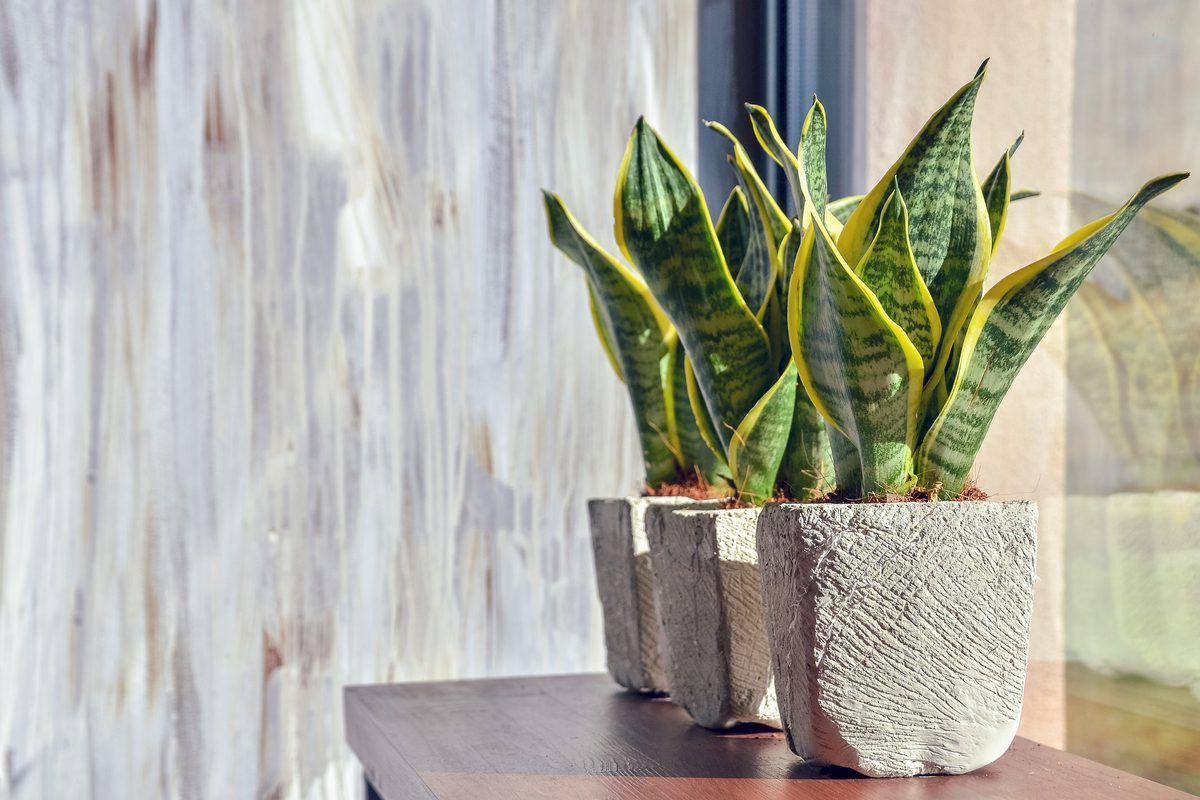
Snake plants are succulents that are native to tropical and subtropical regions, meaning they can tolerate quite a deal of humidity. There are around 70 different species, and specific care may vary from plant to plant. Snake plants are low-maintenance, hardy plants that can grow up to 6 feet in height and tolerate a bit of neglect. Their main weakness is overwatering, so be careful to follow the care instructions to ensure your plant stays alive! Snake plants are able to remove the toxins formaldehyde, benzene, xylene, and trichloroethylene.
What if I have a small bathroom?
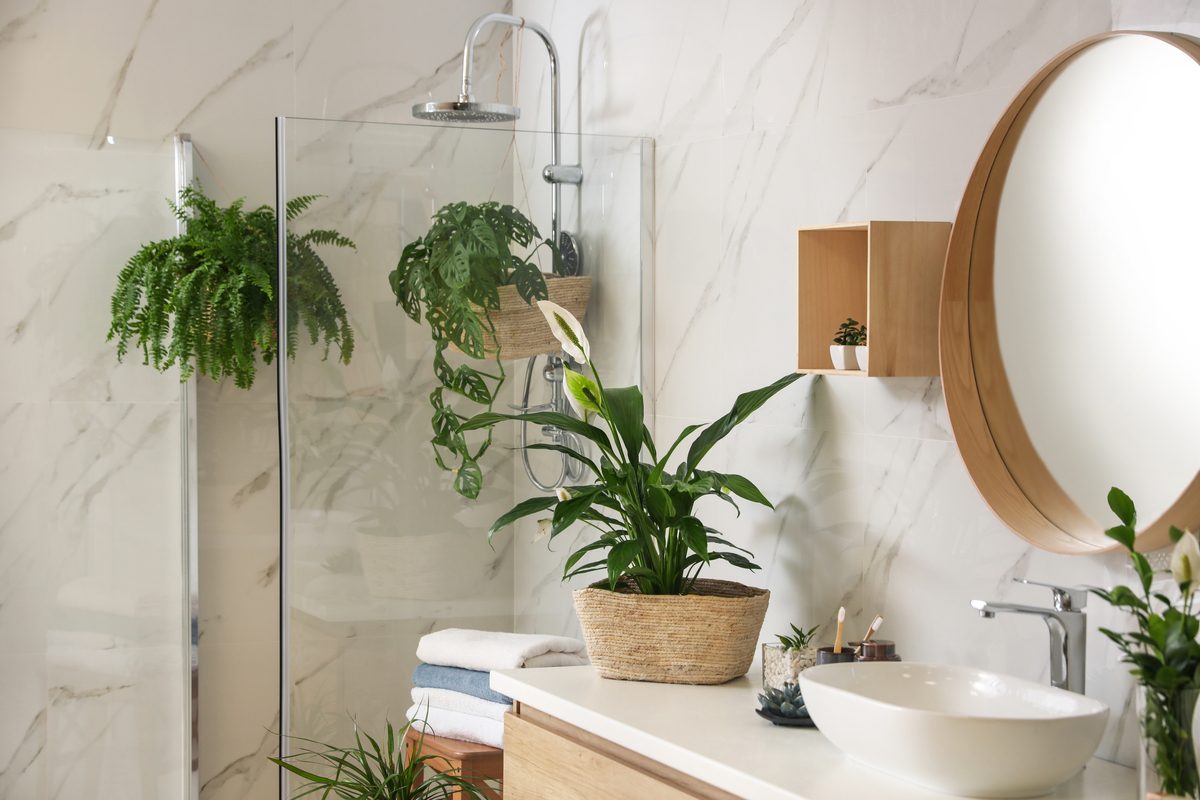
In a smaller space, shelves and hanging plants will be your best friends. They’ll prevent you from taking up much-needed floor space and will add some brightness to your bathroom walls. The beauty of air-purifying plants is that they don’t have to be huge in order to make a big impact. Even one plant is better than none.
Shelves can hold not only upright plants, but also plants like English ivy that grow and drape over the sides. So if you don’t have space for hanging baskets, you can still bring this lovely plant into your bathroom. And vice versa — hanging baskets can hold a variety of plants and are a great option for bathroom spaces because you can hang them from the ceiling or even an extra towel hook. You can also opt for a little reorganization, condensing some of your bathroom necessities into baskets to clear some room for a helpful plant.
What about large bathrooms?
Not only can large bathrooms make use of shelves and hanging baskets, but you may find that you have extra floor space that could use a little sprucing. These rooms are perfect for larger bathroom plants that stand on their own or need an aesthetic plant stand . A larger snake plant would work in this space, as would a tree or other big plant that can tolerate a humid environment.
You may want to be careful of how many plants you put someplace if you don’t want the space to feel crowded. It may be ideal to mix only two types of plant locations (floor and shelf, floor and hanging, hanging and shelf) to avoid any busy clutter; however, that’s entirely up to you! You have more freedom to pick and choose the size and shape of your bathroom plants.
With the right plant and the right care, you can freshen up any bathroom space with air-purifying plants. They’ll bring life to the room and make it feel like an even more enjoyable place to be.