
Pothos plants are one of the best ones to have if you’re new to indoor houseplants (or gardening, in general). They’re easy to care for and can be grown in a variety of locations, including in hanging baskets and on tables or windowsills.
They’re hardy houseplants, able to grow in an array of environments including low light and fully in water. Growing pothos in water may take some practice, so make sure you know the ins and outs of caring for the plant beforehand.
Best pothos varieties for fast growth
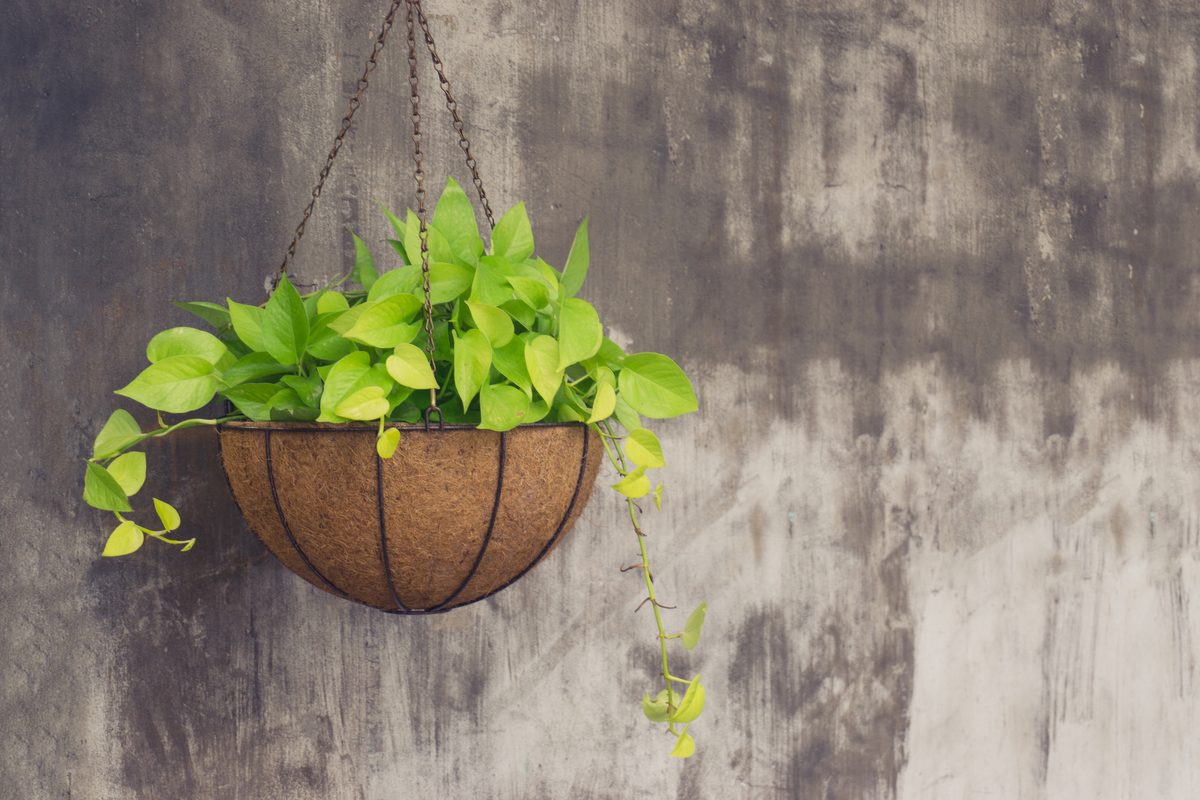
The best varieties for fast growth will be the ones that have the greenest leaves and have the least amount of variegation. The more variegation in the leaves, the less chlorophyll they’ll have and the longer it will take for the plants to photosynthesize. The two best kinds of pothos if you’re looking for a fast-growing houseplant are the golden pothos and the neon pothos.
The golden pothos (or devil’s ivy) can often be found at any local nursery or garden center. They’re the most common varieties of pothos plants and are the ones you’re likely to see at other people’s houses. The leaves of the golden pothos are heart-shaped and green with a slight yellow hue (hence the name). They’re also the most resilient variety, making them the best one to start with if you’re interested in growing pothos in water.
The neon pothos is a more unique variety as the color changes slightly with maturity. Although overall a lime-green color, the younger leaves will have brighter tones, while the older leaves are a deeper neon. In order for the color to be as bright as possible, the neon pothos needs to be grown in bright lighting. The plant will still survive in more shaded spaces, but the color may be lacking. Both the golden and the neon pothos, though, have the best amount of green possible for a fast-growing pothos plant.
Varieties to avoid if you want a fast-growing houseplant
A general rule of thumb is that the more variegated varieties of pothos will have much slower growth rates due to the fact that they have less chlorophyll in each leaf. That isn’t to say that the more variegated varieties of pothos are difficult to grow — they aren’t. But they will grow more slowly than the golden or neon pothos, so if you want a fast-growing houseplant, these varieties aren’t for you.
The marble queen, like the golden pothos, is also a common variety. The leaves are a mix of white and dark green that many say has a cheesecake-esque appearance. Although beautiful, the variegation in this variety is very high, which means it’s one of the slowest-growing pothos plants. The best way to ensure good growth is to keep them on a windowsill or closer to a light source.
Jessenia pothos plants are also slow-growing. Unlike the marble queen, they have a much darker lime-colored variegation. Although it may grow faster than the green and white leaves of the marble queen, the jessenia plants will still have slower growth than the golden pothos; however, if you love unique plants and are all right without fast growth, you may want to snag a jessenia or marble queen, as every leaf turns out different than the others due to the unexpected nature of variegation.
Growing pothos in water
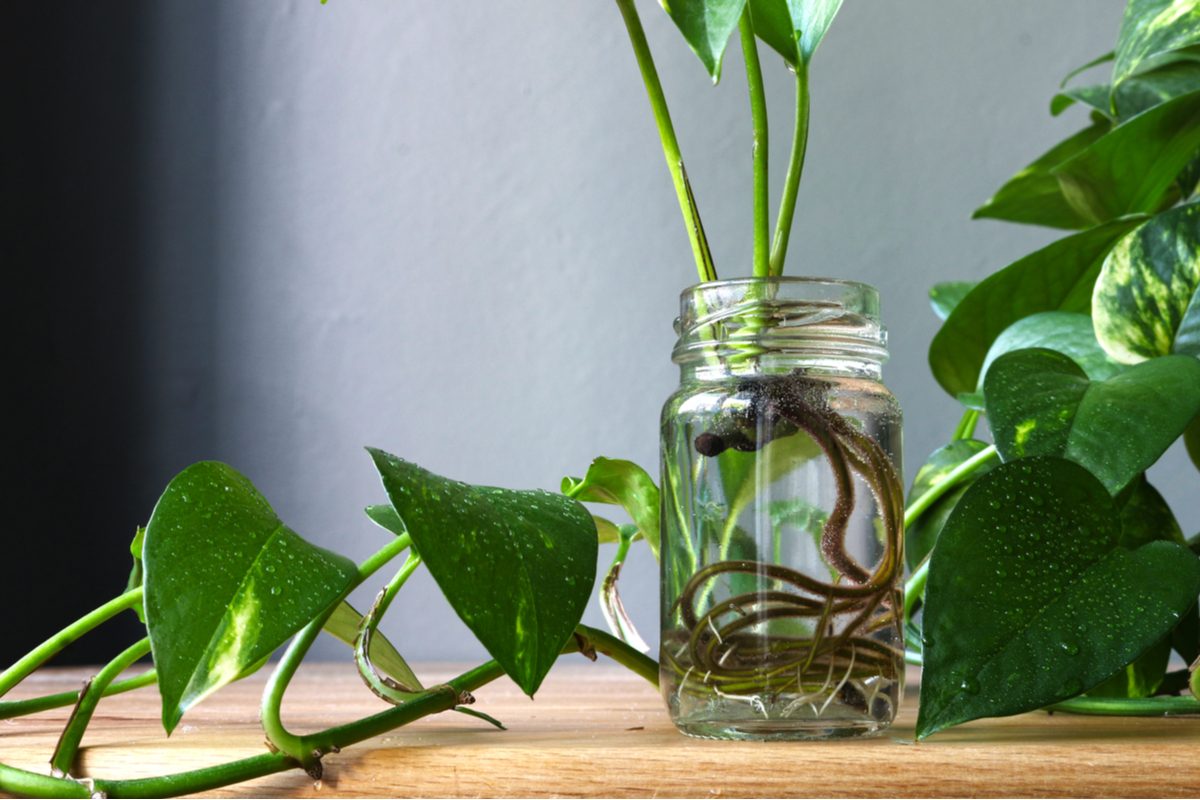
The big questions now are: Can you grow pothos in water, and can pothos live in water forever? In short, yes and yes. Just like any pothos grown in dirt, a pothos grown in water is capable of thriving, as long as you provide the proper care. The tricky part will be ensuring that your water stays nutrient-rich and you keep it in an ideal environment, which is why it’s recommended to try growing pothos in soil first if you’re unfamiliar with either the pothos plant or with growing plants in water.
Although water is oxygenated, it does eventually run out. To counter this, you’ll want to replace the water once every one to two weeks and use a liquid fertilizer to introduce the proper amount of nutrients to the pothos’ environment. If you choose to grow a variegated variety in water, remember that they naturally grow slower than nonvariegated varieties. So don’t panic when your golden pothos is growing faster than your marble queen. As long as both look healthy and happy, you’re doing things right.
As with anything grown in water, there’s always the potential for algae growth. You’ll want to stay on top of it by cleaning the containers as soon as you see any signs of algae in order to prevent it from damaging the roots and your plant.
Other than keeping the water clean and nutrient-rich, the growing requirements for water-grown pothos are roughly the same as soil-grown pothos. They’ll thrive best in a brighter area, but they can be grown in more indirect, shaded light if that’s the environment you have.


