Succulents are popular houseplants, because they are easy to care for and incredibly varied. From towering, tree-like succulents to tiny ones, succulents that flower to those that grow in strange shapes, these wonderful drought-tolerant plants make excellent houseplants. If you’re looking at the wide variety of succulents available and feeling a little overwhelmed, don’t worry! Here are our five favorite types of succulents that you should consider starting with. Whether you’re a beginner or an expert, a minimalist or a maximalist, there’s something on this list for everyone.
Pencil cactus

Despite their name, pencil cactus plants are succulents, not cacti. These spindly succulents grow long, thin stems that branch off into angular segments, creating a unique display. Pencil cactus plants are in the Euphorbia genus, making them cousins of crown of thorns and poinsettias. The sap of these succulents is toxic and a skin irritant, so take care when bringing it home and caring for it.
For the healthiest pencil cactus, plant it in well-draining soil, place it in a sunny window, and water it when the soil is completely dry. You can prune this succulent if it begins growing too large, but be careful. We recommend wearing gloves and long sleeves to protect your skin.
Desert rose
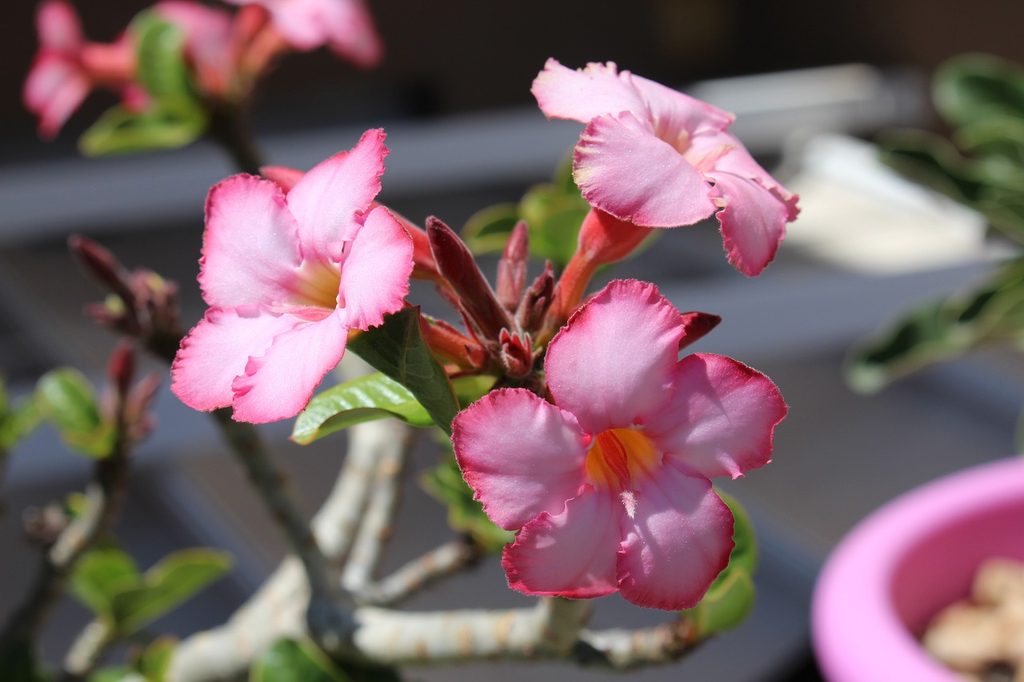
If you’re looking for something pretty, tropical looking, and floral, then the desert rose may just be the succulent you need. Adenium obesum looks remarkably like a small tree, with a thick, trunk-like main stem that branches out into smaller stems. Little dark green leaves and cheerful two-toned pink flowers complete the display. If you’ve always wanted to grow a bonsai but don’t have the time and energy to invest in caring for one, these plants will give you the aesthetic you’re after.
They need plenty of sun and more frequent waterings than other types of succulents. While they can tolerate droughts, they won’t bloom as much without regular water. Still, they are sensitive to overwatering, so plant them in well-draining soil and let the soil dry mostly before watering them.
Echeveria
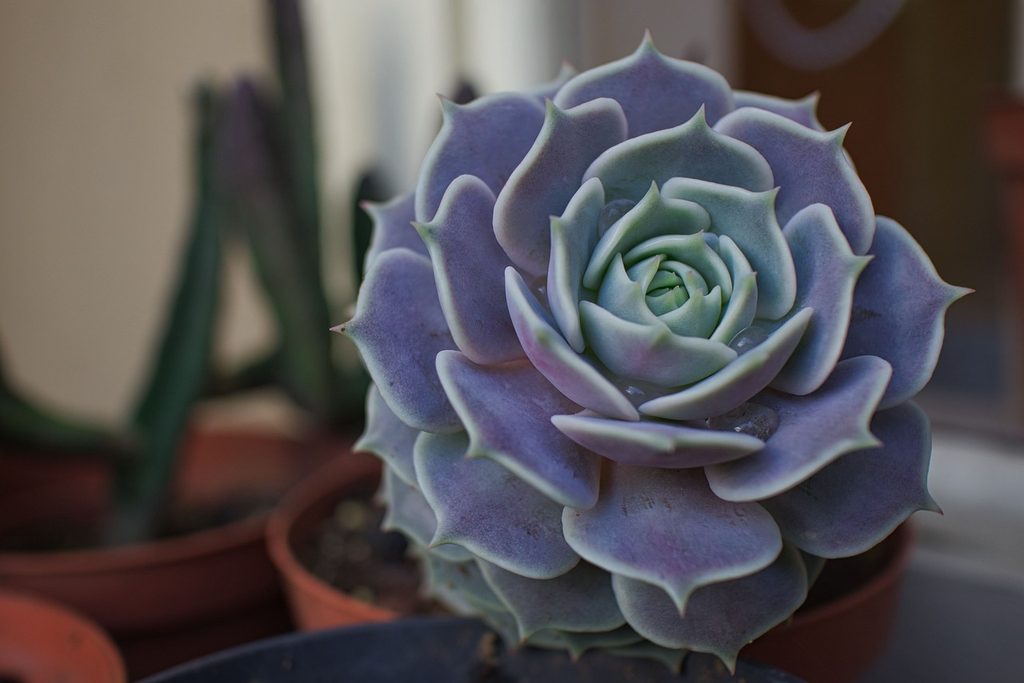
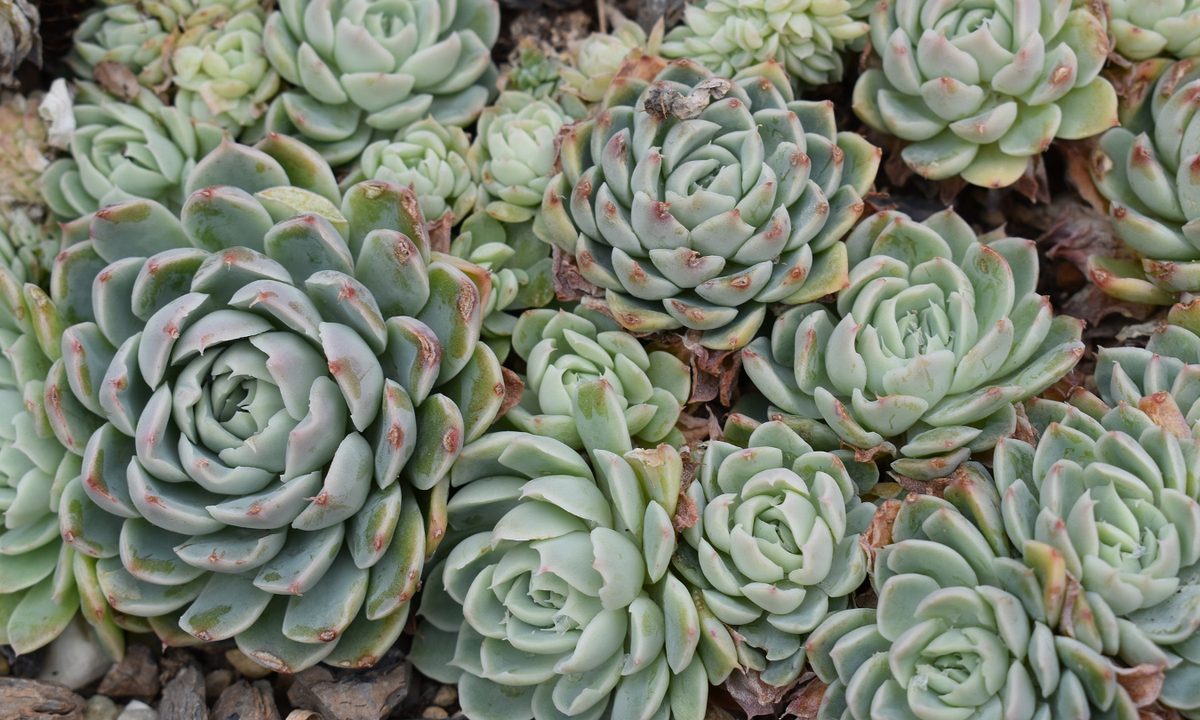
Echeveria is a genus of succulents that grow in beautiful rosettes, or rose-shaped leaf clusters. These rosettes can range in color from blue-gray to pink, and some are even two tones or multicolored. If you want something simple, elegant, and fairly small, then echeveria should be at the top of your list.
These succulents make perfect houseplants if you’re short on space, but they can also be paired with companion plants for a larger display. Since they tend to stay low to the ground, they’re also a good candidate for vertical gardens. A sunny window and water when the soil is dry are all these succulents need in order to thrive.
Sedum
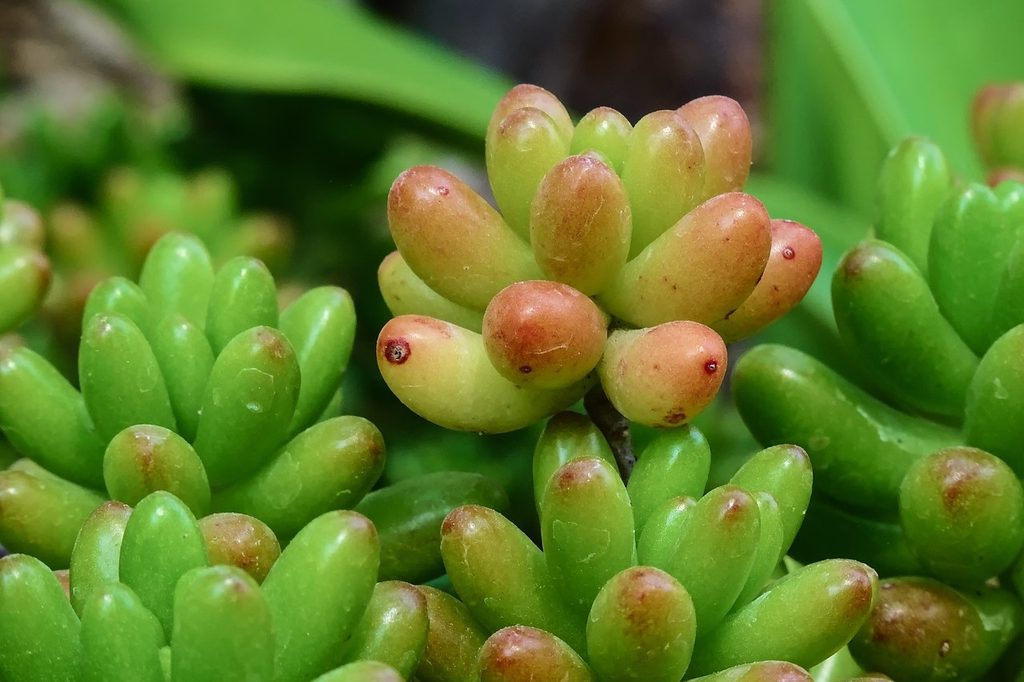
Sedum is another beautiful and varied succulent. There are a few common forms of sedum, and each is lovely in its own right. One popular sedum is burro’s tail, which grows in thick vine-like stems lined with many tiny round leaves. This type of sedum is great for hanging baskets, but smaller burro’s tail succulents can grow in standing pots as well. There are low-lying sedum species that bloom prolifically, creating a carpet of bright yellow or pink flowers.
Golden moss sedum and coral carpet sedum are two popular sedum ground covers. Finally, there are sedum species that don’t resemble succulents at all. Sedum varieties like autumn joy sedum resemble herbaceous plants, with tall stems, clusters of flowers, and long leaves. If you want the aesthetic of a regular garden plant and the easy care requirements of a succulent, this type of sedum is ideal for you.
Kalanchoe
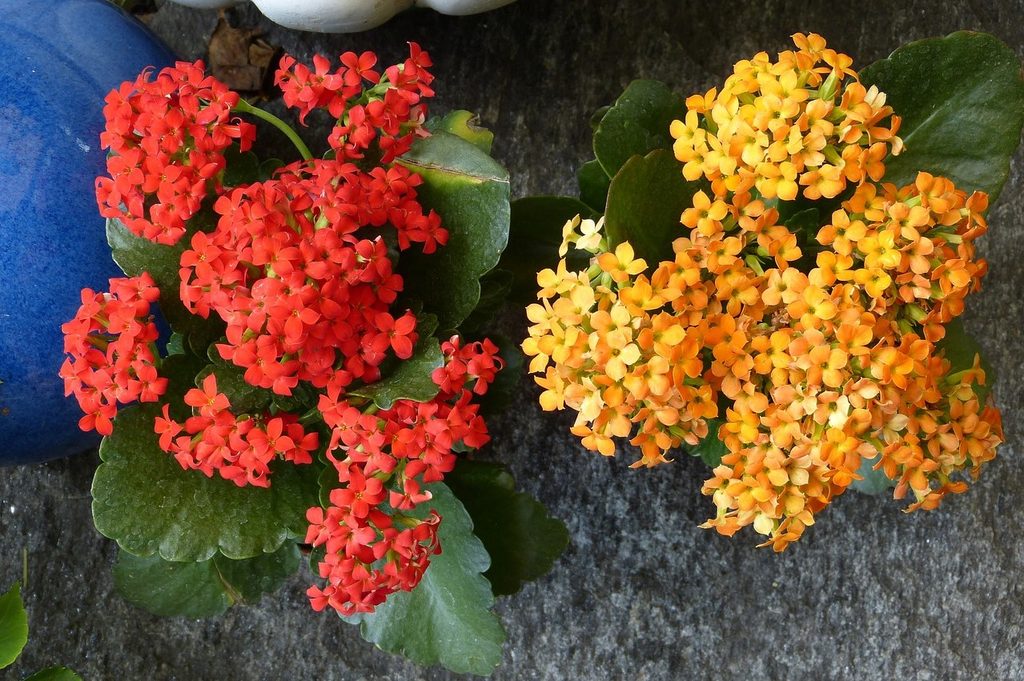
Kalanchoe is one of the best types of succulents to grow if you love flowers. While many succulents rarely bloom indoors, kalanchoe is best known for the tight clusters of brightly colored flowers that appear between its dark leaves in late winter. From sunshine yellow to bright pink, rich red to fiery orange, this succulent blooms in a wide range of colors, making it easy to find a plant that matches your taste.
Kalanchoe needs bright, indirect light, well-draining soil, and warm temperatures in order to thrive. It can also be moved outdoors during late spring and summer, when the weather is warm.
These five types of succulents are some of the best houseplants available. They’re fairly easy to care for, come in so many shapes, sizes, and colors, and they’re easy to find in most nurseries. Whether you want something unique like a pencil cactus or classic like an echeveria, succulents have something to offer everyone. Let these five be your starting point, and continue exploring the wide world of succulents!