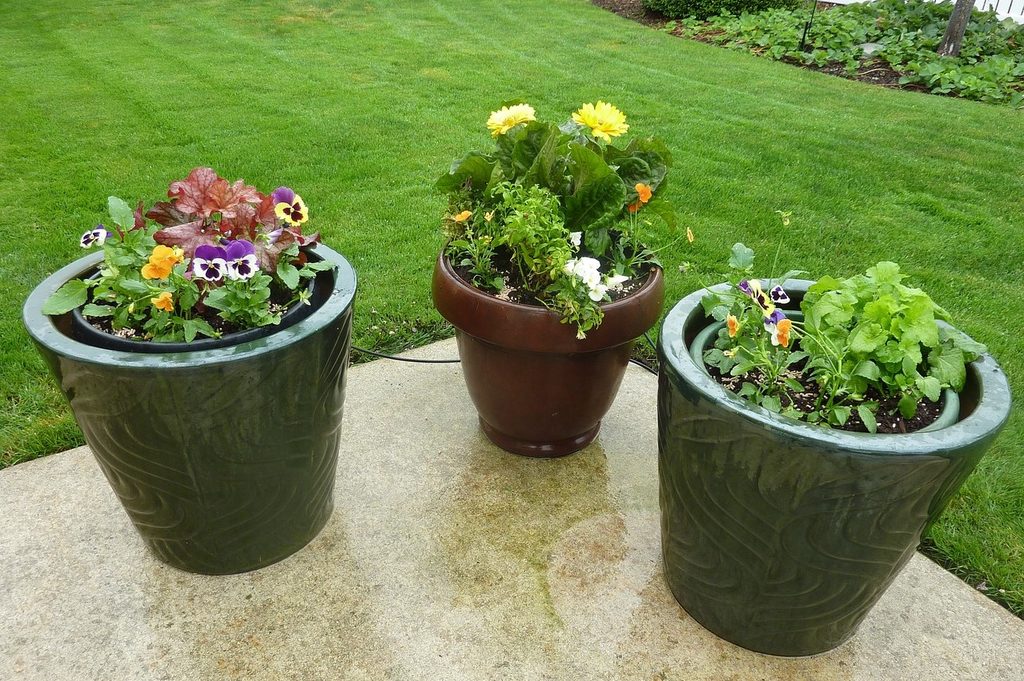
It’s hard to resist the call of warm weather. Sitting outside on your patio with your friends or just a good book can be so relaxing, and adding your favorite flowers to the mix makes it even more so! Some bright colors and interesting plants could liven up this gathering spot, but what if your thumb isn’t even remotely green? No problem. We’ve collected our 9 favorite low-maintenance outdoor potted plants for you to add to your patio. Whether you need sun-loving flowers, plants that prefer shade, or shrubs to fill the space, this guide to low-maintenance patio plants is sure to satisfy.
Have a patio that gets baked by the sun all day? Try these plants
Many of our favorite plants would wither up and die if exposed to the harsh sun all through the day. Here are some sun-loving beauties that thrive in full sun and are resistant to drought.
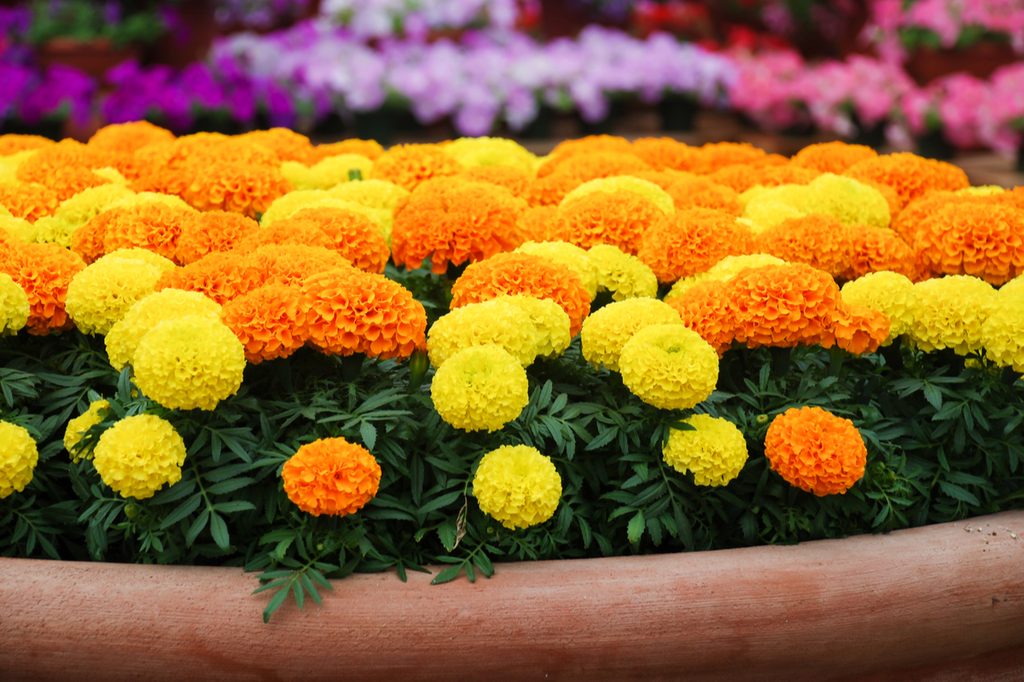
Marigolds
Marigolds are one of the most popular flowering plants to place in pots on front porches or back decks. With their bright yellow and orange blooms, it’s easy to see why! Not only are they gorgeous flowers, but they require almost effortless care. They prefer to dry out between waterings, and they love full sun. That means you can let them hang out in the sun and not worry about killing them if you miss a watering day.
For best results, plant your marigolds in well-draining soil in a pot that’s about 3 inches larger than the root ball. Also, deadhead your marigolds (i.e., pluck off the dead and wilted blooms) to extend bloom production throughout the summer.
Silver ponyfoot
Although this isn’t a flowering plant, silver ponyfoot is a delicate vining plant that cascades down hanging pots or the sides of a retaining wall. The leaves are a silvery green color that will create a lovely backdrop for more brightly colored plants, such as the marigolds mentioned above. Silver ponyfoot grows quickly, is drought tolerant, and will thrive in full sun or partial shade. This waterfall plant is almost impossible to kill, but it won’t survive a harsh winter, so it must be brought indoors during the colder months.
Geraniums
You’ve likely spent an evening with friends and seen geraniums hanging in city gardens or window boxes along your neighborhood streets. They are a trendy flowering plant available in a wide range of colors, including white, red, coral, pink, purple, yellow, and blue. Part of their popularity is due to their durability against full sun and droughts. For optimal growth, let your geraniums dry out between waterings. Fertilize them every two weeks during the summer to get the most blooms. To encourage even more blooms, you can deadhead your geraniums and enjoy stunning colors all summer long.
During the winter, the roots will need to dry out more often, but not completely. Geraniums will go through a dormant season and then be back to blooming by springtime. In early spring, you can repot your geraniums into pots 2 to 3 inches bigger than their old pots to encourage growth.
Have a covered or shady patio? These plants will be right at home
While some plants are sun lovers and can’t seem to get enough light, others are more delicate and prefer life in a nice shady spot. Here are three beautiful plants that will thrive on your shaded patio.
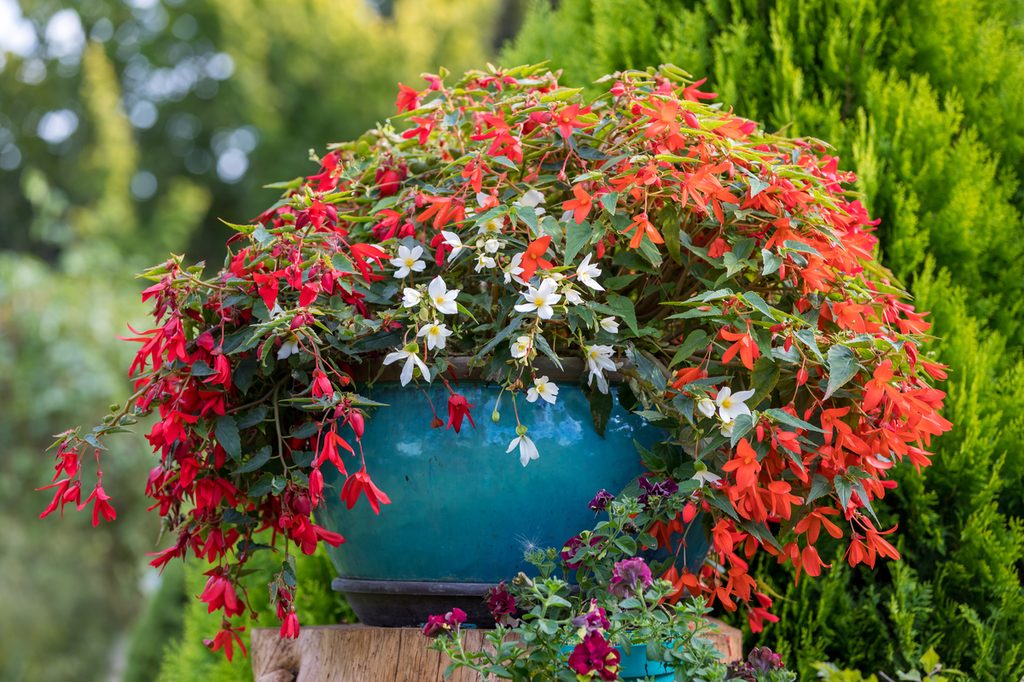
Begonias
These are a common plants to keep indoors; however, they also can be kept outside for a unique splash of color, both with their leaves and blooms. Many begonias have stunning flowers, and some of them even resemble roses. Begonias like full shade and standard potting soil, and they do not like to dry out between waterings. It’s best to keep the deep part of the soil damp and provide extra water when the top few inches are dry. They also love humidity; if the outside humidity level drops below 10%, be sure to hose down the patio and give the leaves a heavy shower to increase the humidity levels around the plant. When temperatures start to drop, bring your begonias indoors to hang out until springtime.
Caladium
This is another plant with striking leaves that are bound to please and shock your dinner guests. Caladiums can range from red center leaves with white rims to purple, green, white, and pink. They look so different that you might get accused of having a fake plant!
While some varieties are sun tolerant, most prefer full shade and high humidity. They like their soil to be moist, but they don’t want to sit in water, so be sure to allow the top few inches of soil to dry out before watering again. When nighttime temperatures begin to drop below 60, it’s time to bring the caladium indoors for the winter.
Heucheras
Also known as coral bells, heucheras are a magnet plant for hummingbirds and butterflies. So not only will you enjoy a beautiful plant, but you’ll also get some fantastic visitors as well! Coral bells do come in a fun coral color, as the name implies, but you can also find them in red, white, pink, purple, blue, and orange varieties. Heucheras can survive in full sun, but they prefer partial shade and well-draining, moist soil. Do not allow the soil to dry out between waterings, but wait for the soil on top to dry and then water thoroughly again. To fertilize, use a water-soluble fertilizer. Be sure not to over-fertilize or else you might inhibit the plant’s ability to bloom.
Low-maintenance potted shrubs for your patio
If you’re looking for something to take up a bit more space, these shrubs and miniature trees might be the perfect low-maintenance patio plants for you!
Rosemary
Rosemary is a fragrant and delicious herb that produces beautiful flowers. While they can be kept small for indoor herb gardens, they can grow into medium-sized shrubs when given enough room. Rosemary is a hardy, drought-tolerant plant, but it can develop problems if overwatered. Make sure to plant your rosemary in a pot with drainage holes, but don’t let it sit in standing water, and water it deeply but infrequently.
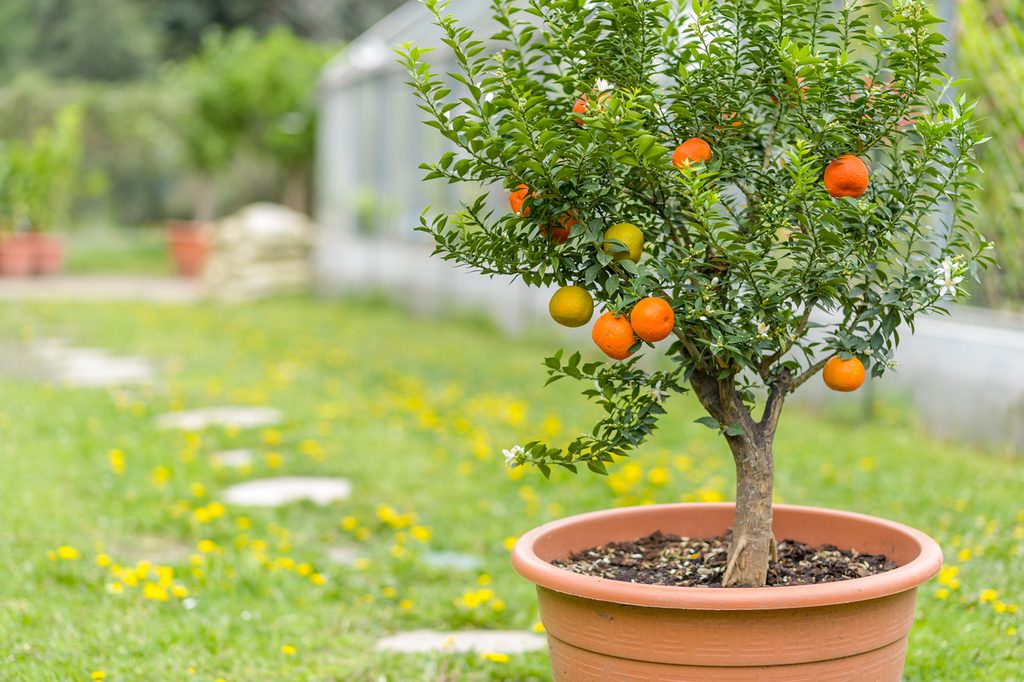
Kumquat
If you love the taste of citrus fruit but don’t have enough space for a full-sized fruit tree, then growing a kumquat tree on your patio is a great option. Choose a large container to give their roots plenty of room, set them in a sunny corner of your patio, and watch them bloom! Take care not to overwater them, as they can develop root rot when left in wet soil for too long. Instead, only water them when the soil is dry a few inches down, and plant them in well-draining potting soil. You should expect your first harvest in late winter through early spring.
Hydrangea
If your patio needs a burst of color, hydrangeas are sure to satisfy. These popular and easy-to-grow flowers come in shades of pink, blue, and white, and some of them can even change colors. When potting your hydrangeas, add a slow-release fertilizer or use potting soil that already has it mixed in for the best results. Water your potted hydrangeas thoroughly whenever the top inch of the soil is dry.
You can’t go wrong with any of these uniquely beautiful plants. Choose your favorite or all six to bring color, intrigue, and even hummingbirds to your patio. These plants and their winged friends are sure to set the mood for a lovely outdoor party or date night on the deck.