
The cool blue water of your pool beckons. Literally, you can feel it calling to you as the summer days get longer and hotter. Yet, you can’t enjoy the water if you haven’t paid proper attention to pool maintenance, now can you? Ensuring that your pool is clean and debris-free is essential during the dog days of summer.
Remember that when you don’t ensure the cleanliness of your pool, the water can begin to harbor all kinds of nasty things. For example, you’ll likely begin to have slimy green algae, microorganisms, and mosquito larvae calling your pool home. Plus, the more use your pool gets, the dirtier it becomes! Read on to see how to keep up with pool maintenance so you can continue to enjoy the fun of swimming in clean, crystal clear water when the sun is at its hottest.

Skim the debris
Many people have pools surrounded by trees, bushes, and other large plants. When the wind blows, leaves and other debris naturally get shaken loose and often end up floating in your pool. Using a skimmer can help you easily remove whatever’s floating on or near the water’s surface. You should use a skimmer and take just five to ten minutes (often, it won’t even take that long) every morning to clear out floating leaves, dead bugs, and any other debris. Another added benefit is that skimming helps to increase your pool’s water circulation, which decreases chemical levels.
Vacuum your pool
Having an automated or robot vacuum can be a true blessing. First of all, you need a pool vacuum to ensure that you can remove any hard-to-reach debris on the sides of the pool or at the bottom. Often there’s stuff down in there that your skimmer just can’t reach. You should run your vacuum at least once a week and be sure to check the vacuum’s filter and clean it if needed.
Note that if you’ve got any algae stuck to the surface of your pool, your vacuum might not be enough to remove it. You’ll have to take a nylon brush along with a chemical pool cleaner to scrub it away.
Clean your pool’s filter
If your pool’s filter isn’t cleaned regularly, it won’t do its job correctly. When the pool filter isn’t functioning as it should, your pool’s water can become murky or cloudy. Filters come in a few different types: diatomaceous earth (DE), cartridges, and sand. The amount of maintenance you’ll have to do depends on which type you have.
Check and maintain the pH level
You can ruin swimming suits if you don’t maintain your pool’s pH levels correctly. The reason for this is that acidity levels can be too high. The right pH range for swimming water, which helps keep the water clean and safe for swimmers, is between 7.2 and 7.8 on the pH scale.
To know what the pH level is, keep a testing kit available. Test the water with test strips. If the pH levels are either above or below the acceptable range, you’ll have to add chemicals to adjust it. Pool chemicals you’ll need are muriatic ash and soda ash. The first will decrease the pH level, and the latter will increase it.
Some people aren’t comfortable working with pool chemicals themselves. If that’s you, don’t worry; you can always give a professional pool service a call, and they’ll do it for you.
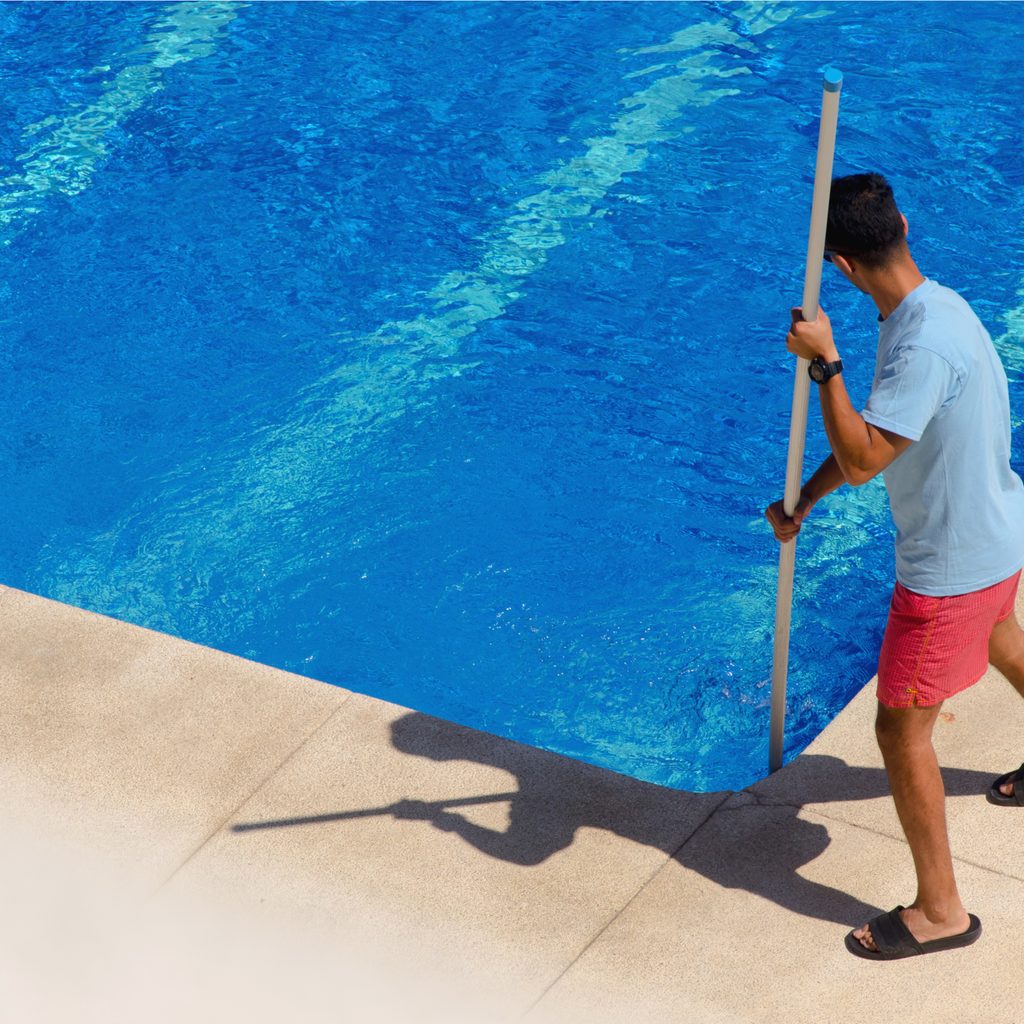
Find and Repair Leaks
Finally, the last item on your to-do list when it comes to pool maintenance during the summer is to check for leaks. Sometimes the water may be a bit low, but it won’t have anything to do with a leak. Water does evaporate into the atmosphere, after all. One way to figure out if the lower water levels are due to a leak or not is to perform a bucket test:
- Fill up your bucket about three quarters of the way.
- Mark the water line with a marker.
- Put the bucket in the pool and mark the outside of the bucket at the pool’s water line.
- Allow the bucket to sit there a few days.
- Go back and check the water lines.
Suppose the water has decreased by the same amount both inside and outside the bucket. In that case, you’re losing water due to evaporation. If the water on the outside goes down more, you probably have a leak. That’s a problem, and you’ll likely need professional help to fix it.