The dragon tree, or Dracaena marginata, is a plant native to Madagascar and beloved by houseplant enthusiasts everywhere. As a slow-growing plant, it’s perfect for any indoor space and looks just as beautiful in a home office as it does in a living room! Dragon trees grown outdoors can reach up to 20 feet; however, they’re much more manageable (and happy) when pruned and kept at a maximum of six feet tall.
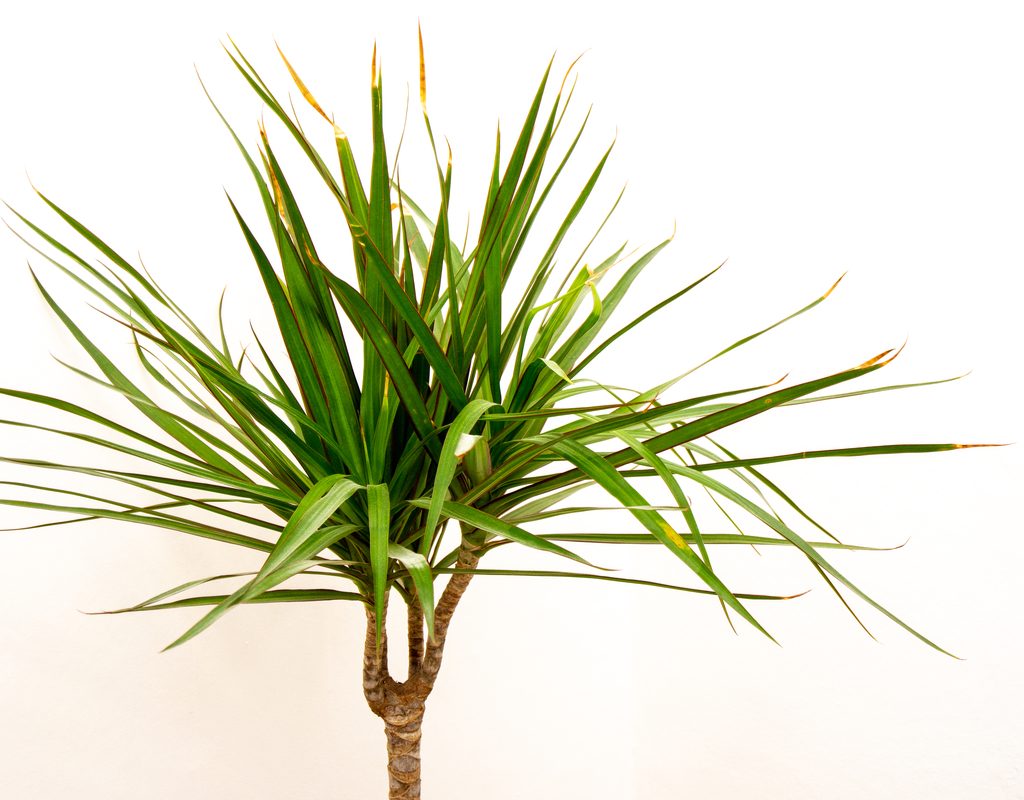
The green leaves of the Dracaena marginata are long and pointy, resembling the blade of a sword, and sport a red tint along the edges. Surprisingly, the dragon tree is one of many species of succulent/cacti trees, and as such their care is rather similar.
Adding a dragon tree to your collection
The Dracaena marginata is a unique plant, loved by indoor gardeners for its ability to adapt to many different environments. Dragon trees make beautiful potted plants for bright corners of a room or beside an end table, and they’re even versatile enough to spruce up a well-lit bedroom!
They can be grown outdoors in USDA hardiness zones 10 through 12, but otherwise they thrive in an indoor environment. If you live outside one of the ideal zones, you can still transition your dragon tree to an outdoor deck, patio, or balcony space during the warmer months! It will love the sunshine and the warmth while bringing an eye-catching element to your outdoor decor.
Are there different varieties of dracaena marginata?
There are three common varieties of the dragon tree that you’ll find in nurseries: the colorama, the bicolor, and the tricolor.
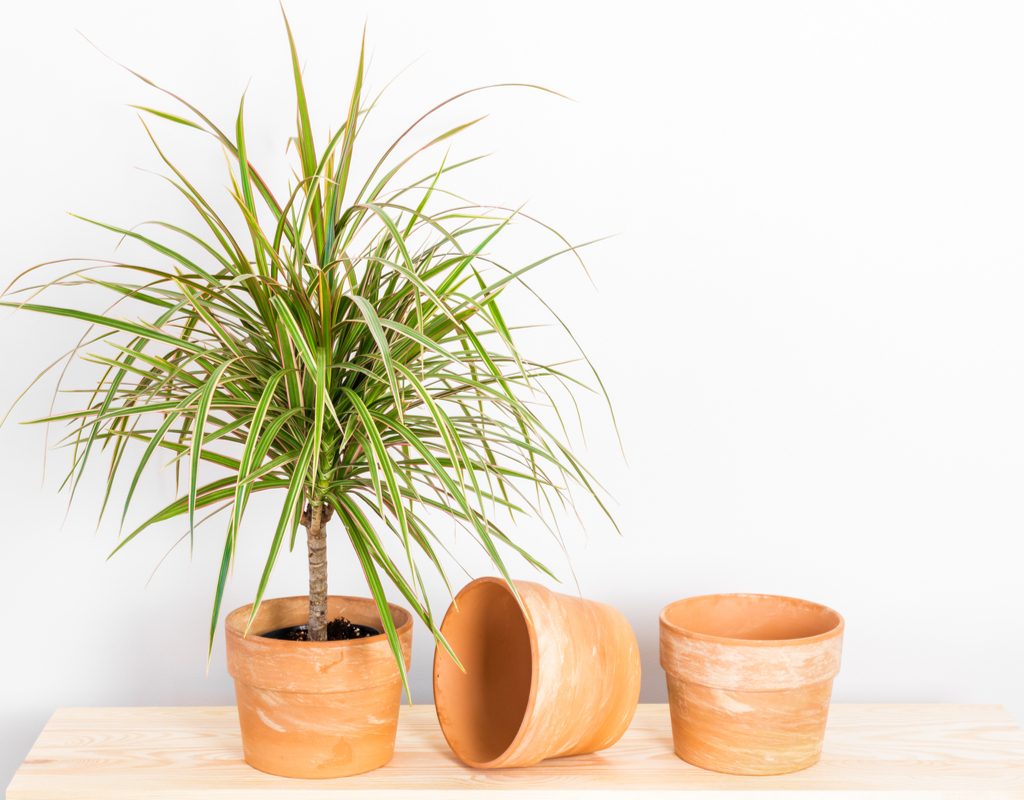
- Dracaena marginata “Colorama.” The Colorama dragon tree is pink in appearance and has green- and white-striped variegation. Like other variegated plants, it needs proper care (especially light levels) to keep its unique variegation patterns.
- Dracaena marginata “Bicolor.” The Bicolor dracaena features green and red stripes, which like the Colorama are at their brightest and boldest when proper care is given.
- Dracaena marginata “Tricolor.” The Tricolor dracaena, similar to the Bicolor, has green and red coloring; however, the leaves themselves on this variety are green with dark red edges, featuring a vertical white stripe down the leaf.
The Dracaena draco is also colloquially known as a dragon tree, and it’s often easily confused for the marginata due to the nearly identical appearance. If you don’t know which dragon tree you have (or can’t remember), the best way to find out is to cut into the leaf. If it’s a Dracaena draco, there will be a red resin that drips out of the cut.
Caring for your dragon tree
Dragon trees aren’t terribly high maintenance when it comes to care, though they may not be a great beginner plant. If you already have a decent houseplant collection, you shouldn’t have any trouble meeting the needs of a Dracaena marginata so that it grows as happy and healthy as possible. They like spaces between 70 and 80 degrees Fahrenheit and moderate humidity levels. In a cold, dry environment (like a northern winter), this can be a bit difficult to maintain.
If you live somewhere where it cools down during the colder months and you notice your home getting dry, space humidifiers will be your best friend. You can also try collecting your houseplants into one area to increase the natural humidity, or place your dragon tree near a shallow tray of pebbles filled with water. Some home gardeners will even give their dragon tree a light misting every few days.
Light needs: Thrives in bright light; tolerates partial shade
Water needs: Water regularly, waiting until the top half of the soil is dry to water again; relatively drought-tolerant
Soil needs: Loose, well-draining potting mix
Do you need to prune a dragon tree?
Like all houseplants, the Dracaena marginata will be all the more happier with regular pruning. Dragon trees are known to self-shed dead leaves, so don’t worry if you see a few older ones fall to the ground every now and then. If you want to keep it looking its healthiest, you can always take a pair of sterilized shears or scissors to cut the dying foliage off, which will also let your dragon tree direct energy and nutrients toward healthy leaves and new growth.
Pruning is also a great way to help a plant maintain a desired shape and size. Because the dragon tree can grow up to six feet indoors, you may be wondering what you can do to keep it smaller if you want it as a tabletop plant or you live in a smaller space where that size plant can’t be accommodated. Use your sterilized pair of shears or scissors to keep the growth under control, and your dragon tree will stay nice and modest.
Common problems to look out for (and how to solve them!)
Unfortunately, dragon trees aren’t immune to indoor pests. They’re most susceptible to mealybugs, scale, and thrips, as well as the ever-dreaded spider mite. Each pest comes with its own problems, with the most difficult being that you often won’t see the spider mites until damage has been done.
The good news, though, is that if you catch the infestation early enough, there’s still hope for saving the plant! If there are only a few bugs, you may be able to just pick them off by hand, dispose of them, and wipe down the leaves gently with a damp cloth; however, in more serious cases, you’ll want to try using an insecticidal soap. Every kind is different, so make sure you have one that’s approved for indoor plants (and ideally for dragon trees) and that you follow the directions on the bottle to avoid any adverse effects.
The best way to propagate your dragon tree
Dragon trees can be propagated by rooting stem cuttings either in soil or in water — all you need is a decent-sized plant! Using a pair of sterilized shears or scissors (or a hori hori knife), find a stem that has at least eight inches of growth and make a cut. Get a pot of fresh potting soil, place the cut end directly into the mix, and put the pot in a warm area with bright, indirect lighting. Cuttings should take about three weeks to sprout roots.
With luck, you’ll be able to give your new cuttings to friends and family as holiday gifts, birthday gifts, and housewarming presents! (Or you can just keep them for yourself, we won’t tell.)


